For years, poured concrete has been the default choice for driveways, patios, walkways, and other hardscaped areas around the home. It tends to be straightforward to install, relatively economical, and familiar to most homeowners.
But concrete has one frustrating weakness: when a large slab cracks, repairs can become complicated. A damaged section may need to be cut out and replaced, and the new concrete can look noticeably different from the older surface.
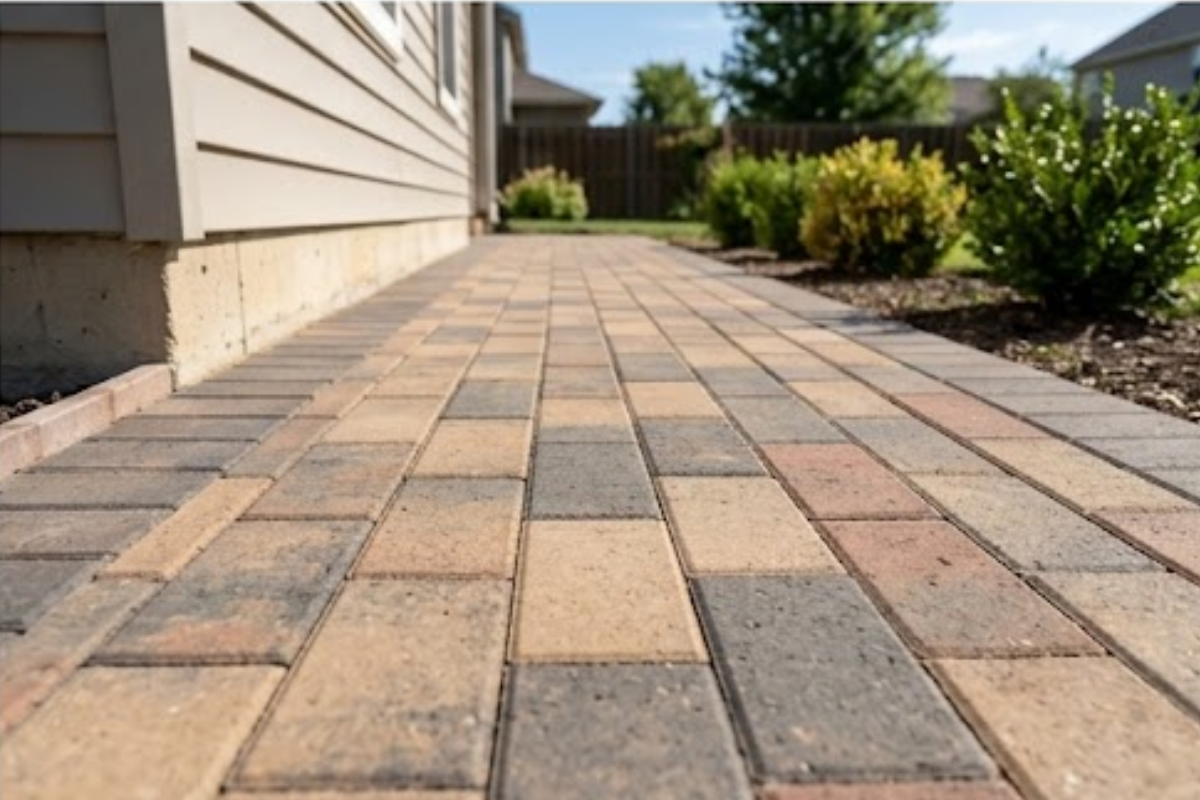
That has some homeowners looking at pavers instead. Pavers come as individual pieces that can be arranged over a prepared base, creating a surface that handles repairs, drainage, and design a little differently.
Pavers (flooring) are commonly used for patios, driveways, walkways, and other outdoor surfaces.
Cracks Don’t Mean Replacing the Whole Surface
One of the biggest differences between concrete and pavers comes down to how they’re repaired.
A concrete driveway works as one large slab. When cracks develop because of ground movement, heavy loads, tree roots, or repeated freeze-thaw cycles, fixing the problem can involve patching or replacing part of the slab.
Pavers break the surface into individual units. If one becomes cracked or damaged, it can typically be removed and replaced without tearing up the surrounding area. That can make future repairs less disruptive.
This doesn’t mean pavers never move or need maintenance. Individual pieces can settle, weeds can grow between joints, and the underlying base can develop problems if installation isn’t done correctly. But the repair process can be more localized.
Pavers Give Homeowners More Design Choices
A large concrete slab usually has a relatively uniform appearance unless it’s stamped, stained, or otherwise finished.
Pavers come in many shapes, sizes, textures, and colors. They can be arranged in patterns such as herringbone, running bond, or basketweave. Different styles can also be combined to create borders around driveways, patios, or walkways.
That flexibility can make it easier to match an outdoor surface with the architecture of the house without relying on decorative treatments added to poured concrete.
For someone replacing an old patio or driveway anyway, the ability to change the layout can be just as appealing as the material itself.
The Higher Initial Cost Can Give Some Homeowners Pause
Pavers don’t always win on upfront price.
According to Bob Vila’s comparison, paver installation generally costs more than basic poured concrete, partly because laying individual pieces requires more labor. The actual price can vary considerably depending on the paver material, site preparation, pattern, project size, and local labor costs.
That means homeowners focused strictly on initial project cost may still prefer concrete.
The calculation can change when future repairs enter the picture. Replacing several damaged pavers can be simpler than repairing a large cracked concrete section, although the savings depend on the condition of the underlying base and the extent of the damage.
They Can Work Well for Driveways and Patios
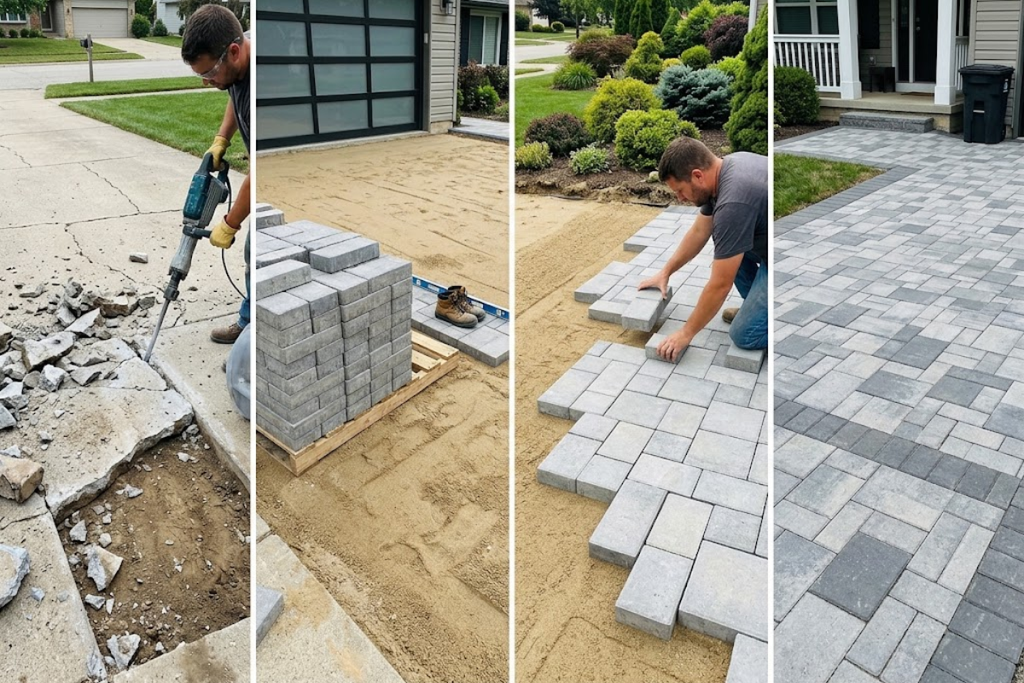
Pavers aren’t limited to decorative garden paths. Properly installed systems can handle vehicles, foot traffic, patios, walkways, and other residential uses.
The foundation underneath matters enormously. Paver installations generally rely on layers of compacted aggregate and sand beneath the individual pieces. A poorly prepared base can lead to sinking, uneven sections, or shifting regardless of how durable the pavers themselves may be.
For a driveway, proper preparation becomes even more important because the surface has to deal with the weight and repeated movement of vehicles.
So Why Make the Switch?
For some homeowners, the appeal isn’t simply that pavers look different from concrete. It’s the combination of repairability, drainage options, design flexibility, and long-term maintenance.
Concrete can still make plenty of sense, particularly when keeping initial installation costs down matters most. Pavers simply give homeowners another way to approach outdoor surfaces, especially when an existing concrete patio or driveway already has cracks, drainage problems, or sections that need replacement.
For someone already facing a major replacement project, switching materials can be an opportunity to rethink how the entire surface will handle water, repairs, and everyday use.