
Vitamin D often gets attention because of its connection to bones, but low levels can show up in less obvious ways. The tricky part: many people with low vitamin D have few or no noticeable symptoms. When symptoms do appear, they can overlap with other health issues, so feeling tired or achy alone does not necessarily mean you need more vitamin D.
Here are some common signs worth paying attention to, especially if you also have factors that can make low vitamin D more likely.
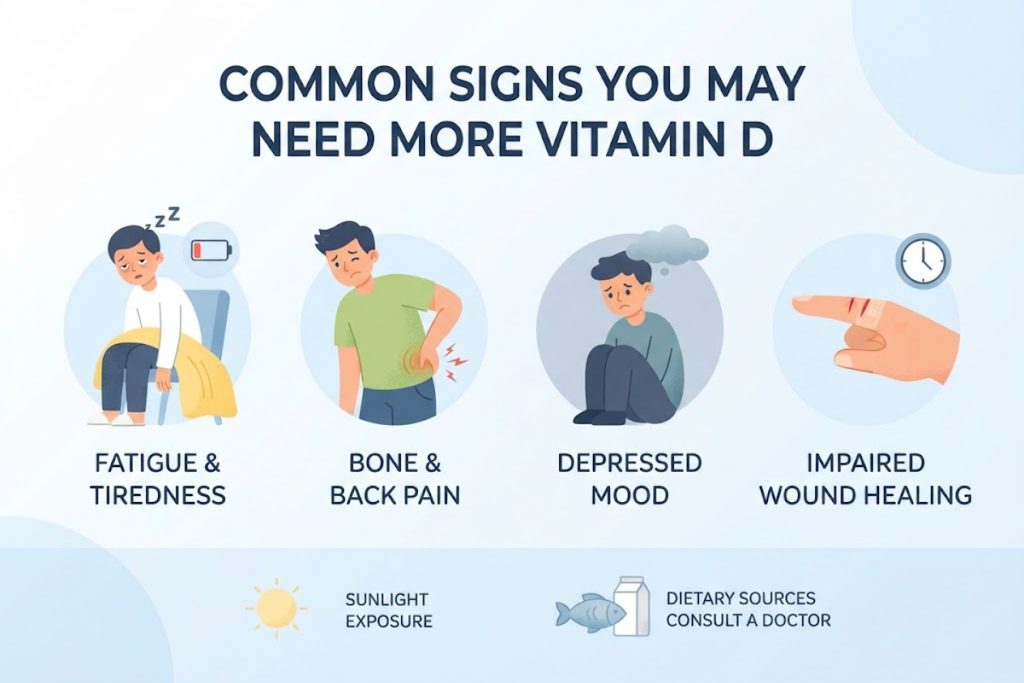
1. You feel unusually tired
Persistent fatigue can have many causes, including poor sleep, stress, anemia, thyroid problems and nutritional deficiencies. Low vitamin D can also occur alongside unexplained tiredness, particularly when a deficiency becomes more pronounced.
Fatigue alone cannot confirm a vitamin D deficiency. If you have been feeling unusually drained for weeks without an obvious reason, a healthcare professional can help determine whether testing makes sense.
2. Your muscles feel weak
Muscle weakness can occur when vitamin D levels become too low. You might notice that everyday activities, such as climbing stairs, getting up from a chair or carrying groceries, feel harder than they used to.
Vitamin D supports normal muscle function, and prolonged deficiency in adults can lead to muscle weakness along with bone-related problems.
3. You have frequent aches or bone pain
A dull ache in the bones or widespread muscle discomfort can occur with vitamin D deficiency. In adults, a severe and prolonged shortage can lead to osteomalacia, a condition involving softened bones.
Pain linked to vitamin D deficiency does not necessarily feel like a sharp injury. Some people describe more general discomfort, particularly in the back, hips, ribs or legs. Still, unexplained or persistent pain deserves a proper evaluation rather than assuming vitamin D causes it.
4. You seem to get sick often
Vitamin D interacts with the immune system, which has led to plenty of interest in the relationship between vitamin D and infections. However, having frequent colds or infections does not automatically mean your vitamin D level is low.
Research into vitamin D and various health conditions continues, and taking extra vitamin D has not consistently been shown to prevent every illness associated with low vitamin D. It makes more sense to consider frequent illness alongside other risk factors rather than using it as a standalone sign.
5. You have noticed changes in bone health
Low vitamin D can make it harder for the body to absorb calcium. Over time, inadequate vitamin D and calcium can weaken bones and increase the risk of bone problems.
For adults, prolonged deficiency can cause osteomalacia, while low vitamin D can also factor into osteoporosis risk. Unexpected fractures, persistent bone pain or a diagnosis of low bone density warrant a conversation with a healthcare professional.
6. You spend very little time outdoors
This isn’t a symptom, but it can be an important clue.
Your skin produces vitamin D when exposed to sunlight. People who rarely spend time outdoors may have less opportunity to produce vitamin D. Darker skin, older age and consistently covering most of the skin can also reduce vitamin D production from sunlight.
7. Your diet contains few vitamin D sources
Very few foods naturally contain substantial amounts of vitamin D. Fatty fish such as salmon, tuna and mackerel provide vitamin D, while fortified milk, some plant milks, cereals and other fortified foods can add more to the diet.
If your diet contains very little of these foods and you also get limited sun exposure, it may be worth discussing your vitamin D intake with a healthcare professional.
How to know if your vitamin D level is actually low
Symptoms can provide clues, but a blood test gives a much clearer answer. The commonly used test measures 25-hydroxyvitamin D, also called 25(OH)D. The NIH notes that levels below 30 nmol/L (12 ng/mL) can be too low, while levels of 50 nmol/L (20 ng/mL) or above meet the adequacy threshold for most people for bone and overall health.
For more background, you can read about vitamin D deficiency and review vitamin D sources and recommendations from Mayo Clinic.
Vitamin D supplements can help when a deficiency exists, but taking more does not necessarily mean getting more benefit. Excessive supplementation can cause harmful calcium levels and other problems, so high-dose supplements should not be treated like an everyday nutritional shortcut.
If several of these signs apply to you, particularly unexplained muscle weakness, bone pain or changes in bone health, asking about a vitamin D blood test may provide a more useful answer than trying to judge your level from symptoms alone.