Choosing a new mattress can feel overwhelming, especially when navigating the memory foam vs spring mattress debate. Both types have been popular for years, and each offers advantages depending on your sleeping style, comfort preferences, and support needs. Rather than asking which is universally better, it is more useful to compare how they perform in areas such as pressure relief, durability, temperature regulation, and motion isolation.
What Is a Memory Foam Mattress?
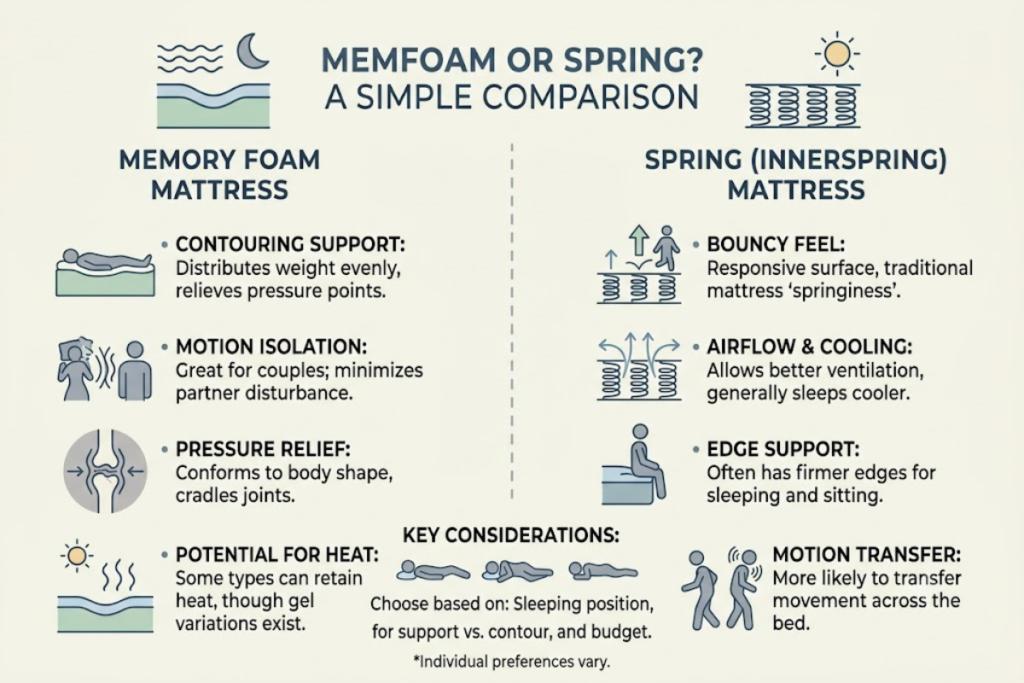
Memory foam mattresses are made from layers of foam that respond to body heat and pressure. As you lie down, the foam contours to your body, helping distribute weight more evenly across the surface.
Many modern memory foam mattresses combine multiple foam layers, including cooling gel foams or high-density support cores designed to improve comfort and longevity.
Memory Foam Mattress Benefits
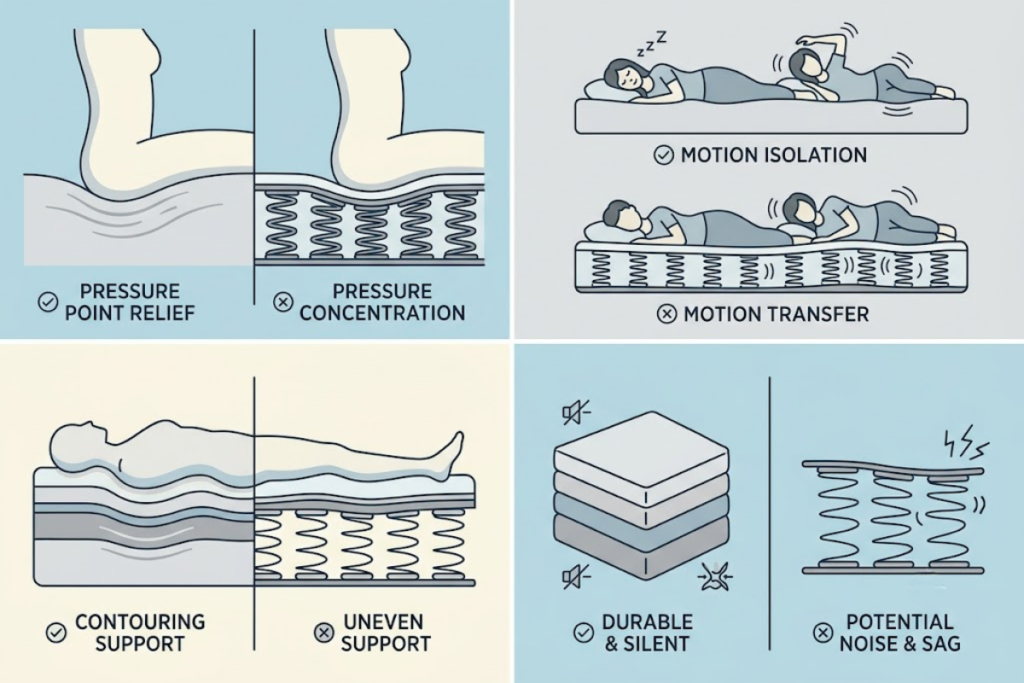
One of the biggest advantages of memory foam is pressure relief. Because the material conforms to the body’s shape, it can reduce pressure on areas like the shoulders, hips, and lower back. This makes memory foam especially popular among side sleepers.
Memory foam also excels at motion isolation. If one person changes positions or gets out of bed, the movement is less likely to disturb their partner. Couples often appreciate this feature because it can contribute to a more restful night’s sleep.
Additionally, memory foam mattresses are typically quiet since they contain no metal springs that may squeak over time.
What Is a Spring Mattress?
Spring mattresses, also called innerspring mattresses, rely on metal coils for support. Modern designs often include individually wrapped pocket coils that move independently, providing better contouring than traditional interconnected springs.
Most spring mattresses also include comfort layers made from foam, latex, or fiber padding above the coil system.
Spring Mattress Benefits
Spring mattresses are known for their responsive feel. They provide more bounce, making it easier to move around or change sleeping positions during the night.
Another advantage is airflow. The open coil structure allows heat to circulate more freely than solid foam, helping many sleepers stay cooler.
Spring mattresses also tend to provide stronger edge support, allowing users to sit or sleep near the edge without excessive sinking.
Memory Foam vs Spring Mattress: Key Differences
When comparing a memory foam vs spring mattress, comfort, support, temperature regulation, motion isolation, and durability are the most important factors to consider.
Comfort
Memory foam offers a body-hugging feel that cushions pressure points. Spring mattresses provide a firmer, more responsive surface with less contouring.
The better choice depends on whether you prefer sleeping “in” the mattress or “on” it.
Support
Both mattress types can provide excellent support when well designed. High-quality memory foam supports spinal alignment by contouring to body curves, while pocket coil systems distribute weight through responsive springs.
Support depends more on mattress construction and firmness than on material alone.
Temperature regulation
Traditional memory foam has a reputation for retaining heat. However, many newer models include cooling technologies such as gel infusions, open-cell foam, or breathable covers.
Spring mattresses naturally promote better airflow, making them a popular option for hot sleepers.
Motion isolation
Memory foam generally performs better at absorbing movement. Spring mattresses, especially those with older interconnected coils, may transfer more motion across the bed.
Pocket coil systems improve motion isolation considerably but usually do not match the performance of high-quality memory foam.
Durability
Both mattress types can last many years when made with quality materials. Higher-density memory foam often resists sagging better than lower-quality foam, while well-built pocket coil mattresses can maintain support for extended periods.
Proper foundation, regular rotation (when recommended), and following manufacturer care guidelines can help extend mattress life.
Which Mattress Type Is Better for Different Sleepers?
Memory foam may be a better choice if you:
- Prefer pressure-relieving comfort
- Sleep on your side
- Share a bed with a partner
- Want minimal motion transfer
- Enjoy a softer, contouring feel
A spring mattress may suit you better if you:
- Sleep hot
- Prefer a more responsive surface
- Frequently change sleeping positions
- Need stronger edge support
- Like a traditional mattress feel
Can hybrid mattresses offer the best of both?
Hybrid mattresses combine pocket coils with multiple foam comfort layers, including memory foam in many cases. This design aims to deliver pressure relief while maintaining airflow and responsiveness.
For shoppers who appreciate features from both mattress types, hybrids have become an increasingly popular middle ground.
Memory Foam vs Innerspring Mattress: Final Verdict
In the memory foam vs spring mattress comparison, neither option is automatically better for every sleeper. The ideal choice depends on your body type, sleeping position, temperature preferences, and the level of firmness you find comfortable.
If pressure relief, motion isolation, and contouring are your top priorities, memory foam may be the better fit. If you value cooling, bounce, and ease of movement, a spring mattress could be the more suitable option. Testing mattresses in person when possible and reviewing trial periods and warranty policies can help ensure you choose a mattress that supports comfortable sleep for years to come.


One thought on “Are Memory Foam Mattresses Better Than Spring Mattresses?”