A yard can look tired without needing a complete makeover. Overgrown edges, bare patches, scattered pots, and faded garden beds can make an outdoor space feel unfinished. The good news? A few weekend projects can make a noticeable difference without requiring professional landscaping equipment or a major budget.
From defining garden borders to adding layers of plants, these simple DIY landscaping ideas can help give an ordinary yard a cleaner, more inviting look.
1. Give Garden Beds a Clean Edge
One of the easiest ways to change the appearance of a yard involves defining the boundary between grass and garden beds. Grass that grows into flower beds can make everything look messy, even when the plants themselves look healthy.
Use a half-moon edger or flat spade to create a clean line around planting areas. Follow the existing shape of the bed, or create gentle curves rather than sharp angles. Once the edge looks neat, add mulch to cover exposed soil and give the bed a finished appearance.
2. Refresh Tired Mulch
Old, faded mulch can make a garden look older than it really is. Replacing or refreshing it takes relatively little work.
Remove obvious weeds and debris first, then spread a fresh layer around trees, shrubs, and flower beds. Keep mulch a few inches away from tree trunks and plant stems to reduce moisture-related problems.
Wood mulch, shredded bark, pine straw, and other materials can work depending on the plants and climate. The USDA gardening resources can also help with region-specific gardening information.
3. Group Plants Instead of Spreading Them Everywhere
A common DIY landscaping mistake involves placing individual plants randomly throughout the yard. Grouping plants in small clusters can create a more organized appearance.
Try planting three, five, or seven similar plants together rather than placing one plant in several different locations. Odd-numbered groupings often create a more natural arrangement.
You can also mix different heights. Put taller plants toward the back of a bed, medium-sized plants in the middle, and shorter flowers or ground covers near the front.
4. Add a Simple Gravel Path
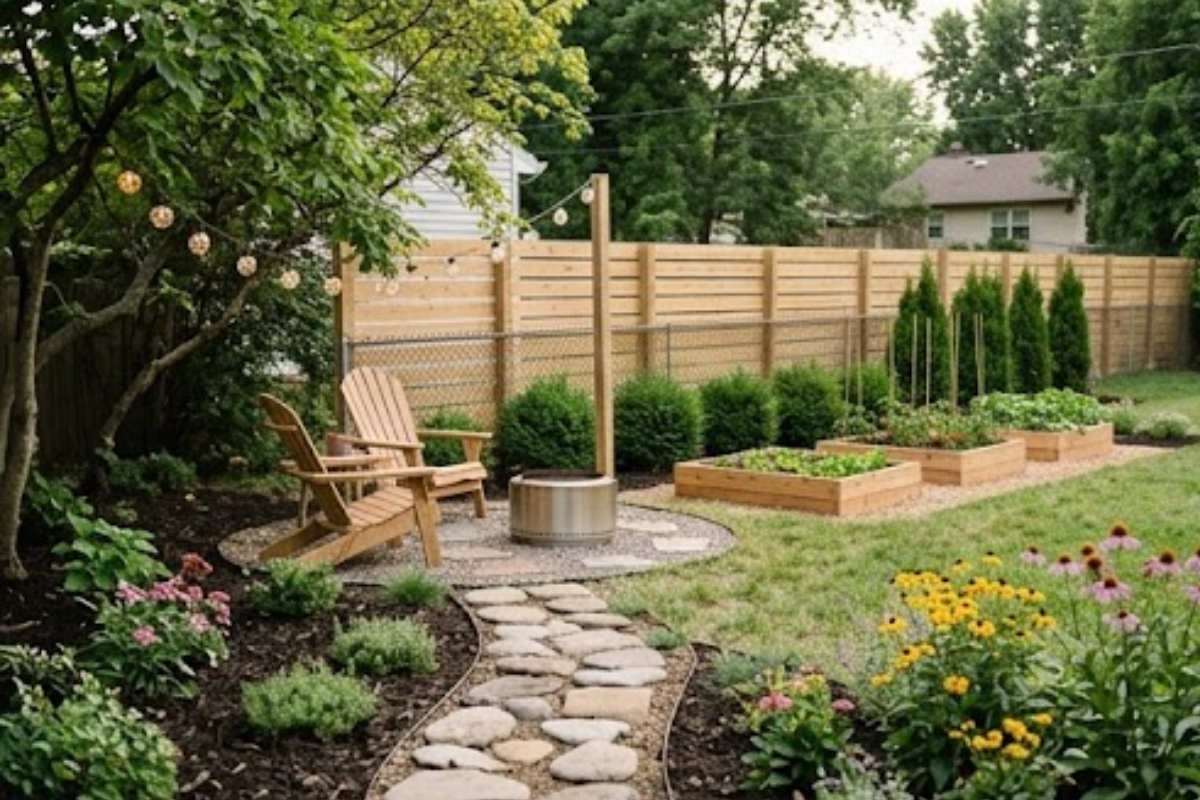
A path doesn’t require concrete or expensive pavers. Gravel can create an informal walkway between a patio, garden, shed, or side gate.
Mark the route with stakes and string, remove several inches of soil, and create a reasonably level surface. Landscape fabric underneath the gravel can help reduce weed growth. Finish with enough gravel to create a stable walking surface.
For inspiration, the Wikipedia guide to landscaping provides a useful overview of different landscaping approaches.
5. Use Containers to Fill Empty Spots
Large planters can quickly add interest to areas where planting directly into the ground doesn’t make sense. Place containers near steps, patios, entryways, or along a fence.
Mix plants with different shapes and heights inside a single container. A taller plant in the center or toward the back, a fuller plant around it, and trailing foliage around the edge can create a layered arrangement.
Containers also make it easier to change the yard’s appearance from season to season.
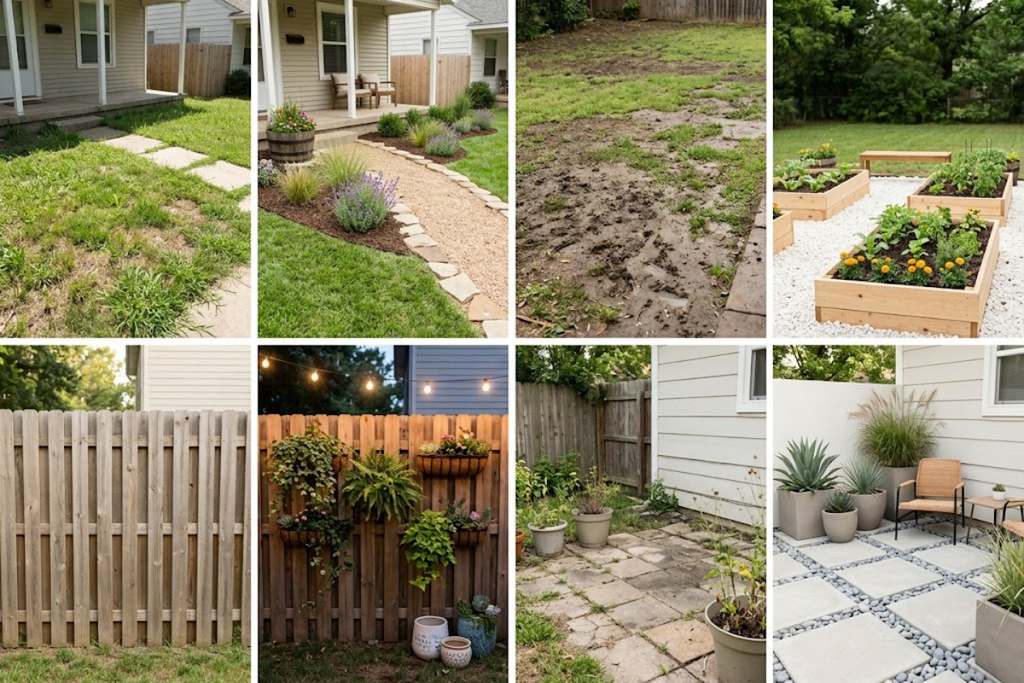
6. Turn an Unused Corner Into a Garden Bed
An empty corner doesn’t necessarily need to remain lawn. Consider converting a small section into a planting bed.
Remove the grass, loosen the soil, and add compost if needed. Then choose plants suited to the amount of sunlight the area receives. A mix of shrubs, flowering plants, and ground cover can create a low-maintenance planting area.
Start small. A six-foot garden bed can have plenty of visual impact without turning into a major weekend project.
7. Paint or Stain Old Outdoor Features
A faded wooden planter, garden bench, fence section, or trellis can make the entire yard look worn. Before replacing it, consider cleaning and refinishing it.
A fresh coat of exterior paint or stain can give an old feature a completely different appearance. Just make sure the product works for outdoor use and follow the manufacturer’s preparation instructions.
8. Add Solar Lights Along Walkways
Solar-powered pathway lights provide a simple way to make a yard easier to navigate after sunset. They don’t require electrical wiring, and many models can be installed simply by pushing them into the ground.
Place them along paths, around planting beds, or near steps. Avoid overcrowding the area with lights. A few evenly spaced fixtures can look cleaner than a row packed closely together.
9. Tackle Weeds Before Adding Anything New
New plants won’t make much difference if weeds dominate the yard. Spend part of the project pulling weeds, removing dead growth, trimming overgrown shrubs, and clearing leaves from planting areas.
This basic cleanup often produces the biggest immediate change. Once the yard looks tidy, it’s much easier to decide where new plants, mulch, paths, or decorative features actually belong.
The best DIY landscaping projects don’t have to involve digging up the entire yard. A clean edge, fresh mulch, grouped plants, a small path, and a few refreshed outdoor features can change how the space looks and feels—all without turning the weekend into a full-scale renovation.