
A small handful of almonds can look like a simple snack, but there’s quite a bit packed into those few bites. Almonds contain protein, fiber, unsaturated fats, vitamins, minerals, and other plant compounds that can make them more filling than many typical grab-and-go snacks.
Here’s what you get from roughly one ounce of almonds, or about 23 whole almonds.
1. A decent amount of protein
An ounce of almonds provides around 6 grams of protein. That may not sound like much compared with meat, eggs, or a protein shake, but it can add up when almonds become part of a meal or snack.
Pairing almonds with fruit, yogurt, or oatmeal can also create a snack with a mix of protein, fat, and carbohydrates rather than relying mainly on one type of nutrient.
2. Plenty of healthy fats
Most of the fat in almonds comes from monounsaturated and polyunsaturated fats. These types of unsaturated fat commonly appear in foods such as olive oil, avocados, seeds, and other nuts.
Almonds don’t provide much saturated fat compared with their total fat content. That makes their fat profile quite different from snacks built around butter or other sources of predominantly saturated fat.
3. Fiber that can make a snack more satisfying
An ounce of almonds contains roughly 3.5 grams of fiber. Fiber takes longer to digest than many refined carbohydrates, which can make a handful of almonds more satisfying than something like a small serving of crackers or candy.
Fiber also supports normal digestive function. If you’re trying to eat more fiber, nuts can make an easy addition to meals without requiring much preparation.
4. They pack a lot of vitamin E
Almonds rank among the better food sources of vitamin E, an antioxidant that helps protect cells from oxidative damage.
One ounce provides about 7 milligrams of vitamin E, a substantial portion of the recommended daily amount for adults. Vitamin E also plays a part in immune function and other normal processes in the body.
5. Magnesium comes along for the ride
That same handful contains roughly 75–80 milligrams of magnesium. The mineral participates in hundreds of reactions in the body, including those involved in muscle and nerve function, energy production, and blood glucose regulation.
Almonds aren’t the only way to get magnesium. Beans, whole grains, seeds, and leafy greens can contribute plenty too. Still, a regular serving of almonds can make a noticeable contribution.
6. The calorie count can sneak up on you
Here’s the part that often gets overlooked: almonds pack a lot of nutrition into a small amount of food, but they also pack a lot of calories.
An ounce contains around 165 calories. Because almonds don’t take up much space, it’s easy to eat two or three handfuls while barely noticing the portion size. Three ounces can push the total close to 500 calories.
That doesn’t make almonds a bad snack. It simply makes portion size worth paying attention to, particularly if you’re watching overall calorie intake.
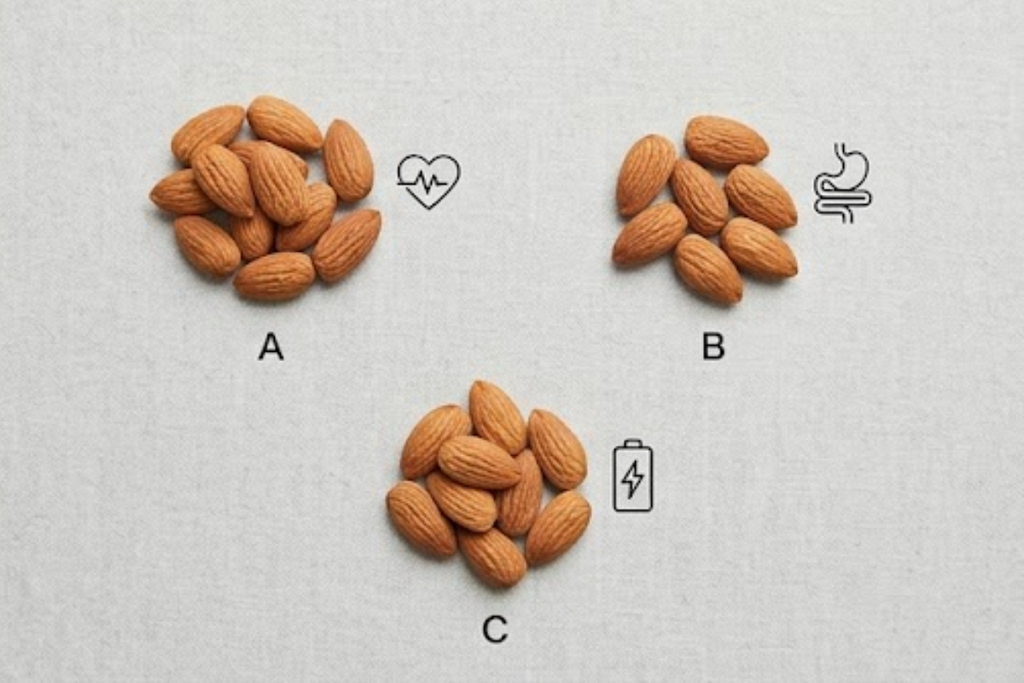
7. Whole almonds may be more satisfying than almond-flavored snacks
There’s a difference between eating whole almonds and choosing a highly processed snack that happens to contain almond ingredients. Whole almonds come with their original combination of fat, protein, fiber, and micronutrients.
The same idea applies to dietary fiber: the form and overall composition of a food can matter, not just one nutrient listed on the package.
8. A handful can fit into surprisingly different meals
Almonds don’t have to stay in the snack category. Chopped almonds can add crunch to oatmeal, yogurt, salads, roasted vegetables, or grain bowls. They can also work with fruit for a quick snack when you want something that doesn’t require cooking.
For more context on nuts and their nutritional properties, the Harvard T.H. Chan School of Public Health’s Nutrition Source provides a useful overview.
The takeaway from a handful of almonds isn’t that more equals better. Around an ounce gives you a compact combination of protein, fiber, unsaturated fat, vitamin E, magnesium, and other nutrients. The small serving size also explains why almonds can be easy to overeat.
For a food that fits in the palm of your hand, that’s a surprisingly substantial nutritional package.