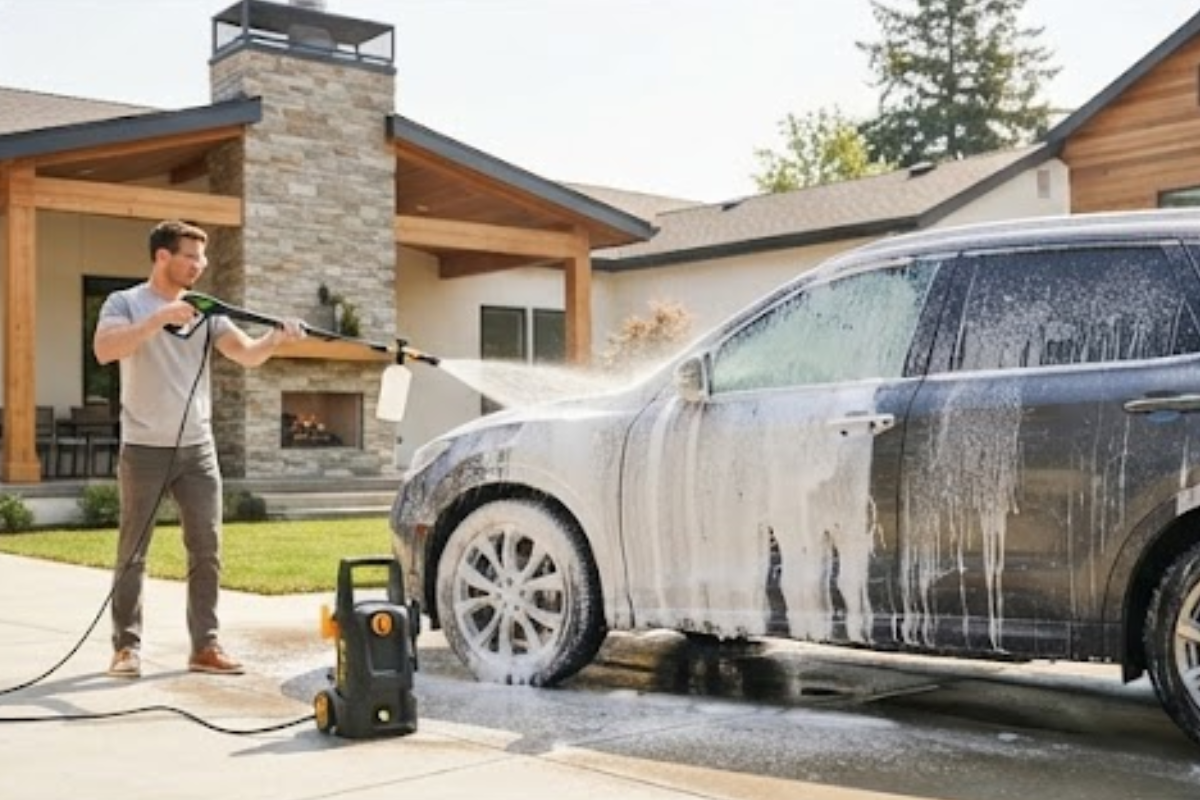
Concrete can collect an impressive amount of grime over the years. Driveways, sidewalks, patios, garage floors, and steps gradually pick up dirt, algae, mildew, tire marks, and other stains. A pressure washer can remove much of that buildup far faster than scrubbing with a brush and garden hose.
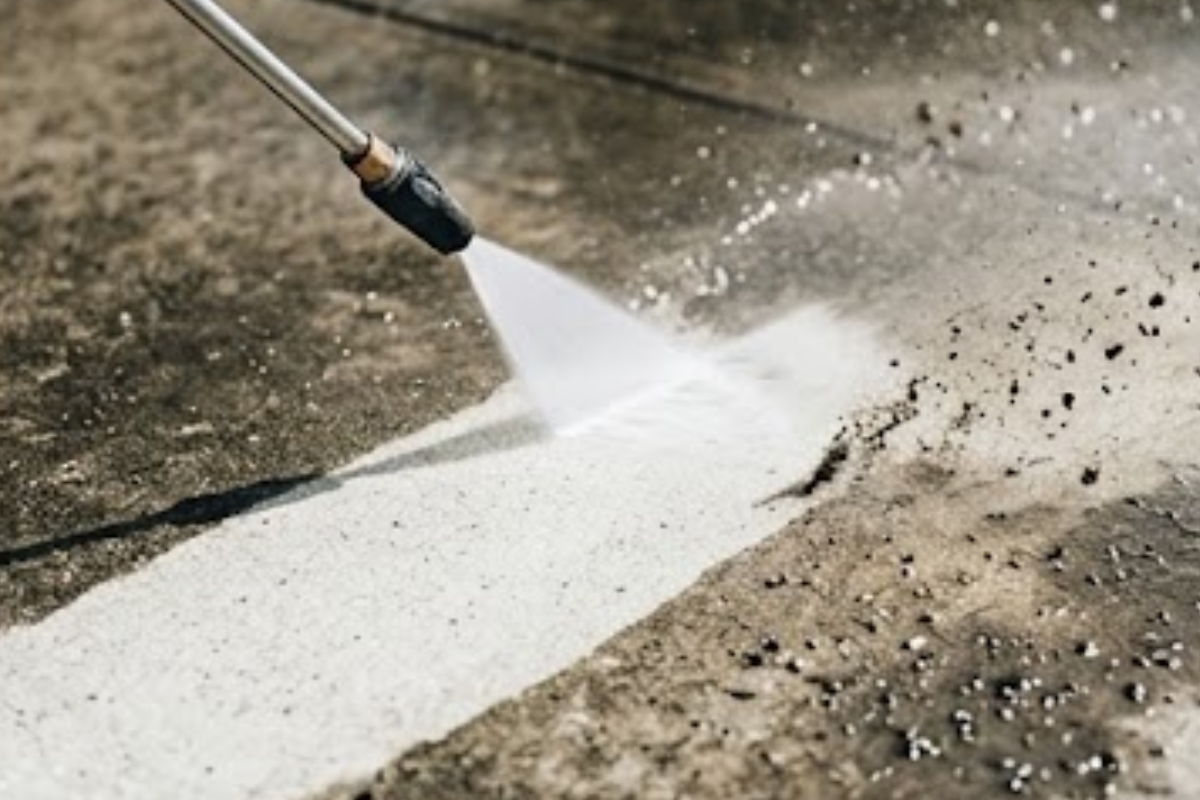
Pressure washing uses a concentrated stream of water to break loose dirt and grime from hard surfaces. Pressure washing The trick comes down to using enough pressure to clean the concrete without damaging its surface.
1. Start by Clearing the Concrete
Before turning on the pressure washer, remove everything sitting on the concrete. Move patio furniture, planters, toys, vehicles, hoses, and other objects out of the way.
Sweep the area with a stiff-bristle broom or use a leaf blower to remove loose dirt, leaves, gravel, and debris. Small pieces of stone can become dangerous projectiles when hit by high-pressure water.
Take a few minutes to inspect the concrete, too. Look for cracks, loose sections, crumbling edges, or areas where the surface has already started to deteriorate.
2. Choose the Right Pressure
More pressure doesn’t automatically mean better cleaning.
For older concrete with heavy dirt buildup, a machine producing around 2,000 to 3,000 PSI can provide enough cleaning power for most residential jobs. Recent guidance from Bob Vila recommends staying around this range to remove driveway grime while reducing the risk of etching the concrete.
Flow rate matters as well. A machine with higher gallons per minute (GPM) can move dirty water away more quickly, which makes large driveways and patios faster to clean.
If you’re unsure about your machine, start at a lower pressure and test an inconspicuous area first.
3. Pretreat Years of Grime
Pressure washing alone works well on loose dirt, but old stains may need some help.
Apply a concrete-safe cleaner to particularly dirty sections. Let it sit for several minutes according to the cleaner’s instructions, giving it time to break down the grime.
Oil and grease spots usually need a degreaser and some scrubbing before pressure washing. Algae and mildew may also respond better to a suitable outdoor cleaner than to water alone.
Avoid using harsh acids on concrete. The wrong chemical can damage or discolor the surface. Bob Vila’s concrete-cleaning guide also recommends soaking nearby plants with water before applying cleaning solutions.
4. Use a Surface Cleaner for Large Areas
If you’re cleaning an entire driveway or patio, consider attaching a pressure washer surface cleaner.
This round attachment has rotating spray nozzles underneath a protective housing. Instead of moving a single jet back and forth, the spinning nozzles clean a wider section as you move the attachment across the concrete.
There’s another benefit: a surface cleaner can produce a more uniform result. Using a pressure washer wand alone can leave visible stripes or darker lines if the spray pattern overlaps unevenly.
For large flat surfaces, this attachment can turn a tedious job into a much more manageable one.
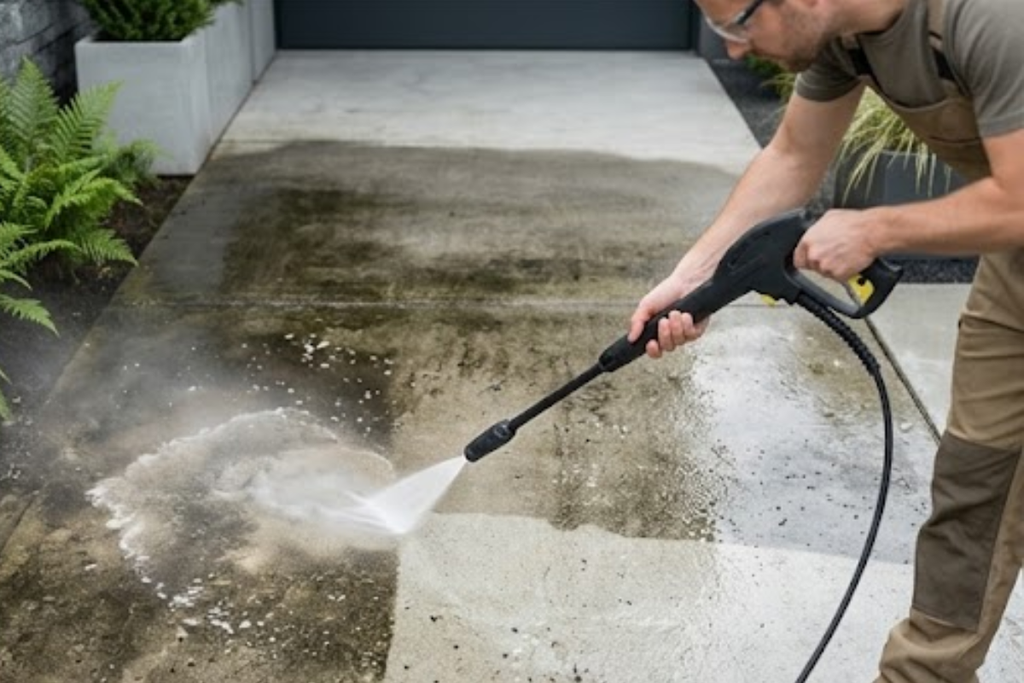
5. Keep the Wand Moving
When using the regular pressure washer wand, don’t hold the spray in one spot.
Keep the nozzle roughly 12 to 18 inches from the concrete and work in overlapping passes. A 25-degree nozzle provides a useful balance for general concrete cleaning. A wider spray pattern can be used for rinsing.
Start at the highest point and work toward the lowest point. On a driveway, that usually means working from the area closest to the garage toward the street.
Move steadily rather than racing across the surface. Extremely slow passes can etch the concrete, while extremely fast passes may leave dirt behind.
6. Rinse Thoroughly
After cleaning each section, rinse away the loosened dirt and detergent.
A wider spray pattern works well for this stage. Pay particular attention to cracks, expansion joints, corners, and edges where dirty water can collect.
Once everything dries, you may notice a few darker spots that need another pass. That’s normal with heavily neglected concrete. Spot-clean those areas rather than repeatedly pressure washing the entire surface.
7. Protect the Concrete After Cleaning
Once the concrete has completely dried, inspect the finished surface. If the concrete remains in good condition, a suitable sealer can help reduce future staining and make subsequent cleaning easier.
Don’t pressure wash freshly poured concrete. New concrete needs time to cure before aggressive cleaning. Also avoid pointing a narrow, high-pressure stream directly at damaged or crumbling sections.
With the right pressure, a suitable cleaner, and patient overlapping passes, years of accumulated dirt can come off concrete without turning the job into an all-day scrubbing project.