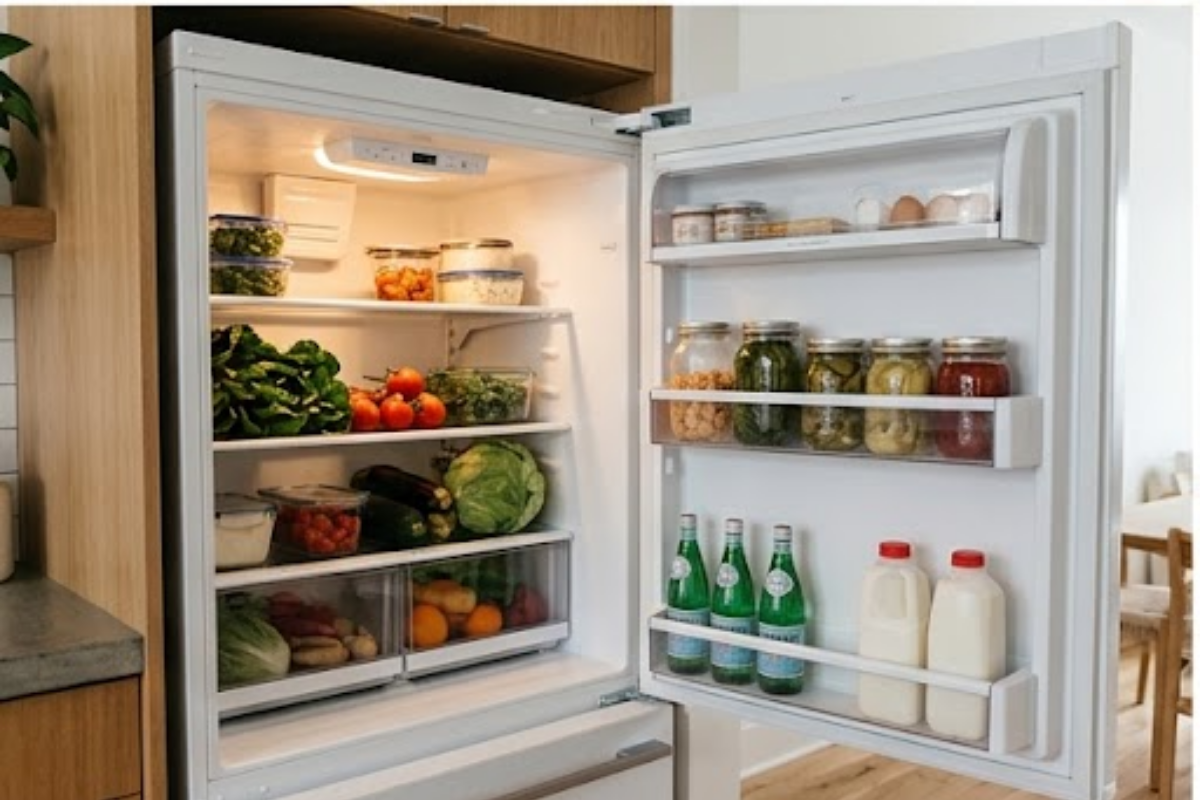
Your refrigerator runs around the clock, so even a small efficiency problem can add to your electricity use over time. A fridge that suddenly seems louder, runs longer, or struggles to maintain a steady temperature may be working harder than necessary.
Before assuming the appliance needs to be replaced, look for these signs.
1. The refrigerator runs almost constantly
A refrigerator naturally cycles on and off throughout the day. But if you rarely hear it stop, something may be making it work harder.
Dirty condenser coils, poor airflow, a damaged door seal, an overly warm kitchen, or an incorrect temperature setting can all increase the workload. ENERGY STAR recommends keeping the refrigerator around 35–38°F and leaving enough space around the appliance for air circulation.
If the compressor seems to run for hours at a time, check the easier-to-fix problems first.
2. Your electricity bill has gone up without a clear reason
A refrigerator won’t usually cause a dramatic jump in your electric bill by itself, but an older or poorly maintained unit can consume noticeably more power.
ENERGY STAR notes that older refrigerators can use substantially more energy than newer certified models. Refrigerators more than 15 years old may also cost more to operate than newer units.
If your household electricity use hasn’t changed much but your bill keeps climbing, the fridge deserves a closer look.
3. The sides or back feel unusually hot
Refrigerators remove heat from inside the cabinet and release it into the surrounding room. Because of that, some warmth around the exterior is normal.
Excessive heat, however, can point to poor heat transfer or restricted airflow. Dust-covered condenser coils can make it harder for the refrigerator to release heat, forcing the cooling system to work longer.
Check whether the refrigerator sits too close to a wall, oven, or other heat-producing appliance.
4. The door seal feels loose
The rubber gasket around the refrigerator door should create a tight seal when the door closes. If it’s cracked, warped, dirty, or no longer gripping properly, cold air can escape continuously.
Try the simple paper test: close the door on a sheet of paper and pull it. If the paper slides out with almost no resistance, inspect the gasket more closely.
A worn seal can cause the refrigerator to run more frequently because it has to replace the cold air escaping around the door.
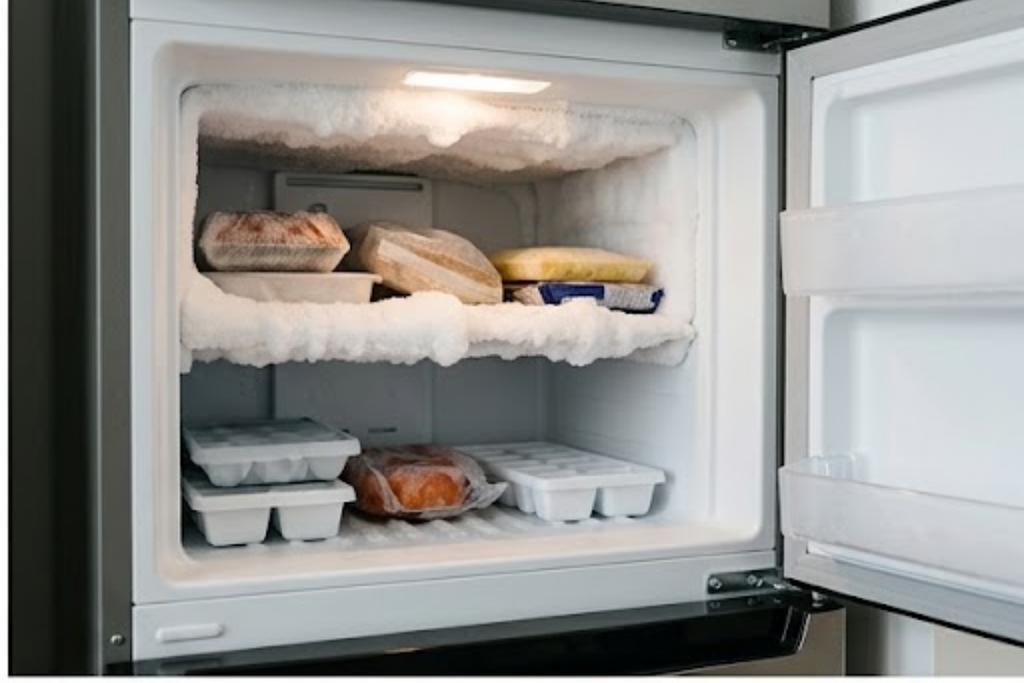
5. Frost keeps building up inside the freezer
A little frost can happen, but persistent or heavy frost deserves attention.
Warm, humid air entering through a faulty door seal can create frost buildup. In some refrigerators, excess frost can also interfere with normal airflow and cooling performance.
If you have an older manual-defrost freezer, regular defrosting can prevent a thick layer of ice from reducing usable space and cooling efficiency.
6. Food isn’t staying consistently cold
A refrigerator that struggles to maintain its temperature may need to run longer to compensate.
Check the temperature setting first, then make sure food isn’t blocking interior vents. Overloading the refrigerator can restrict air circulation, while leaving it nearly empty can also make temperature control less stable.
For context on how refrigeration works, a refrigerator uses a heat pump to move heat from inside the cabinet to the surrounding environment.
7. You hear unusual or increasingly loud noises
Refrigerators naturally make sounds as compressors, fans, and defrost systems cycle. A sudden change in those sounds, though, can indicate a mechanical problem.
Buzzing, rattling, clicking, or a fan that seems to run continuously may deserve inspection. The cause isn’t always related to energy use, but a component that isn’t operating properly can make the refrigerator work harder.
8. The condenser coils look dusty
This is one of the easiest things to check.
Depending on the model, condenser coils may sit behind the refrigerator or underneath it. Dust, pet hair, and debris can accumulate around them and interfere with heat release.
Unplug the refrigerator before cleaning and follow the manufacturer’s instructions. A vacuum or appropriate coil brush can remove loose buildup. ENERGY STAR specifically recommends keeping condenser coils clean on older models.
9. The refrigerator is sitting in a hot spot
Location can affect energy consumption more than many people realize.
A refrigerator positioned next to an oven, exposed to strong sunlight, or placed in a poorly ventilated area has to deal with more surrounding heat. That can increase the amount of work required to keep the interior cold.
If moving the appliance isn’t practical, make sure it has the clearance recommended by the manufacturer.
10. Your refrigerator is simply very old
Age doesn’t automatically mean a refrigerator wastes energy, but older models generally have less efficient technology than newer refrigerators.
If the appliance is more than 15 years old and you’re also seeing several of the signs above—constant cycling, poor cooling, damaged seals, excessive frost, or rising electricity consumption—it may be worth comparing its estimated annual energy use with newer models.
A refrigerator doesn’t need to be replaced simply because it’s old. But when several warning signs appear together, checking its energy consumption can help determine whether keeping it running still makes financial sense.
For practical repair ideas, The Spruce’s refrigerator repair guide covers common problems involving door gaskets, condenser coils, airflow, temperature settings, and unusual noises.