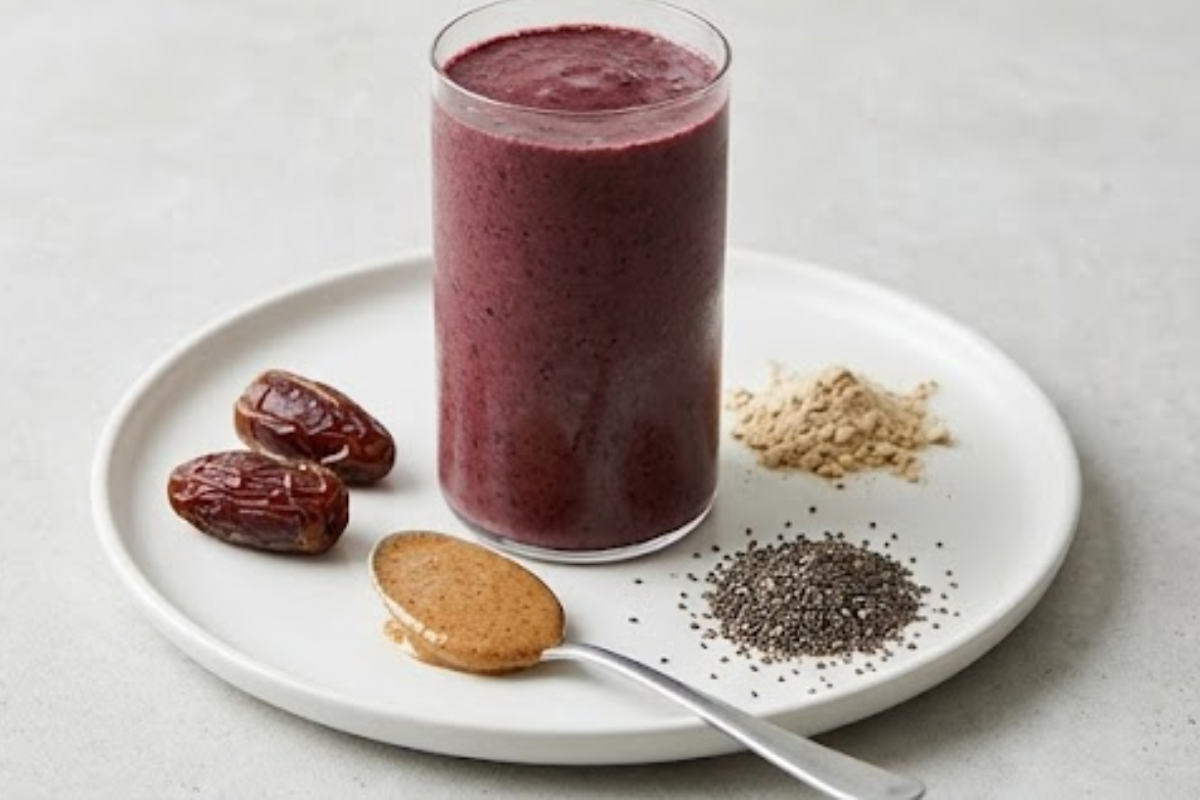
Smoothie calories can be surprisingly high compared with popular breakfast foods such as eggs or toast. A smoothie comes in a glass, often contains fruit or vegetables, and can feel more like a snack than a meal.
The calorie count, however, depends almost entirely on what goes into the blender.
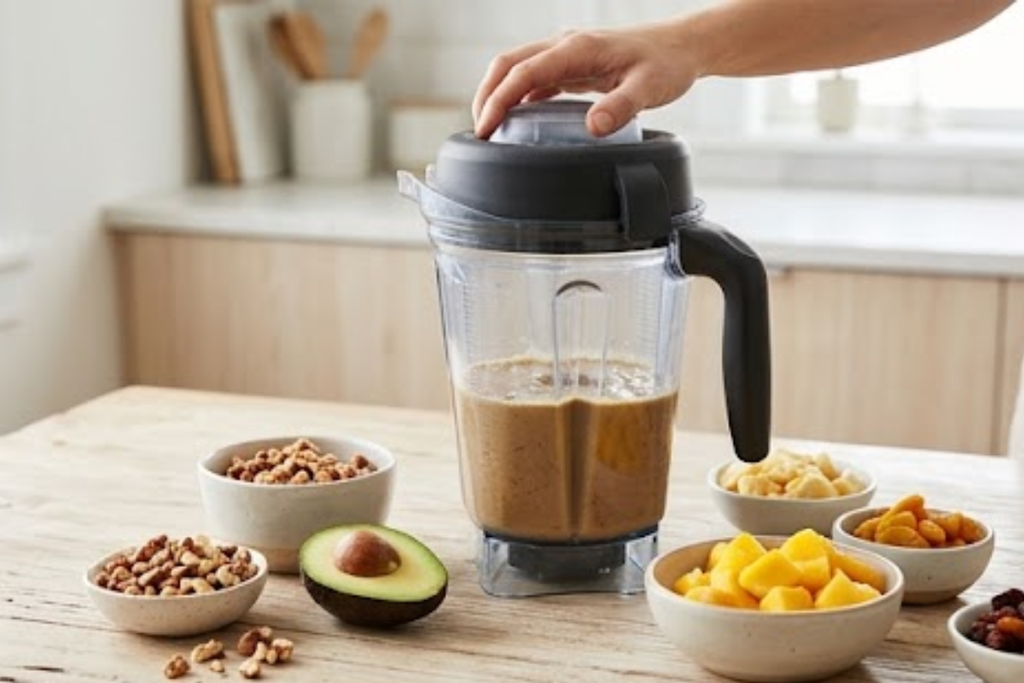
A homemade smoothie with fruit, spinach, ice, and water can be relatively light. Add whole milk, Greek yogurt, peanut butter, oats, honey, protein powder, avocado, and a second banana, and that same drink can quickly turn into a 700- or 800-calorie meal.
That happens because smoothies make it easy to combine several calorie-dense foods in one serving.
Why Smoothie Calories Add Up Quickly
A typical smoothie might start with a banana and a cup of berries. Those ingredients provide carbohydrates, fiber, vitamins, and minerals, but they also bring calories.
Then comes the liquid. Milk, coconut milk, fruit juice, or a sweetened plant-based milk can add another 50 to 200 calories depending on the amount and type.
The calorie count can climb further with toppings and add-ins. A spoonful of peanut butter, for example, can add around 90 calories. Oats, chia seeds, flaxseed, protein powder, honey, dates, and avocado can each add more.
None of these foods need to be avoided. The issue comes from stacking several calorie-dense ingredients into one glass without realizing how much has gone in.
Why Liquid Smoothie Calories Are Easy to Miss
One reason smoothies can feel deceptively light comes from the way they are consumed.
Eating a bowl containing a banana, berries, yogurt, nuts, and oats makes the individual portions easy to see. Put those same foods into a blender and they become one drink.
That can make a large amount of food feel surprisingly small.
Smoothies also commonly use juice as the liquid base. Fruit juice can add calories and sugar without providing the same amount of fiber found in whole fruit. Cleveland Clinic recommends keeping juice portions modest and using options such as water or unsweetened milk when appropriate.
Healthy Ingredients Still Affect Smoothie Calories
The phrase “healthy smoothie” can create another problem: assuming that every ingredient has a negligible calorie count.
Peanut butter, nuts, seeds, avocado and full-fat yogurt can all fit comfortably into a balanced diet. They also contain calories from fat, which makes them more energy-dense than foods such as leafy greens or berries.
Consider a smoothie containing:
- 1 banana
- 1 cup berries
- 1 cup whole milk
- 2 tablespoons peanut butter
- ½ cup Greek yogurt
- ½ cup oats
- 1 tablespoon honey
Depending on the exact products and portions, that combination can easily reach several hundred calories before any toppings are added.
Healthline notes that smoothies can range from snack-sized drinks to versions exceeding 1,000 calories, depending on ingredients and serving size.
Smoothie Size Changes the Calorie Count
Portion size can quietly change the math.
A 12-ounce smoothie and a 32-ounce smoothie may contain many of the same ingredients, but the larger drink can contain several times as much food.
Restaurant and smoothie-shop drinks can also contain more than one serving’s worth of fruit, dairy, sweeteners, nut butter or other add-ins. A drink that looks like one item on a menu can therefore contain enough calories to replace a full meal.
For anyone trying to keep track of calorie intake, checking the nutrition information and serving size can tell a very different story from judging the drink by its appearance.
Blending Does Not Lower Smoothie Calories
Blending changes the texture of food, not its calorie content.
A banana does not become lower in calories because it gets blended. Neither do oats, peanut butter, yogurt, or dates.
What changes is how quickly several foods can be consumed. A smoothie containing five or six ingredients can go down in a few minutes, even though eating those ingredients separately might take considerably longer.
That doesn’t mean smoothies automatically cause overeating. Research summarized by Healthline suggests smoothies can work as meals or snacks when their calories fit into a person’s overall needs.
How to Make a Lower-Calorie Smoothie
The easiest way to control calories isn’t necessarily to remove every ingredient associated with nutrition. It can be as simple as choosing fewer calorie-dense additions.
For example, use whole fruit for sweetness instead of honey or syrup, choose unsweetened milk, add plenty of ice, and measure ingredients such as peanut butter, seeds and oats instead of pouring them in by eye.
A smoothie built around fruit, vegetables, a reasonable protein source and a measured amount of fat can work well as a snack or meal.
The bigger lesson is that smoothie calories depend on the complete recipe and serving size. Once multiple calorie-dense ingredients land in the blender, a drink that looks light can contain as many calories as—or more than—a traditional meal.
2 thoughts on “Why Smoothies Can Contain More Calories Than a Full Meal”