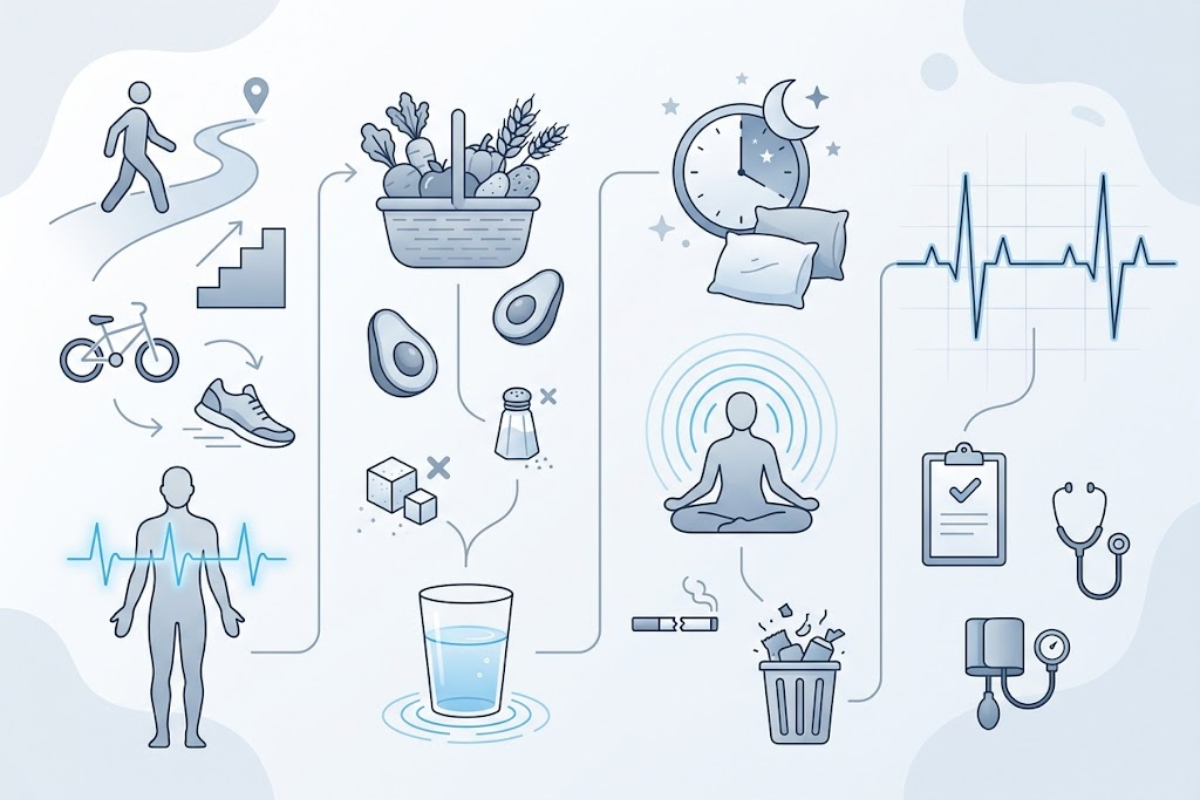
Heart healthy habits are built throughout an ordinary day, not only during a workout or at the doctor’s office. Many of the routines that fill an ordinary day—from what you eat at lunch to how long you sit at your desk—can influence blood pressure, cholesterol, sleep and other factors connected with cardiovascular health.
Some habits may seem harmless because they happen gradually. Here are 10 everyday behaviors worth paying attention to.
Heart healthy habits: break up long sitting
A long workday at a desk, followed by several hours on the couch, can add up to a lot of sedentary time. Research has linked prolonged sitting with higher risks of heart disease and stroke, even among people who exercise regularly.
Try breaking up long stretches of sitting by standing, walking around the office, taking the stairs or doing a few household chores.
2. Eating more sodium than you realize
Sodium can hide in everyday foods such as canned soups, deli meats, frozen meals, sauces, chips and restaurant dishes. Regularly consuming too much sodium can make it harder to keep blood pressure under control.
Checking nutrition labels and choosing more fresh or minimally processed foods can make a difference. Mayo Clinic recommends limiting salt along with saturated fat, added sugar and highly processed foods as part of a heart-conscious eating pattern.
3. Treating sleep as optional
Staying up late to finish work, watch television or scroll through your phone can turn into a regular routine. Adults generally need about seven to nine hours of sleep each night, and consistently poor sleep has been associated with several cardiovascular risk factors.
A consistent bedtime and wake-up schedule can make getting enough sleep easier. Try these everyday habits for better sleep.
4. Skipping physical activity because you’re “too busy”
Exercise doesn’t have to mean spending an hour at the gym. Walking the dog, gardening, taking the stairs or doing household chores can all add movement to the day. Mayo Clinic recommends at least 150 minutes of moderate aerobic activity each week for most adults, along with strength training.
Short bursts of activity can also help when a full workout doesn’t fit the schedule. A regular walking routine is one accessible way to add movement.
5. Using food to deal with stress
A stressful day can make salty snacks, sweets or fast food especially tempting. The problem comes when occasional comfort eating turns into a routine.
Stress can also make people less active, smoke more, drink more alcohol or sleep poorly—all habits associated with cardiovascular risk.
A walk, workout, hobby, breathing exercise or conversation with someone you trust can provide another way to decompress.
6. Smoking “only occasionally”
There isn’t a harmless version of tobacco use. Cigarette smoke contains chemicals that can damage blood vessels, raise heart rate and make the heart work harder. Secondhand smoke also deserves attention.
For people who smoke, quitting can improve cardiovascular health even after years of use.
7. Drinking more alcohol than intended
A drink with dinner or on the weekend may seem unrelated to heart health, but regular heavy drinking can raise blood pressure, increase triglycerides and contribute to irregular heart rhythms.
Paying attention to how often and how much you drink can help keep the habit from becoming routine. Alcohol also appears among the common AFib triggers some people report.
8. Ignoring your blood pressure
High blood pressure can develop without obvious symptoms, which makes it easy to overlook. Regular checks can reveal whether your numbers are moving in the wrong direction.
Mayo Clinic recommends adults have their blood pressure checked regularly, with more frequent monitoring for people with certain risk factors.
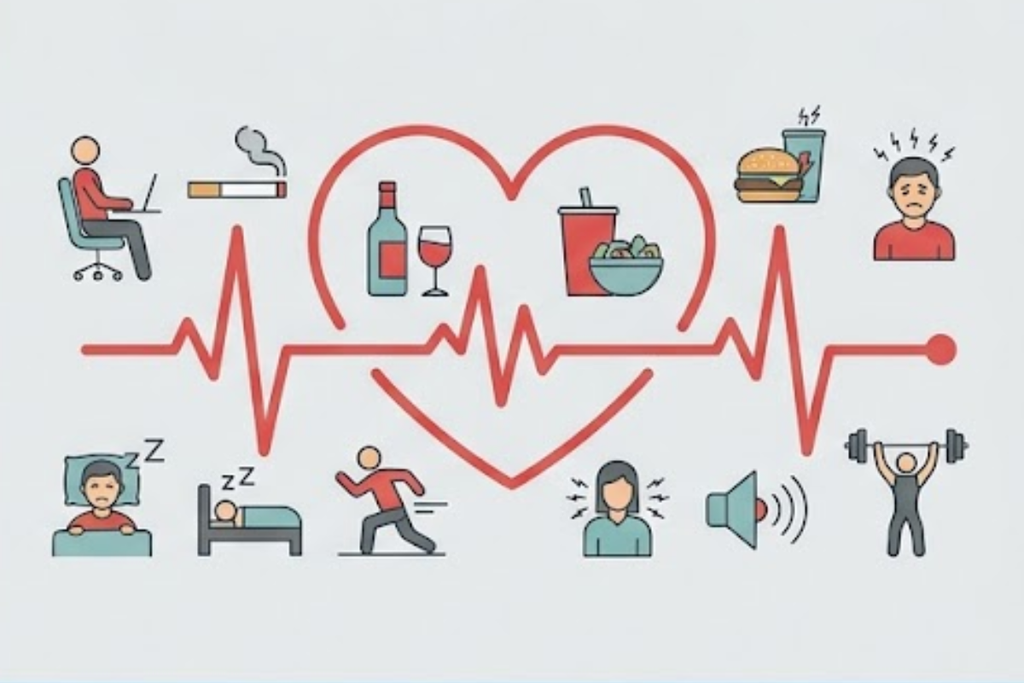
9. Assuming a healthy-looking diet automatically means a heart-friendly diet
A meal can look healthy while still containing plenty of sodium, added sugar or saturated fat. On the other hand, simple foods such as vegetables, fruits, whole grains, beans, fish, nuts and healthy fats can fit comfortably into a heart-conscious eating pattern.
Learning to read nutrition labels can reveal what you’re actually getting from foods you eat regularly.
10. Putting off routine health screenings
You can’t always tell when cholesterol or blood pressure has started creeping upward. Routine screening gives you information before a problem becomes more difficult to manage.
For adults, cholesterol testing and blood pressure checks form part of routine cardiovascular risk assessment. People with certain conditions or family histories may need testing more often.
Small routines can add up
Heart health isn’t determined by one meal, one missed workout or one late night. Daily patterns matter more than isolated choices. Paying attention to movement, sleep, food, stress, tobacco, alcohol and routine health checks can help create habits that support cardiovascular health over time.
Consistent heart healthy habits—including movement, balanced meals, adequate sleep, and routine screenings—can support cardiovascular health over time.


One thought on “10 Everyday Habits That Can Quietly Affect Heart Health”