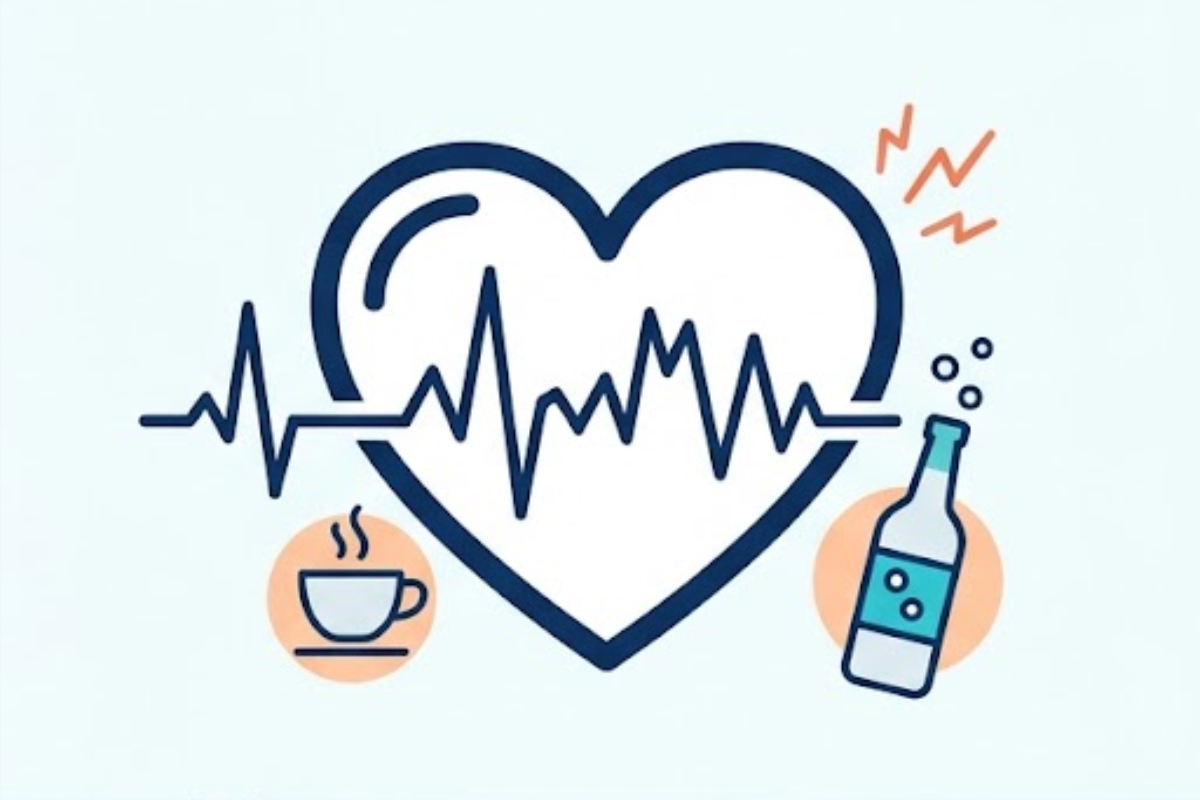
Common AFib triggers can include alcohol, poor sleep, dehydration, stress, illness, and certain medications, although episodes sometimes seem to appear out of nowhere. Atrial fibrillation, or AFib, can be unpredictable. One day your heartbeat feels normal, and the next you may notice fluttering, pounding, racing or an irregular rhythm. For some people, certain situations or habits seem to make episodes more likely.
Not everyone with AFib has the same triggers. Keeping track of what happens before an episode can make patterns easier to spot. Here are 10 common triggers worth paying attention to.
Common AFib triggers: alcohol
Alcohol ranks high on the list of potential AFib triggers. Drinking heavily or having several drinks in a short period can make an episode more likely. Some people notice symptoms after even smaller amounts.
If you have AFib, pay attention to whether episodes tend to follow nights when you drink. Reducing alcohol or avoiding it altogether may help if you notice a connection.
2. Too Much Caffeine
Coffee doesn’t automatically trigger AFib for everyone. The American Heart Association notes that normal amounts of coffee generally shouldn’t trigger AFib, although excessive caffeine and energy drinks may be different.
If your heart starts racing after several cups of coffee, energy drinks or other heavily caffeinated beverages, consider tracking the amount and timing.
For more background, see atrial fibrillation.
3. Stress and Anxiety
A stressful meeting, argument, difficult day or prolonged period of anxiety can sometimes precede an AFib episode. Stress can affect heart rate and the body’s nervous system, which may make irregular rhythms more noticeable or easier to trigger in some people.
Stress management techniques such as slow breathing, meditation and regular physical activity may help reduce the frequency of stress-related symptoms.
4. Poor Sleep
A few late nights may do more than leave you tired the next morning. Poor sleep has been linked with AFib episodes, and sleep apnea can also increase the risk of AFib.
If you regularly wake up gasping, snore heavily or feel exhausted despite getting enough hours in bed, it may be worth discussing sleep quality with a healthcare professional. These habits that support better sleep may also help improve your routine.
5. Dehydration
Not drinking enough fluids can sometimes coincide with heart palpitations and irregular rhythms. Dehydration may become more likely during hot weather, illness, heavy sweating or long periods of physical activity.
Pay particular attention after exercise or when you’re sick. Replacing lost fluids can help, especially if dehydration repeatedly appears before symptoms.
6. Intense Exercise
Regular exercise generally benefits heart health, but very intense workouts can trigger symptoms in some people with AFib. High-intensity endurance training may also increase AFib risk when performed at extreme levels over long periods.
That doesn’t mean you should stop exercising. Instead, notice whether certain workouts consistently precede an episode and discuss appropriate exercise intensity with your healthcare provider.
7. Smoking and Tobacco
Nicotine and tobacco products can affect heart rate and the cardiovascular system. Smoking also raises the risk of cardiovascular conditions associated with AFib. Reviewing everyday habits that affect heart health can highlight other risk factors.
If you notice palpitations after smoking or using other tobacco products, that’s another pattern worth recording.
8. Certain Cold Medicines
Some over-the-counter cold and allergy products contain stimulants that can affect heart rhythm. Decongestants containing pseudoephedrine, for example, can contribute to abnormal heart rhythms in some people.
Before taking a new cold, cough or decongestant product, check the active ingredients and ask your healthcare provider or pharmacist whether it’s appropriate with your heart condition.
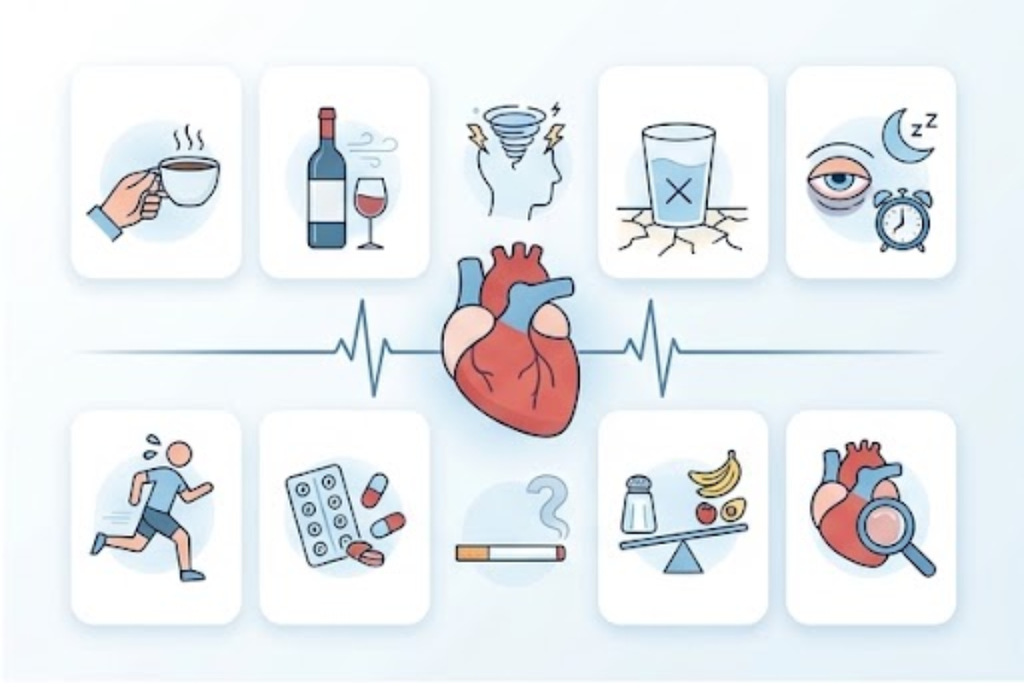
9. Heavy or Highly Processed Meals
What you eat may also matter. Caffeine and alcohol receive much of the attention, but some people notice palpitations after large meals or foods high in fat, sugar or carbohydrates. Highly processed and high-sodium foods can also be worth watching.
Rather than eliminating specific foods automatically, keep a simple record of meals followed by symptoms. This can help reveal whether certain foods repeatedly coincide with episodes.
10. Illness, Fever or Electrolyte Changes
Being sick can put extra stress on the body. Fever, infection, dehydration and changes in electrolytes can all affect heart rhythm. This can make episodes more likely in someone who already has a tendency toward arrhythmias.
If AFib appears during or shortly after an illness, don’t automatically assume the illness caused it. Several factors can overlap, including dehydration, poor sleep and medication use.
Look for Your Personal Pattern
Common AFib triggers vary from one person to another, and sometimes an episode has no obvious trigger at all. Knowing the early signs of AFib can also help you recognize and describe symptoms. A simple log can help: record what you ate and drank, how much you slept, your activity level, stress, medications and when symptoms began.
The goal isn’t to blame every episode on something you did. Instead, recognizing recurring patterns can give you useful information to discuss with your healthcare provider. Cleveland Clinic also recommends paying attention to activities or habits that appear to trigger an abnormal rhythm.
For another practical guide, see Cleveland Clinic’s AFib diet and food guide.


One thought on “10 Common AFib Triggers Worth Paying Attention To”