Your heart keeps working whether you’re walking, exercising, watching TV or sleeping. One simple number can show how hard it works while your body is at rest: your resting heart rate.
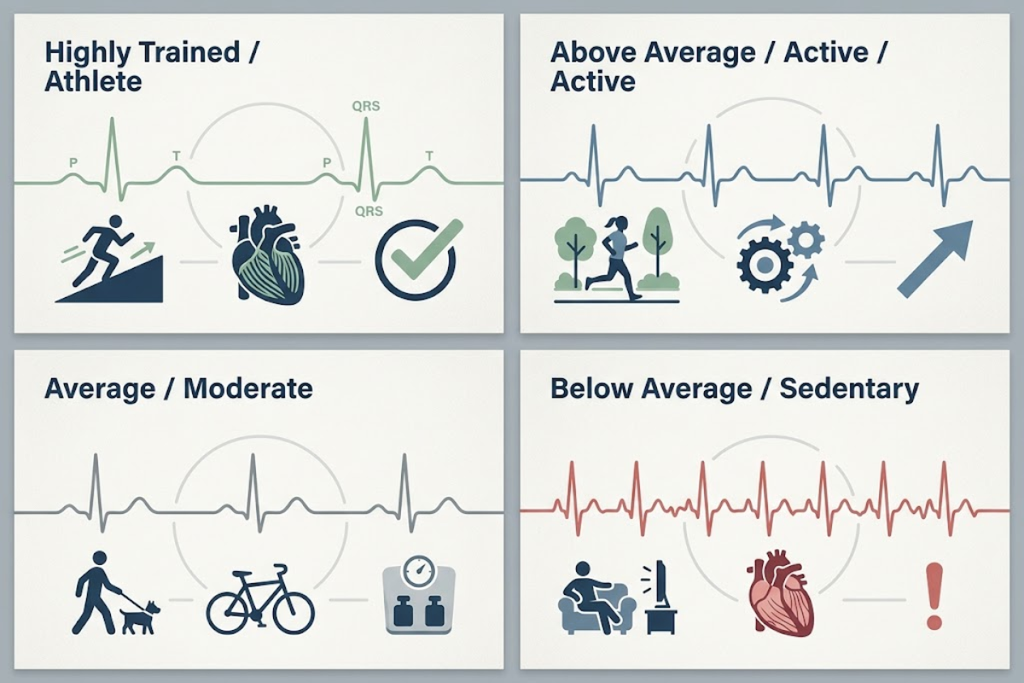
For most adults, a resting heart rate between 60 and 100 beats per minute (bpm) falls within the typical range. People who exercise regularly, particularly endurance athletes, may have lower numbers because their hearts can pump more blood with each beat.
That doesn’t mean a lower number automatically equals better fitness. Your resting heart rate can change for plenty of reasons, including sleep, stress, caffeine, alcohol, medications and illness.
What a lower resting heart rate may mean
Regular aerobic exercise can make the heart more efficient. As cardiovascular fitness improves, the heart may pump more blood with each contraction, reducing how often it needs to beat while you’re resting.
For someone who exercises consistently, a resting rate in the 50s may be perfectly normal. Highly trained athletes can sometimes have resting rates in the 40s.
The important part involves context. A low reading in a fit person who feels well can mean something very different from a suddenly low reading accompanied by dizziness or unusual fatigue.
Your Usual Number Matters More Than One Reading
Checking your heart rate once gives you a snapshot. Tracking it over time can tell you much more.
Suppose your usual resting heart rate sits around 62 bpm. After several weeks of regular exercise, including a consistent walking routine for fitness and weight loss, you might notice it gradually moving into the high 50s. That change can accompany improved cardiovascular conditioning.
The opposite can also happen. If your usual number suddenly rises from the low 60s to the 80s or 90s, it may have nothing to do with losing fitness. Poor sleep, stress, dehydration, illness, alcohol, and caffeine can all push resting heart rate higher. Several of these also appear among common AFib triggers.
A Higher Number May Give You Something to Investigate
A resting heart rate toward the upper end of the normal range doesn’t automatically mean you’re out of shape. Someone who rarely exercises may naturally have a higher resting rate than a well-conditioned person, but many other factors can affect the number.
Stress provides one common example. When your body remains in a more alert state, your heart rate can rise. Poor sleep can have a similar effect. Certain medications and health conditions can also change resting heart rate.
If your number stays noticeably higher than usual for several days, it may be worth paying attention to what else has changed.
How You Measure It Matters
For a useful comparison, measure your resting heart rate under similar conditions each time.
A practical approach involves checking it shortly after waking, before getting out of bed or drinking coffee. You can use a fitness watch or place two fingers on your wrist and count the beats for 30 seconds, then multiply by two.
Try not to compare a post-workout reading with your morning number. Your heart rate naturally rises during physical activity.
For more background, you can read about resting heart rate and how it relates to cardiovascular function.
Fitness Depends on More Than One Number
Resting heart rate can provide a useful clue about cardiovascular conditioning, but it cannot tell the whole story.
Your ability to walk or run longer, recover between workouts, maintain a steady pace and perform everyday activities without becoming unusually winded also matters. Two people with identical resting heart rates can have very different fitness levels.
That’s why a trend can be more useful than chasing a particular target number.
When a Low Heart Rate Deserves Attention
A resting rate below 60 bpm falls into the clinical definition of bradycardia, although healthy, physically active people can naturally have lower rates.
A low number becomes more concerning when it comes with symptoms such as dizziness, fainting, unusual weakness, shortness of breath or chest discomfort. A new or persistent change from your normal pattern also deserves attention. Review the early signs of AFib if an irregular pulse appears with other symptoms.
A resting heart rate above 100 bpm can likewise warrant evaluation, particularly when it repeatedly occurs at rest or comes with symptoms.
For another useful read, Cleveland Clinic’s guide to heart rate explains normal ranges and the factors that can make resting heart rate rise or fall.
Your resting heart rate can offer a small window into your fitness, especially when you track it consistently. Rather than treating one reading as a score, look at your usual range, how it changes with exercise and recovery, and how you feel alongside the number.


One thought on “What Your Resting Heart Rate May Say About Your Fitness”