The Greek vs regular yogurt comparison often comes down to protein, sugar, texture, and nutritional goals. Although both begin as milk fermented with beneficial bacterial cultures, Greek yogurt undergoes additional straining that changes its consistency and nutritional profile. So, is one genuinely better? The answer depends on your dietary preferences, nutrition needs, and how you plan to use it.
So, is Greek yogurt better than regular yogurt? The answer depends on your nutritional goals, dietary preferences, and how you plan to use it.

Greek vs Regular Yogurt: Key Differences
Both Greek yogurt and regular yogurt start the same way. Milk is fermented with beneficial bacterial cultures that convert lactose into lactic acid, giving yogurt its characteristic tangy flavour and creamy texture.
The key difference comes after fermentation.
Greek yogurt is strained several times to remove much of the liquid whey. This process creates a thicker, creamier texture while concentrating certain nutrients. Regular yogurt retains more of its natural liquid, resulting in a smoother and lighter consistency.
Because of this extra straining step, the nutritional values of the two can differ noticeably.
Which Yogurt Has More Protein?
One of the biggest advantages of Greek yogurt is its higher protein content.
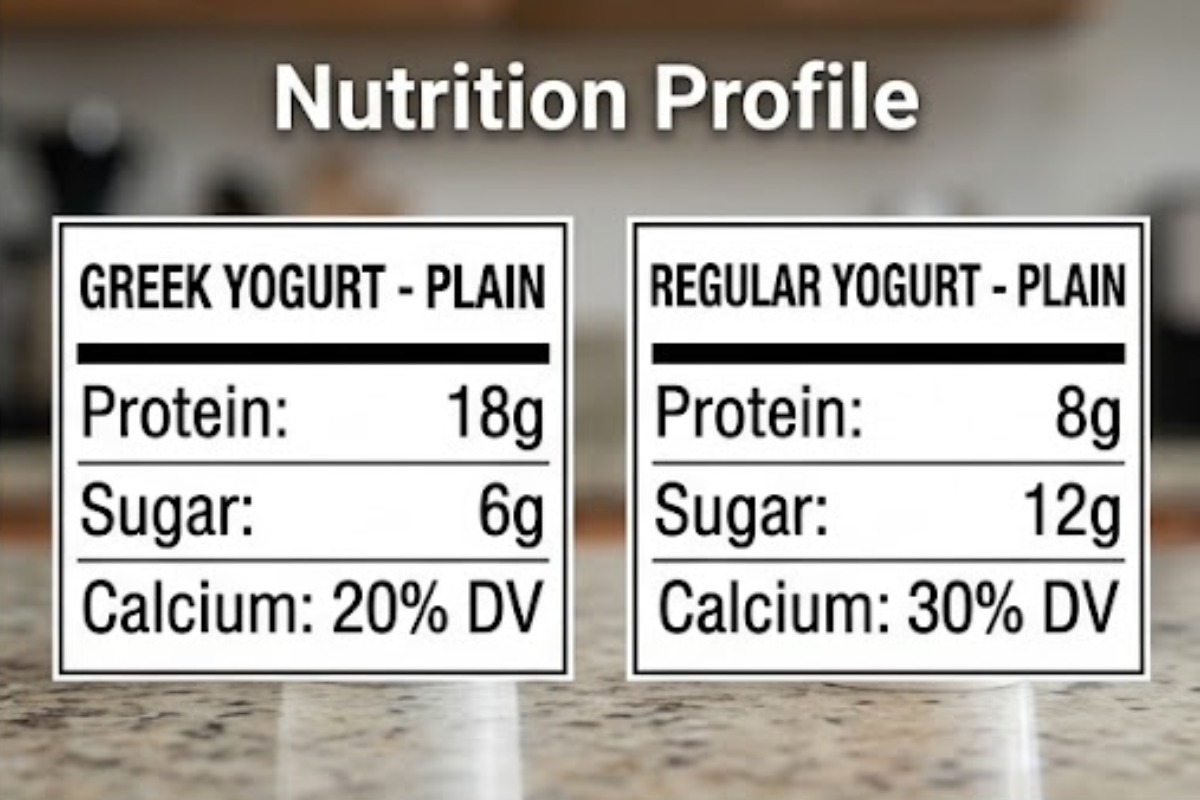
A typical serving of plain Greek yogurt often contains nearly twice as much protein as the same serving of regular yogurt. Protein plays an important role in:
- Supporting muscle maintenance and repair
- Helping you feel fuller for longer
- Contributing to a balanced diet
People looking to increase protein intake, such as active individuals or those trying to stay satisfied between meals, may prefer Greek yogurt for this reason.
Greek and Regular Yogurt: Carbs and Sugar
Since some of the lactose (milk sugar) is removed with the whey during straining, plain Greek yogurt generally contains fewer carbohydrates than regular yogurt.
However, the difference becomes much less meaningful if you’re choosing flavoured varieties, which often contain added sugars.
When comparing products, it’s worth reading the nutrition label and ingredient list rather than assuming all Greek yogurts are lower in sugar.
Fat content depends on the variety
Many people assume Greek yogurt is always higher in fat, but that’s not necessarily true.
Both regular and Greek yogurt are available in several options, including:
- Fat-free
- Low-fat
- Reduced-fat
- Full-fat
The fat content depends on the milk used during production, not simply whether the yogurt is Greek or regular.
Calcium and other nutrients
Regular yogurt often contains slightly more calcium because less whey is removed during processing. Calcium supports healthy bones and teeth, making it an important nutrient throughout life.
Greek yogurt may contain slightly less calcium per serving but still provides a meaningful amount.
Both types also supply nutrients such as:
- Vitamin B12
- Phosphorus
- Potassium
- Riboflavin
The exact amounts vary by brand and recipe.
What about probiotics?
Yogurt is known for containing live bacterial cultures, commonly referred to as probiotics.
These microorganisms may help support a healthy balance of gut bacteria, although the amount and types can vary significantly between brands.
If probiotics are important to you, look for products labelled as containing “live and active cultures.“
Both regular and Greek yogurt can provide these beneficial cultures.
Which works best for cooking?
Each type has strengths in the kitchen.
Greek yogurt is ideal for:
- Smoothies
- Dips
- Sauces
- Baking
- Replacing sour cream or mayonnaise
Its thick consistency helps recipes stay creamy without becoming watery.
Regular yogurt works well for:
- Breakfast bowls
- Cereal toppings
- Marinades
- Salad dressings
- Lighter desserts
Its thinner texture blends more easily into certain recipes.
Which Yogurt Is Healthier?
Neither type is automatically healthier than the other.
Instead, consider these factors:
- Choose plain varieties whenever possible to avoid excess added sugar.
- Add fresh fruit such as berries or a banana, nuts, seeds, or cinnamon for natural flavour.
- Compare protein, sugar, and saturated fat on nutrition labels.
- Select the option that matches your dietary needs and taste preferences.
For someone looking to increase protein intake, Greek yogurt may be the better choice. For someone wanting slightly more calcium or a lighter texture, regular yogurt may be equally suitable.

Greek vs Regular Yogurt: Final Verdict
In the Greek vs regular yogurt comparison, both options can be nutritious additions to a balanced diet. Greek yogurt typically provides more protein and fewer carbohydrates because it is strained to remove more whey, while regular yogurt usually contains slightly more calcium and has a lighter consistency.
Rather than asking which yogurt is universally “better,” it’s more helpful to ask which one best supports your personal nutrition goals. Whether you choose Greek or regular yogurt, opting for plain varieties with minimal added sugar is often the healthiest approach.
Disclaimer: This article is for informational purposes only and should not be considered medical, nutritional, or dietary advice. Nutritional needs vary from person to person. If you have specific health conditions, food allergies, or dietary concerns, consult a qualified healthcare professional or registered dietitian before making significant changes to your diet.


4 thoughts on “Is Greek yogurt better than regular yogurt?”