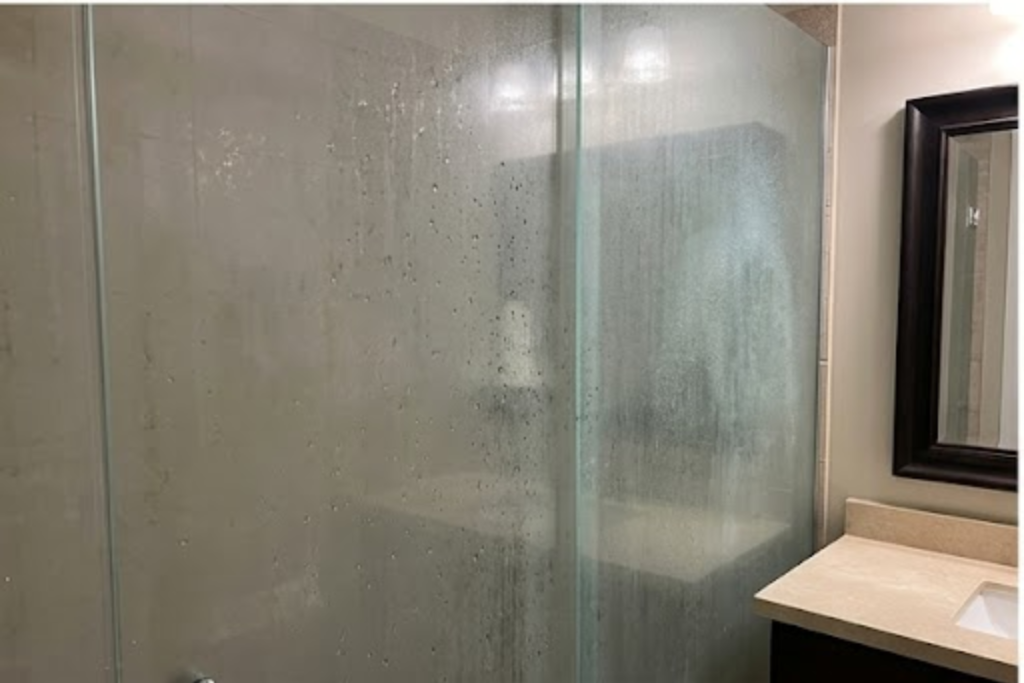
Glass shower doors often look clean right after installation, but over time many homeowners notice cloudy patches, white marks, and stubborn streaks appearing across the surface. These stains usually come from hard water, a common issue caused by minerals left behind when water droplets dry on glass.
Hard water stains are not dirt in the traditional sense. Regular bathroom cleaners may remove soap residue or surface grime, but mineral deposits require a different approach. Understanding what causes these marks can make cleaning easier and help prevent them from returning quickly.
What causes hard water stains on shower glass?
Hard water contains dissolved minerals, mainly calcium and magnesium. When water splashes onto a glass shower door and evaporates, these minerals remain behind. A few droplets may not seem like much, but repeated exposure creates layers of buildup.
Fresh mineral deposits often appear as small white spots or a hazy film. Over time, these deposits can become more difficult to remove because they bond more tightly with the glass surface.
Soap scum can make the problem worse. When soap ingredients mix with mineral deposits, they can create a thicker coating that feels rough or cloudy. This combination often requires more effort than either issue alone.
Why regular cleaners often fail
Many everyday bathroom sprays work well on bacteria, oils, and soap residue, but hard water stains need an acidic cleaner to break down mineral deposits.
Glass cleaners designed for fingerprints and general cleaning usually do little against calcium buildup. Scrubbing harder may not solve the problem either. Excessive force can leave small scratches, especially if abrasive tools are used.
The longer hard water stains remain untreated, the more difficult they become to remove. Fresh spots usually require less effort compared with stains that have been sitting on the glass for months.
Common ways to remove hard water stains
Several household methods can help tackle mineral buildup.
White vinegar solution
White vinegar contains acetic acid, which can help dissolve calcium deposits. A simple mixture of equal parts vinegar and water can loosen light stains.
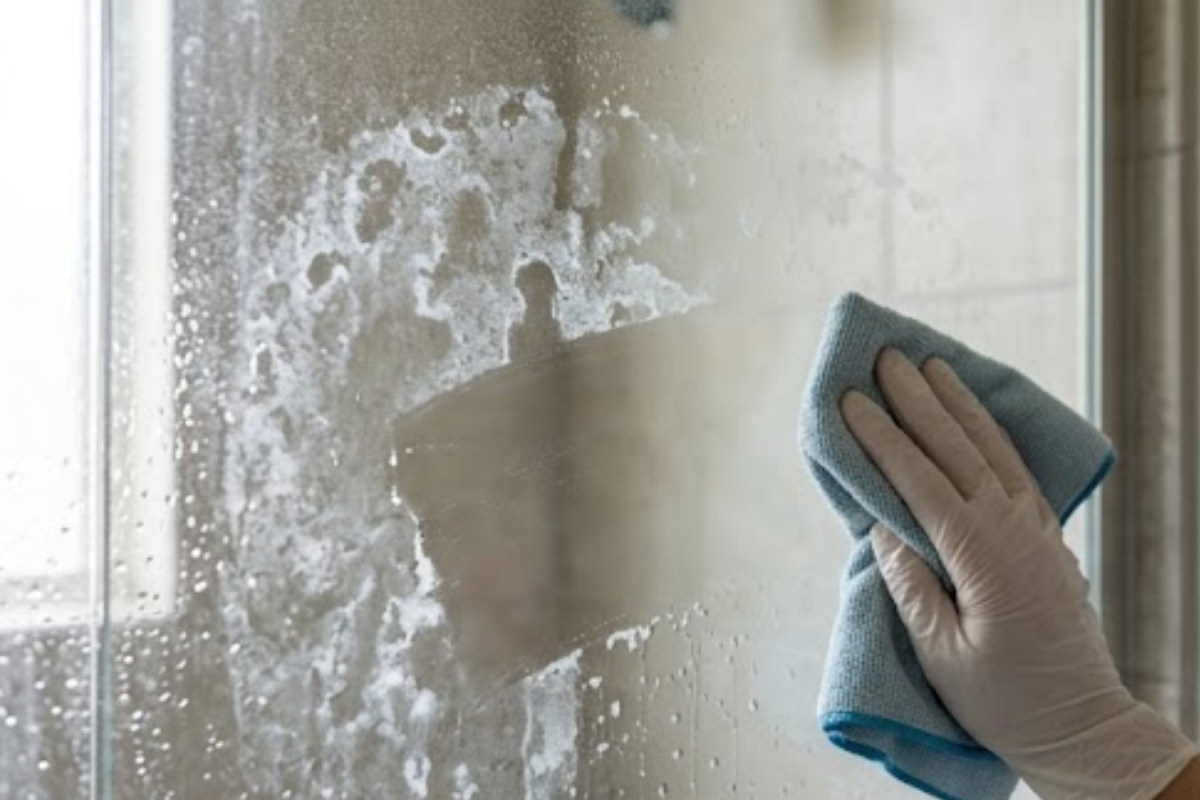
Spray the solution onto the glass, allow it to sit for several minutes, then wipe with a microfiber cloth. For thicker buildup, the vinegar may need more time to work.
Avoid using vinegar on certain surfaces around the shower, such as natural stone tiles, because acidic solutions can damage some materials.
Baking soda for stubborn spots
Baking soda works as a gentle abrasive that can help lift mineral residue after it has softened. Creating a paste with baking soda and water can help target small areas with heavier buildup.
Use a soft cloth rather than rough scrubbers to reduce the chance of damaging the glass.
Commercial hard water removers
Products made specifically for calcium and mineral deposits often contain stronger acids that break down stubborn stains faster. These cleaners should always be used according to the label instructions, with proper ventilation and protective measures.
Can hard water permanently damage shower glass?
Hard water stains usually sit on the surface of the glass, but long-term buildup can create a more serious issue. When mineral deposits remain for extended periods, they may contribute to etching, where the glass surface becomes permanently cloudy or rough.
At that stage, normal cleaning methods may not restore the original appearance. Professional polishing may be needed to improve heavily damaged glass.
How to prevent hard water stains
The easiest way to deal with hard water stains involves reducing the amount of water left on the glass.
Using a shower squeegee after each shower helps remove droplets before they dry. This simple habit can significantly reduce mineral buildup.
A microfiber towel can also help remove remaining moisture from corners and edges where water tends to collect.
Some homeowners install water softening systems to reduce mineral content in household water. While this requires more investment, it can help reduce buildup across showers, faucets, sinks, and appliances.
Applying a glass protectant may also make it harder for minerals and soap residue to stick. These coatings do not eliminate cleaning completely, but they can make maintenance easier.
Hard water stains on glass shower doors are a common result of mineral-filled water drying repeatedly on the surface. With the right cleaning methods and regular maintenance, most buildup can be managed before it becomes a bigger problem. The sooner mineral deposits are addressed, the easier it becomes to keep shower glass clear and clean.