If your kitchen cabinets feel sticky no matter how often you wipe them down, you’re not alone. Grease from cooking doesn’t just disappear into the air. Tiny oil droplets settle on cabinet doors, especially those near the stove, where they mix with dust and slowly turn into a stubborn film.
Many people reach for strong degreasers right away, but there’s a simpler method that often works just as well. Warm water, a few drops of dish soap, and a microfiber cloth can loosen weeks or even months of built-up grease without harsh scrubbing.
The trick isn’t the cleaner—it’s how you use it.
Why grease becomes so difficult to remove
Every time food sizzles in a pan, microscopic grease particles float through the kitchen. Even if you use an exhaust fan, some of that grease lands on nearby surfaces.
At first, the residue feels almost invisible. Over time, it collects dust, cooking residue, and fingerprints until cabinet doors start looking dull or sticky. Standard dusting rarely removes this layer because grease clings tightly to the surface.
That’s why dry paper towels or feather dusters usually leave the cabinets looking the same.
The simple cleaning method
You’ll only need a few common household items:
- Warm water
- A few drops of grease-cutting dish soap
- Two microfiber cloths
- A bowl or small bucket
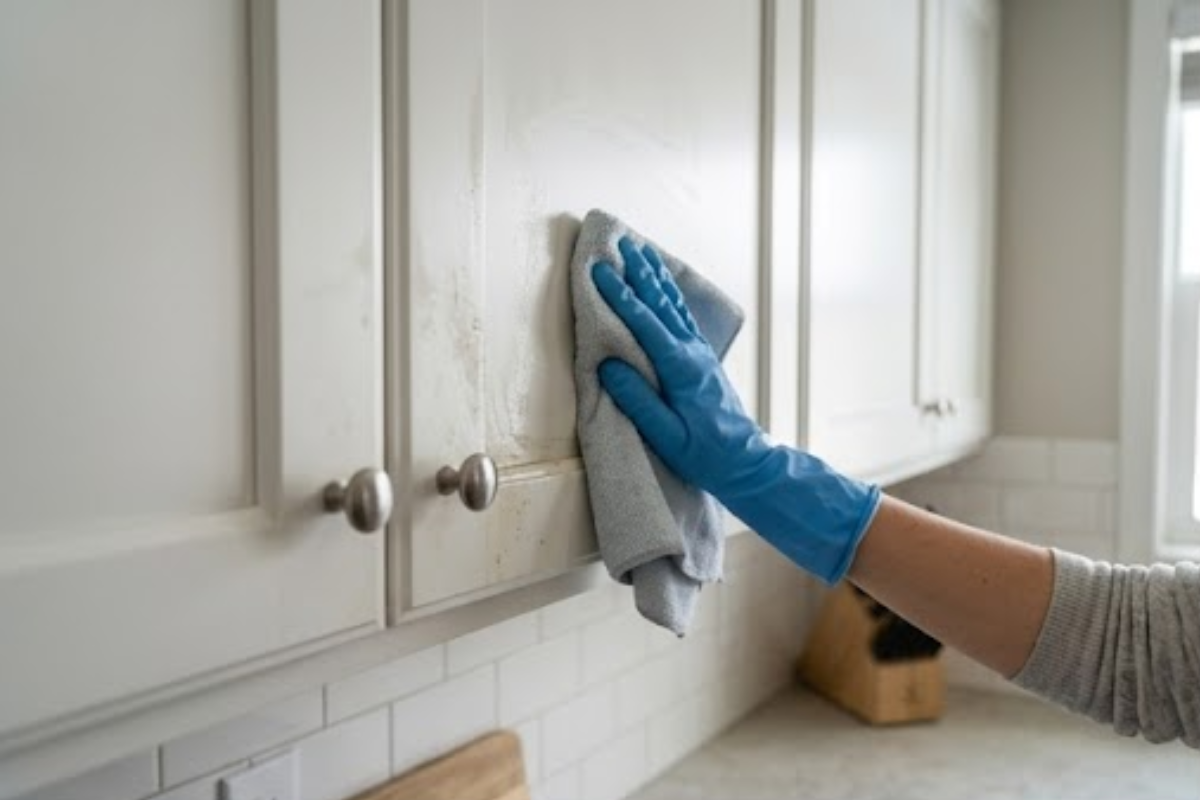
Mix the dish soap into warm water until it becomes lightly sudsy. Dip one microfiber cloth into the solution, then wring it out well. The cloth should feel damp, not dripping.
Wipe each cabinet using gentle pressure, working from top to bottom. Let the warm, soapy water sit on stubborn spots for about 30 seconds before wiping again. The grease softens during that short wait, making it much easier to remove.
After cleaning, use the second cloth dampened with plain water to remove any soap residue. Finish by drying the surface with a clean towel.
For stubborn grease buildup
Some cabinets haven’t been cleaned deeply in years. In those cases, one pass may not do the job.
Instead of scrubbing harder, repeat the process. Two gentle cleanings usually work better than one aggressive one.
If sticky patches remain, make a loose paste using baking soda and a small amount of water. Apply it with a soft cloth and rub lightly in small circles. Avoid using abrasive pads, steel wool, or stiff brushes that can scratch painted or finished cabinets.
Always test any cleaning method on a hidden area first, especially if your cabinets have delicate finishes.
What about vinegar?
Many people recommend vinegar for kitchen cleaning, but it isn’t always the best choice for greasy cabinets.
White vinegar works well for mineral deposits and some general cleaning tasks, yet dish soap usually breaks down cooking grease more effectively. Vinegar can also dull certain wood finishes if used too often or left sitting on the surface.
If you prefer using vinegar, dilute it with water and avoid soaking wooden cabinets.
Don’t forget cabinet handles
Cabinet knobs and pulls collect more grime than almost any other part of the kitchen. Every meal starts with someone touching them, often with hands that aren’t completely clean.
Wipe handles separately using the same soapy solution. If grease has collected around the edges, an old soft toothbrush can help reach small gaps without damaging the finish.
Dry the hardware afterward to prevent water spots.
Small habits that keep grease away
Deep cleaning becomes much easier when grease never gets the chance to build up.
A few simple habits make a noticeable difference:
- Turn on the range hood whenever cooking on the stovetop.
- Wipe cabinet fronts once a week with a damp microfiber cloth.
- Clean splatters while they’re fresh.
- Replace or wash range hood filters regularly.
- Keep steam and smoke moving out of the kitchen whenever possible.
These quick routines take only a few minutes and reduce the amount of scrubbing needed later.
Cleaning different cabinet materials
Not every cabinet should be treated the same way.
Painted cabinets usually respond well to mild dish soap and warm water.
Wood cabinets benefit from minimal moisture. Wring the cloth thoroughly and dry the surface immediately after cleaning.
Laminate cabinets often tolerate gentle cleaning well, though abrasive powders can leave fine scratches.
High-gloss finishes should only be cleaned with soft microfiber cloths to avoid swirl marks.
When in doubt, use the least aggressive method first.
Mistakes worth avoiding
A few common habits can make cabinets look worse instead of better.
Using too much water may seep into joints or seams and damage wood over time.
Spraying cleaner directly onto cabinet doors often leaves streaks or allows liquid to collect around hinges. Spray the cloth instead.
Harsh chemicals, bleach, ammonia, and rough scrubbers may strip protective finishes, leaving cabinets harder to clean in the future.
Patience usually delivers better results than stronger cleaners.
A cleaner kitchen with less effort
Sticky cabinets don’t always need expensive specialty products or hours of scrubbing. Warm water, a little dish soap, and the right wiping technique can remove much of the grease that builds up during everyday cooking.
Once the residue disappears, cabinet colors often look brighter, handles feel cleaner, and the entire kitchen seems fresher. Regular wipe-downs every week or two help keep grease from returning, making each future cleaning session faster and easier.