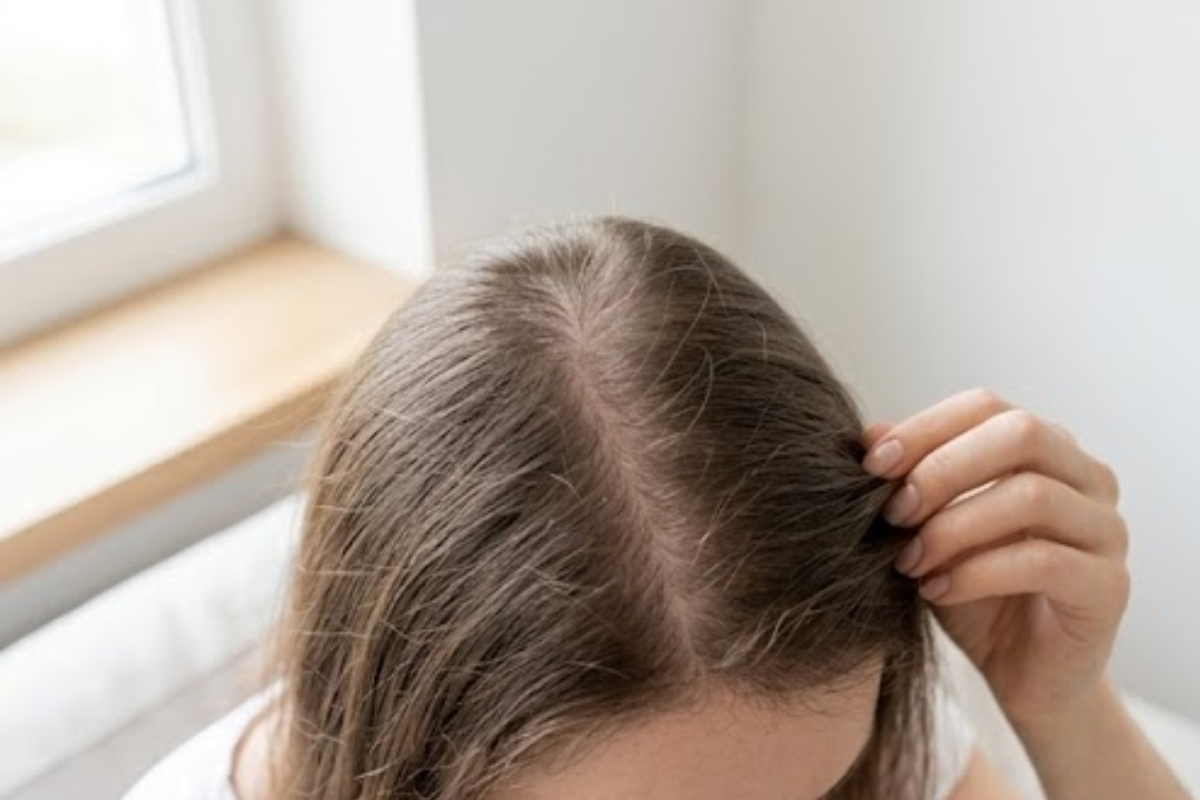
Seeing more hair in the shower drain or noticing a wider part can be unsettling. Hair naturally sheds every day, but thinning hair happens when shedding increases, growth slows, or individual strands become finer over time.
The good news: hair thinning has many possible causes, and some can improve once the underlying issue gets addressed. The first step involves figuring out what may be behind the change.
Hair thinning doesn’t always mean permanent hair loss
A certain amount of daily shedding remains normal. Hair grows in cycles, so individual strands naturally reach the end of their growth phase and fall out.
Temporary shedding can happen after major stress, illness, surgery, rapid weight loss, hormonal changes, or significant changes in diet. This type of shedding often appears a few months after the triggering event, which can make the cause difficult to connect with the hair loss.
Other types develop more gradually. Genetic hair loss, for example, can cause the hairline to recede or the hair on top of the scalp to become progressively thinner. Women may notice a widening part or less volume around the crown.
Your diet can affect your hair
Hair growth requires adequate nutrients. Eating too little protein, iron, zinc, or certain vitamins can affect the normal hair-growth cycle.
Restrictive diets can sometimes make this worse, particularly when someone cuts calories sharply or eliminates entire food groups. Low iron levels can also contribute to hair shedding in some people.
That doesn’t mean taking a handful of hair supplements will automatically solve the problem. Supplements tend to help most when they address an actual deficiency. Taking excessive amounts of certain nutrients can even cause problems, so testing and medical advice make more sense than guessing.
Hormones can play a part
Hormonal changes can affect hair at different stages of life. Pregnancy and the months following childbirth can bring noticeable changes in shedding. Menopause can also coincide with gradual thinning.
Thyroid problems may cause changes in hair growth as well. If thinning appears alongside symptoms such as unusual fatigue, unexplained weight changes, feeling unusually cold or hot, or changes in menstrual cycles, discussing these symptoms with a doctor may help identify an underlying issue.
Everyday hair habits matter too
Frequent bleaching, chemical treatments, high heat, and tight hairstyles can damage the hair shaft. This type of damage differs from hair loss originating at the follicle, but it can make hair appear noticeably thinner because strands break more easily.
A gentler routine can help reduce unnecessary breakage. Avoid pulling hair tightly for long periods, use lower heat when possible, and handle wet hair carefully. A wide-tooth comb can reduce pulling compared with aggressive brushing.
Changing shampoo alone usually won’t reverse genetic or hormone-related hair loss, but a suitable shampoo can help keep the scalp comfortable and hair easier to manage.
Treatments depend on the cause
Minoxidil remains one of the better-known treatments for certain forms of hair loss. Available as a topical treatment, it can help some people maintain or regrow hair when used consistently. Results take time, and continued use may be necessary to maintain the benefit.
For some men with pattern hair loss, prescription finasteride can slow further hair loss and promote regrowth. It comes with potential side effects and isn’t appropriate for everyone, so a doctor should determine whether it’s suitable.
Other options, including prescription treatments for women, platelet-rich plasma procedures, and hair-transplant surgery, may make sense in particular situations. Their usefulness depends heavily on the type and extent of hair loss.
When it’s worth seeing a doctor
Sudden or patchy hair loss deserves more attention than gradual thinning. The same applies when hair loss comes with scalp redness, scaling, pain, itching, or other unusual changes.
A doctor or dermatologist can examine the scalp, review medications and health history, and order blood tests when appropriate. Finding the cause early can make treatment choices much clearer.

The bottom line
Thinning hair doesn’t automatically mean you’re heading toward permanent baldness. Genetics, hormones, nutrition, illness, stress, medications, and hair-care habits can all play a part.
The most useful approach involves identifying the reason for the thinning rather than jumping from one supplement or product to another. Once the cause becomes clearer, there are several options that may help slow shedding, protect existing hair, or support regrowth.