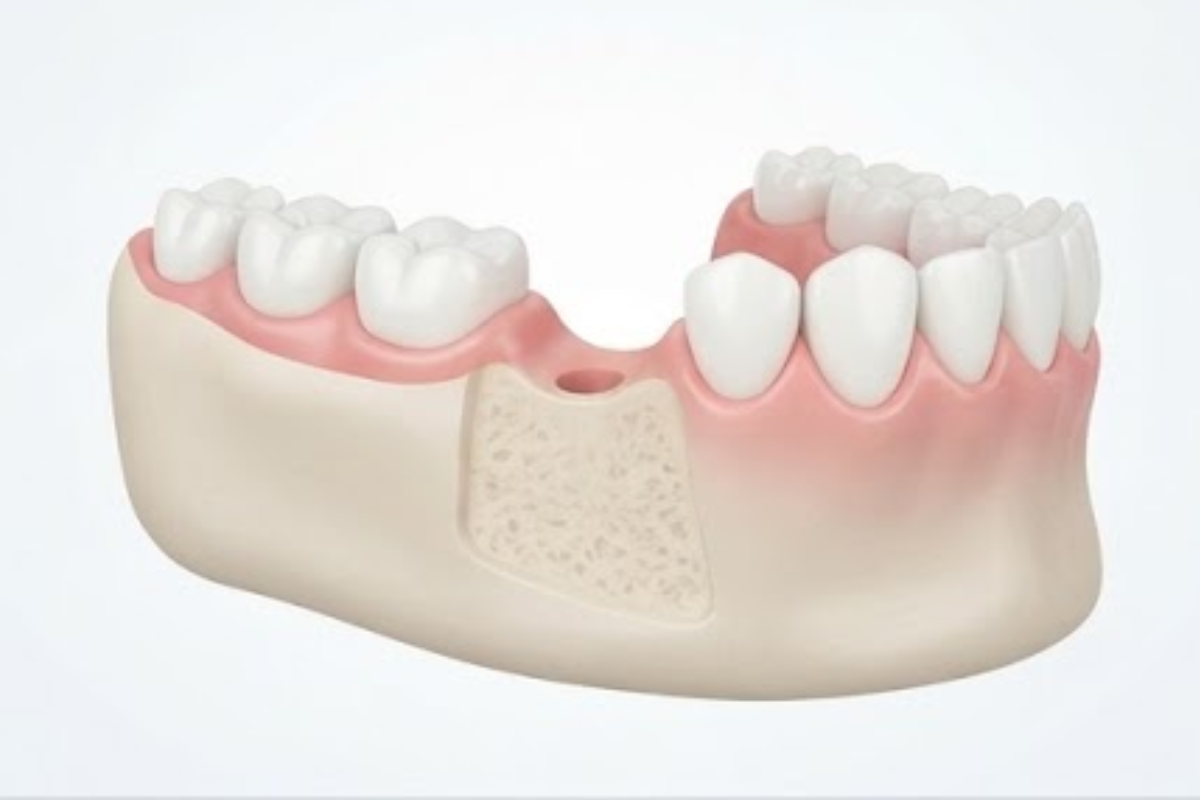
Replacing a missing tooth no longer means choosing between a traditional bridge and removable dentures. Dental implants give dentists several ways to rebuild a smile, depending on how many teeth need replacing, the condition of the jawbone, and how the final teeth should fit and function.
A dental implant typically uses a small post placed into the jawbone, followed by a connector and an artificial tooth or teeth. The implant gradually bonds with the surrounding bone through a process called osseointegration.
Here are several implant options you may hear about when discussing tooth replacement.
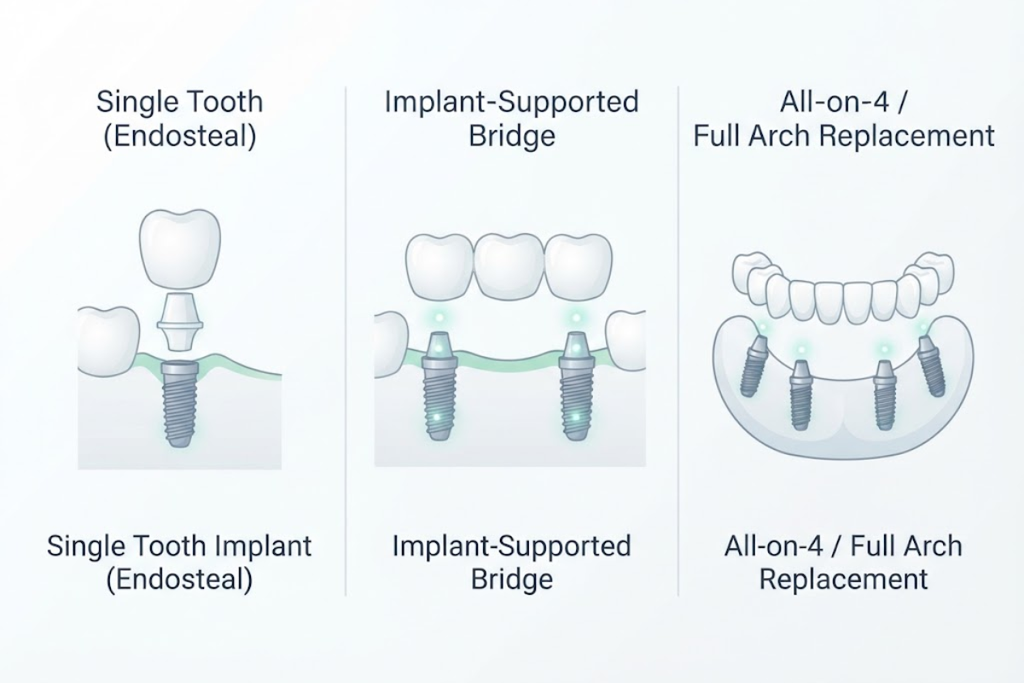
1. Single-tooth dental implants
When only one tooth needs replacing, a single implant can provide a relatively straightforward option. The implant replaces the missing root, while a custom crown takes the place of the visible tooth.
One advantage comes from the fact that the neighboring teeth don’t need to support the replacement. With a conventional bridge, the teeth on either side of the gap typically need preparation to hold the bridge. An implant keeps those teeth separate from the restoration.
The result can look and feel similar to a natural tooth once healing has finished.
2. Implant-supported bridges
Losing several teeth in a row doesn’t necessarily mean getting a separate implant for every missing tooth. An implant-supported bridge can use two or more implants to hold several replacement teeth.
For example, a person missing three consecutive teeth might receive implants at selected positions, with a bridge spanning the space between them.
This approach can reduce the number of implants needed while providing a fixed replacement rather than relying on a removable partial denture. The exact arrangement depends on the available bone, location of the missing teeth and the forces placed on the restoration.
3. Full-arch implants
People missing most or all of their teeth may have the option of replacing an entire upper or lower arch with an implant-supported restoration.
Instead of placing an implant underneath every artificial tooth, dentists can use several strategically positioned implants to support a full arch. Four to six implants may support the restoration, depending on the patient’s situation and treatment plan.
The replacement teeth may remain fixed in place or, in some cases, take the form of implant-supported dentures that can be removed for cleaning.
For someone who has struggled with loose traditional dentures, having the prosthesis anchored to implants can make eating and speaking more comfortable.
4. Mini dental implants
Mini dental implants have a smaller diameter than conventional implants. Dentists may use them in selected situations, including helping stabilize removable dentures.
Their smaller size can make them useful when there isn’t as much room for a conventional implant. However, they’re not automatically a substitute for standard implants. The right choice depends on the amount and quality of available bone and what the restoration needs to withstand.
Because treatment plans vary considerably, a dentist needs to determine whether mini implants make sense for a particular case.
5. Zygomatic implants
Severe bone loss in the upper jaw can make conventional implant placement more complicated. In selected cases, zygomatic implants provide another approach.
Instead of anchoring primarily in the upper jawbone, these longer implants extend toward the cheekbone, also called the zygomatic bone. They’re generally considered for people with substantial bone loss who need an upper-arch restoration.
This treatment requires specialized training and careful planning, so it isn’t the typical choice for someone replacing one missing tooth.
6. Titanium and zirconia implants
Dental implants can also differ by material. Titanium has been used extensively for dental implants because it can bond with bone and has a long history of clinical use. Zirconia provides a ceramic alternative and may appeal to patients looking for a metal-free option.
The material isn’t the only factor that matters. Implant position, bone health, gum health, oral hygiene and the design of the final restoration all affect treatment.
Which dental implant type makes sense?
There isn’t one implant type that works best for everyone. Someone missing a single front tooth may need a very different solution from someone who has lost most of their teeth.
Your dentist may evaluate the jawbone, gums, bite, remaining teeth and overall health before recommending an approach. In some cases, bone grafting may need to happen before an implant can be placed.
Understanding the different options can make the dental consultation less confusing. The goal isn’t simply to replace a missing tooth; it’s to find an implant and restoration combination that fits the condition of your mouth and the number of teeth that need replacing.