Collagen has moved well beyond the occasional anti-aging cream. In Korean beauty, it now appears in hydrogel masks, serums, overnight treatments, supplements, and formulas paired with ingredients such as peptides, hyaluronic acid and PDRN.
That approach has caught attention in the U.S., where Korean skin-care products have become easier to find through retailers and online stores. Allure notes that collagen-focused treatments from Korean brands such as Medicube have become especially visible on social media.
But the most interesting part of the trend isn’t simply the presence of collagen. It’s the way Korean beauty brands are using it as part of broader skin-care routines.
Here are several Korean collagen trends worth knowing.
1. Collagen masks have become a routine rather than an occasional treatment
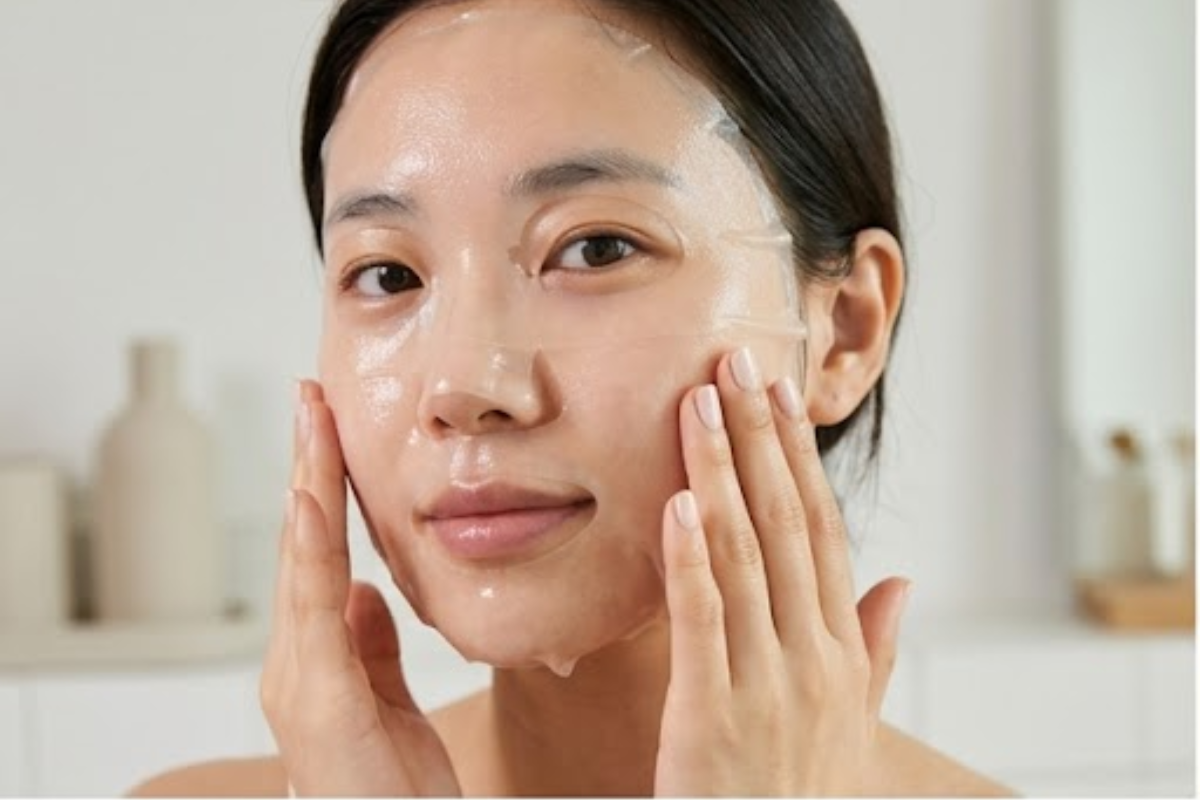
The overnight collagen mask has become one of the most recognizable K-beauty formats.
Instead of applying a thick cream and washing it off after a few minutes, some Korean hydrogel masks sit on the skin for several hours. Biodance’s Bio-Collagen Real Deep Mask, for example, gained attention for its overnight format and combination of collagen, hyaluronic acid and fermented ingredients. Byrdie testers reported softer and more hydrated skin after use.
For American shoppers, the appeal comes partly from convenience. A mask that can be applied before bed fits easily into an existing nighttime routine.
The immediate effect also tends to center on hydration and a plumper appearance rather than dramatic wrinkle removal.
2. Collagen is being paired with other popular ingredients
Korean formulations increasingly treat collagen as one component rather than the entire formula.
Peptides, hyaluronic acid, ceramides, antioxidants and PDRN frequently appear alongside collagen in newer products. PDRN, in particular, has become a popular K-beauty ingredient, with Korean-inspired formulas pairing it with collagen and other moisturizing ingredients.
That matters because skin concerns rarely come one at a time. Someone dealing with dryness may also notice fine lines, while someone concerned about firmness may also want better hydration.
A multi-ingredient formula can therefore make more sense than buying several single-purpose products.
3. Hydrolyzed collagen and collagen peptides are getting more attention
Not all collagen ingredients behave the same way.
Collagen itself forms part of the structural framework of skin and other connective tissues. In topical skin care, however, the size of collagen molecules creates a limitation: conventional collagen generally cannot penetrate deeply enough to rebuild the collagen structure beneath the surface. Allure’s dermatology-focused review notes that topical collagen primarily functions as a moisturizing ingredient, while smaller collagen peptides may have different properties.
That distinction helps explain why Korean products increasingly use terms such as hydrolyzed collagen and collagen peptides.
For shoppers, checking the full ingredient list can tell you more than simply seeing the word “collagen” on the front of a package.
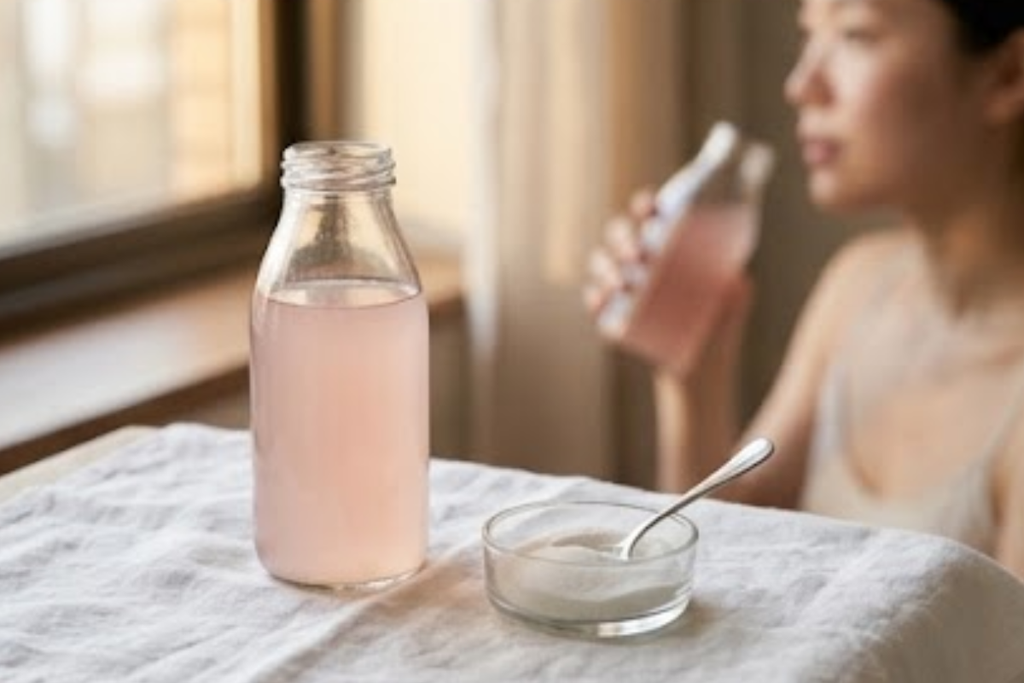
4. Drinkable collagen fits the inside-out approach
Korean beauty has also helped make collagen drinks, powders and other ingestible products part of the beauty conversation.
The concept differs from traditional skin care: rather than applying an ingredient to the face, consumers take collagen orally as part of their daily routine.
The evidence has historically been mixed, but newer research has generated renewed interest. A 2026 review discussed by Allure examined 113 clinical studies and found evidence suggesting collagen supplements may produce modest improvements in skin hydration and elasticity, while also noting limitations.
That doesn’t make every collagen drink equally effective. It does explain why the category continues to attract attention.
5. “Plump” skin has become a bigger goal than simply chasing wrinkles
One noticeable change in Korean-inspired skin care involves the language used around aging.
Rather than focusing exclusively on eliminating wrinkles, many products target skin that looks hydrated, bouncy, smooth and firm.
That fits naturally with collagen-focused products because hydration can temporarily make fine lines appear less noticeable and give skin a fuller appearance.
The result doesn’t necessarily require a complicated 10-step routine. A moisturizer, sunscreen and a well-formulated treatment can still form the foundation, with collagen masks or serums added when desired.
6. American shoppers are getting more selective about collagen claims
The popularity of Korean collagen products also creates a reason to read labels more carefully.
A product labeled “collagen” doesn’t automatically mean it will rebuild lost collagen. Consumers should look at the complete formula, the type of collagen or peptides used, and what other ingredients appear alongside it.
Korean beauty’s influence on U.S. skin care continues to grow, but the smarter takeaway isn’t to copy every viral routine. It’s to borrow the useful ideas: hydration, gentle formulations, layered ingredients and convenient treatment formats.
For anyone curious about the science behind collagen, the Wikipedia overview of collagen provides a useful starting point, while Byrdie’s Korean skin-care guide gives a closer look at how collagen masks and other K-beauty products are being used today.