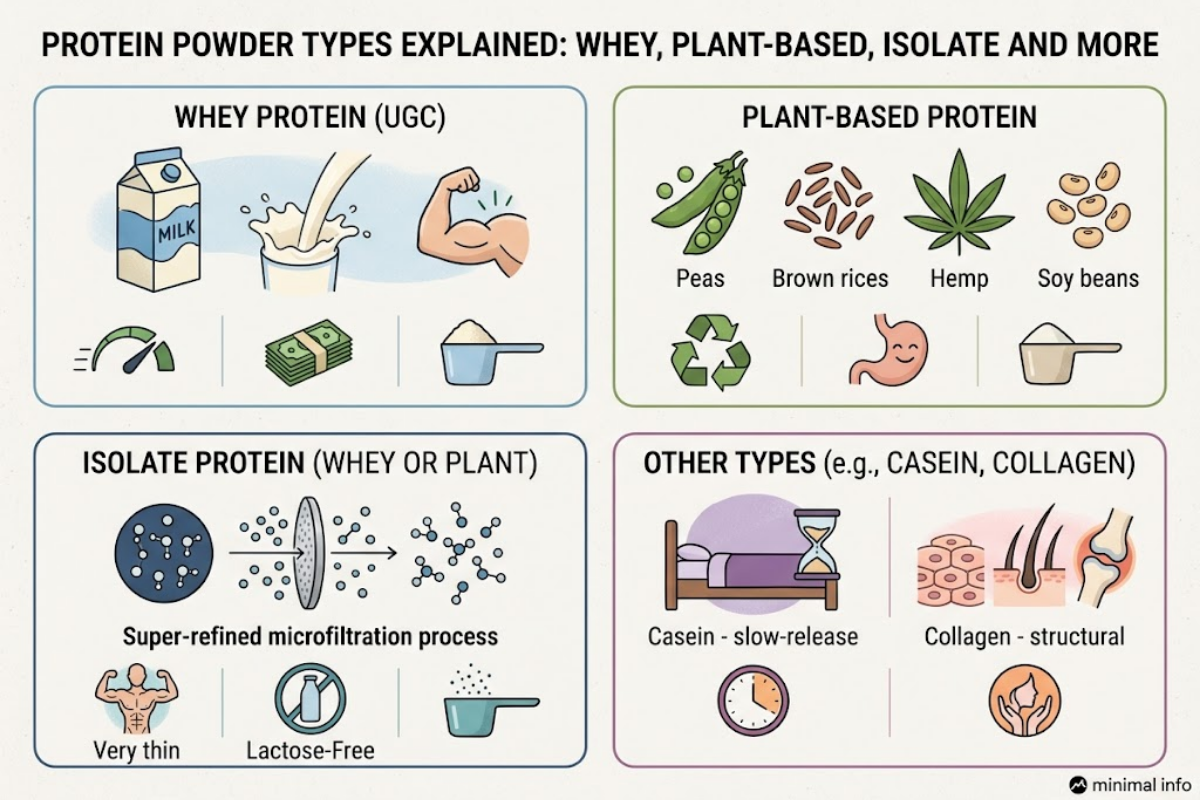
Walk into any supplement store and the protein powder section can feel confusing. Whey, whey isolate, casein, pea, soy, egg, and blended formulas all promise an easy way to add more protein to your diet. The main differences come down to where the protein comes from, how it gets processed, how quickly the body digests it, and whether it fits your dietary needs.
Here’s a simple breakdown of the most common types.
1. Whey Protein
Whey comes from milk and remains one of the most common protein powders used by people who exercise. During cheese production, whey separates from the milk and can then undergo processing to create a powdered protein supplement.
Whey contains all nine essential amino acids, including the branched-chain amino acids (BCAAs) leucine, isoleucine, and valine. It also tends to digest relatively quickly.
For people who consume dairy and want a straightforward protein powder for shakes, smoothies, or post-workout meals, whey can be an easy choice.
There’s one catch: regular whey concentrate can contain lactose, so people who have trouble digesting lactose may experience bloating or stomach discomfort.
2. Whey Protein Isolate
Whey isolate starts with whey but goes through additional filtration to remove more of the lactose, fat, and other components.
The result typically contains a higher percentage of protein by weight than whey concentrate. Many whey isolates contain around 90% protein or more, although the exact amount depends on the product.
Because isolate contains less lactose, some people who experience digestive issues with regular whey find it easier to tolerate. It still comes from milk, though, so it isn’t suitable for people avoiding dairy altogether.
3. Whey Protein Concentrate
Whey concentrate undergoes less processing than isolate. Protein content can vary considerably between products, commonly falling somewhere around 70–80% by weight.
The remaining portion can include lactose, fat, minerals, and other milk components.
Concentrate can work well for someone who tolerates dairy and doesn’t need a highly filtered protein powder. Checking the nutrition label gives a better idea of how much protein, carbohydrate, fat, and lactose each serving contains.
4. Casein Protein
Casein comes from milk too, but the body generally digests it more slowly than whey.
That slower digestion makes casein popular among people who want a protein source that provides amino acids over a longer period. Some people use it as an evening shake or between meals.
The texture also tends to be thicker than whey, which can make casein useful for protein puddings, overnight oats, or other recipes.
5. Plant-Based Protein
Plant protein powders come from ingredients such as peas, rice, soy, hemp, and other plants. They provide an option for people following vegetarian or vegan diets or anyone who prefers to reduce dairy consumption.
The amino acid profile varies by plant source. For that reason, many plant-based powders combine multiple sources, such as pea and rice protein. These blends can provide a broader mix of amino acids than relying on one plant source alone.
6. Soy Protein
Soy protein comes from soybeans and provides all nine essential amino acids, making it a complete protein. It can work well for people looking for a dairy-free protein source.
Soy protein powder also tends to mix reasonably well into shakes and smoothies. Anyone with a soy allergy should avoid it, naturally.
7. Pea Protein
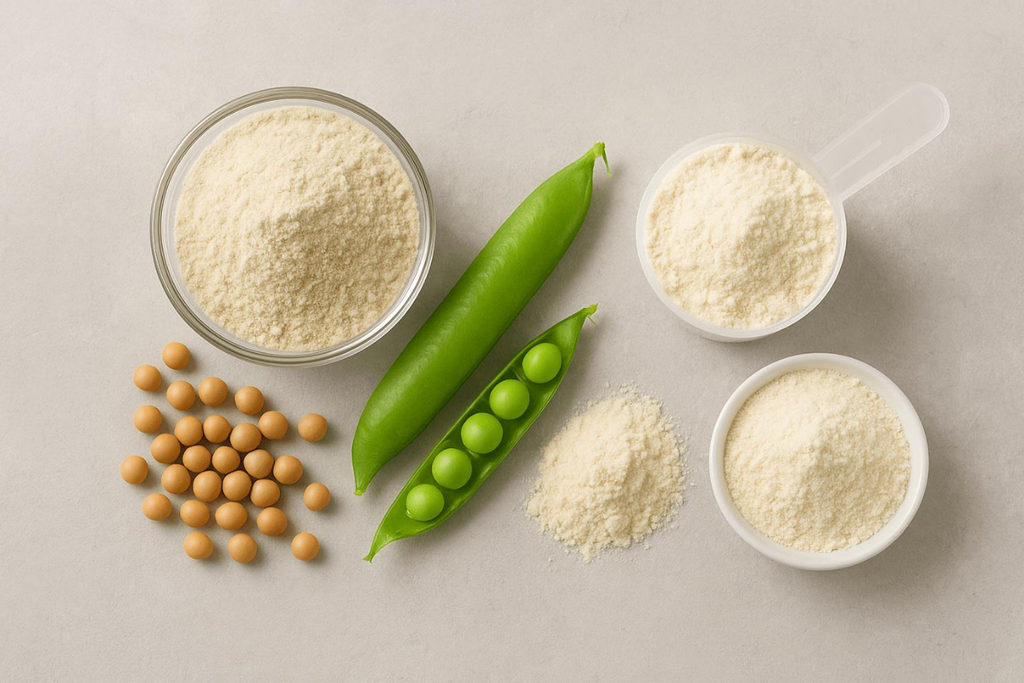
Pea protein typically comes from yellow split peas. It provides a useful amount of protein and works well in vegan protein powders.
Compared with some other plant proteins, pea protein has a relatively strong amino acid profile, although it contains less methionine than many animal-based proteins. That’s one reason manufacturers often combine pea protein with rice protein.
8. Egg White Protein
Egg white protein comes from egg whites rather than milk. It provides all nine essential amino acids and contains no dairy.
For someone who wants an animal-based protein without using milk-based powders, egg white protein can fit the bill. Its flavor and texture differ from whey, so personal preference matters when choosing between them.
9. Protein Blends
Blended protein powders combine two or more protein sources. A formula might contain whey concentrate, whey isolate, and casein, while a plant-based blend might combine pea, rice, and other proteins.
Blends can provide different digestion rates and amino acid profiles in one serving. Reading the ingredient list helps you understand exactly what you’re buying rather than relying only on the product name.
How to Choose the Right Protein Powder
The best type depends less on the label and more on your diet, digestion, and reason for using protein powder.
For dairy users: Whey concentrate or isolate can work well.
For lower lactose: Whey isolate generally contains less lactose than concentrate.
For slower digestion: Casein may make sense.
For vegans: Pea, soy, rice, or plant-based blends provide dairy-free options.
For a complete plant protein: Soy or a pea-and-rice blend can be useful.
For avoiding milk: Egg white or plant-based protein can provide alternatives.
Protein powder remains a supplement rather than a replacement for whole foods. Foods such as eggs, Greek yogurt, chicken, fish, beans, lentils, tofu, and dairy can all contribute protein throughout the day. For a basic explanation of how dietary protein works, the protein article on Wikipedia provides a useful starting point. For practical guidance on choosing and using protein supplements, Healthline’s guide to protein powders covers several common options.