
Protein for muscle growth has become a major focus in fitness, from shakes and bars to chicken and Greek yogurt. But eating more protein does not automatically create bigger muscles. Total intake, resistance training, recovery, and consistency all influence the results.
How Protein Supports Muscle Growth
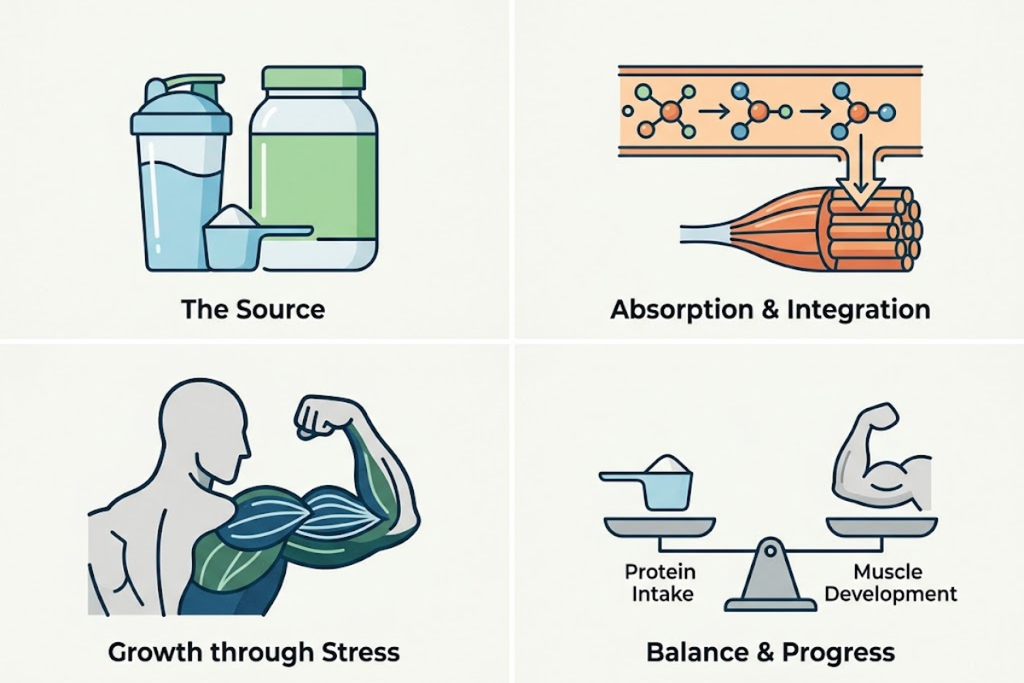
Muscles constantly break down and rebuild. Resistance training creates a stimulus that tells your body to repair and adapt. Dietary protein supplies amino acids that your body uses to make new muscle proteins.
The process behind increasing muscle size is called muscle hypertrophy.
The important distinction: protein supports muscle growth, but it doesn’t replace resistance training. A large review of randomized trials found that increased protein intake produced greater gains in lean mass when paired with resistance exercise. Without the training stimulus, simply adding more protein doesn’t create the same muscle-building effect.
How Much Protein for Muscle Growth?
One of the most common misconceptions involves the idea that more protein automatically means more muscle.
Research suggests there comes a point where additional protein provides little extra benefit. A large meta-analysis involving 49 studies and more than 1,800 participants found that protein supplementation improved gains in muscle size and strength during resistance training, but benefits to lean mass leveled off around 1.6 grams of protein per kilogram of body weight per day.
For someone weighing 180 pounds, that’s roughly 131 grams of protein per day.
That doesn’t mean 1.6 grams per kilogram represents a hard ceiling for everyone. People differ based on age, training experience, calorie intake and other factors. But it does challenge the idea that consuming enormous amounts of protein will produce proportionally larger muscles.
Does Protein Timing Affect Muscle Growth?
The fitness world has spent years debating the “anabolic window” — the idea that you need protein immediately after your workout or risk missing your chance to build muscle.
The reality is less dramatic.
Getting enough protein throughout the day matters more than obsessing over a narrow post-workout window. Having a protein-rich meal or snack around your workout can certainly fit into a good routine, but there’s little reason to panic if you don’t drink a shake the moment you finish lifting.
A 2023 network meta-analysis found benefits from protein supplementation around exercise, while also examining different timing strategies and protein sources.
A practical approach: spread protein across several meals rather than trying to consume most of it at dinner.
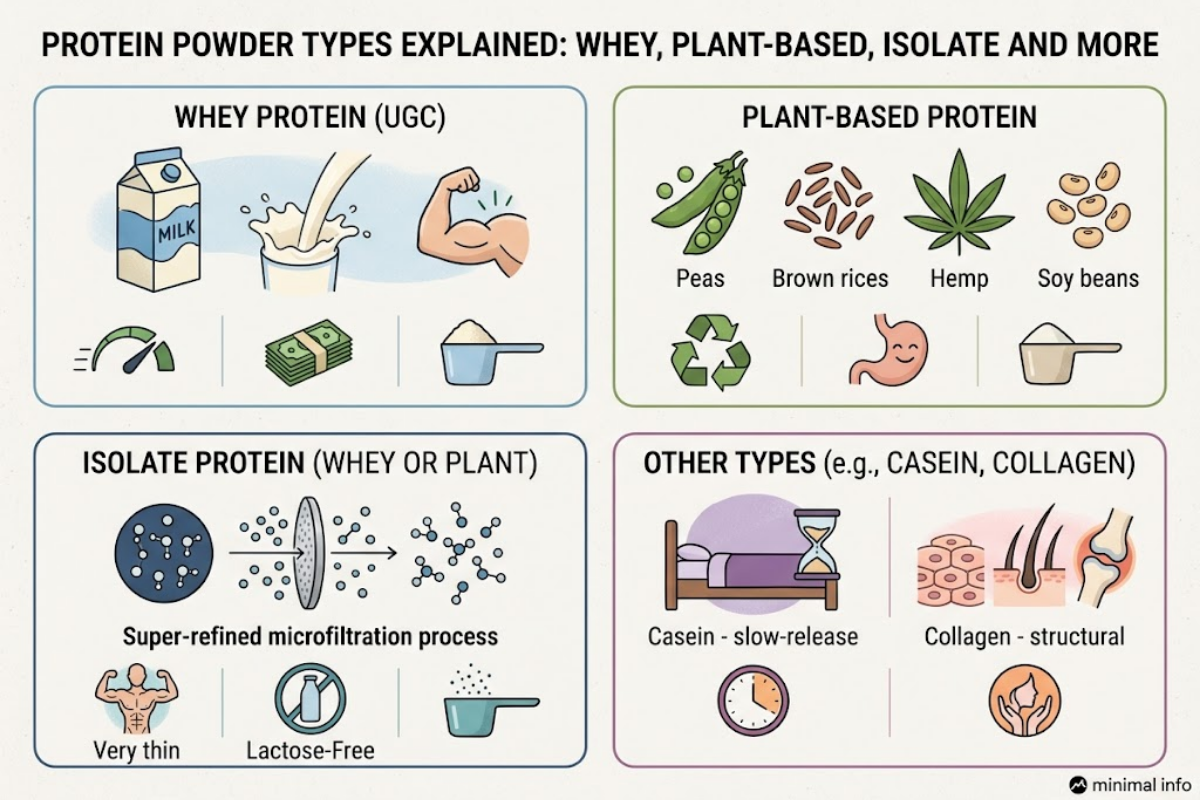
You don’t need protein powder
Protein powder can make reaching a daily target easier, but it isn’t required for muscle growth.
Chicken, turkey, lean beef, fish, eggs, Greek yogurt, cottage cheese, milk, beans, lentils, tofu and other protein-rich foods can all contribute to your intake.
Animal proteins often provide a high concentration of essential amino acids, while people following plant-based diets can meet their needs by eating a variety of protein sources. Recent research has also examined how plant and animal proteins affect muscle protein synthesis, with the differences depending partly on the protein source, amount and individual circumstances.
Think of protein powder as a convenience food rather than a special muscle-building ingredient.
Strength training still does the heavy lifting
Protein can’t compensate for a poorly designed workout.
Progressive resistance training gives muscles a reason to adapt. Over time, that can mean gradually increasing weight, repetitions, training volume, or exercise difficulty.
Sleep and recovery, along with adequate calories, also matter. Muscle growth happens through the combination of training and recovery rather than from protein alone.
This explains why someone can drink a protein shake every day and see little change while another person eating ordinary foods makes steady progress. The difference may have more to do with training consistency, total nutrition and recovery than the type of protein they consume.
A Practical Muscle-Growth Strategy
For most healthy adults trying to build muscle, a sensible strategy looks fairly simple:
- Eat enough total protein each day.
- Include a protein source in several meals.
- Perform resistance training consistently.
- Increase training demands gradually.
- Use protein powder when convenience makes it easier to hit your target.
- Don’t assume doubling your protein intake will double your muscle growth.
Protein for muscle growth matters, but it works as part of a bigger picture. Getting the basics right usually matters far more than chasing the perfect shake, supplement, or meal-timing strategy.


2 thoughts on “The Truth About Protein and Muscle Growth”