Microwave popcorn feels like one of those foods that barely counts as cooking. Tear open the package, put it in the microwave, wait a few minutes and suddenly there’s a bowl of hot, buttery popcorn.
But what exactly goes into that bag?
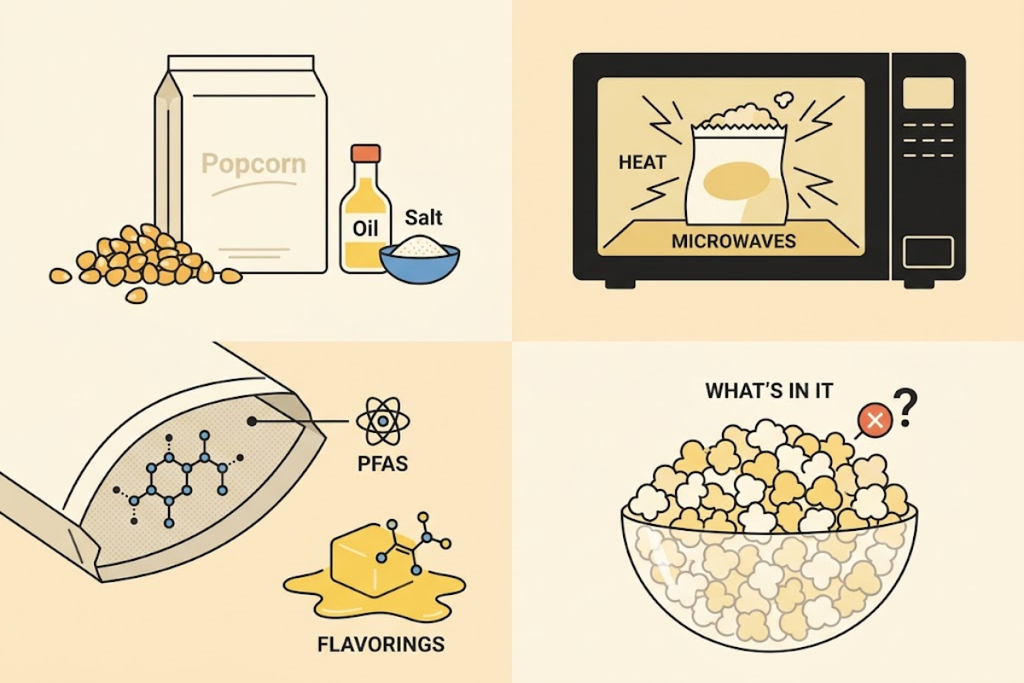
The answer goes beyond corn kernels. Depending on the brand and flavor, microwave popcorn can contain oil, salt, flavorings, emulsifiers and other ingredients designed to create the taste and texture people expect. The bag itself also has a special construction that helps the kernels pop evenly.
That doesn’t automatically make microwave popcorn unhealthy. It does mean the label deserves a closer look.
What’s actually inside the bag?
At its simplest, popcorn only needs three things: corn kernels, heat and, depending on the preparation, some type of fat.
Packaged microwave popcorn typically adds oil and seasoning to the mix. Butter-flavored varieties may contain butter flavoring rather than the same amount of dairy butter you might use at home. Ingredients can include salt, vegetable oils, natural flavors, artificial flavors and other additives.
Food labels can group certain ingredients under terms such as “natural flavors” or “artificial flavors,” so you won’t always see every individual flavor compound listed by name. The FDA allows these categories under its food-labeling rules.
The exact formula varies considerably between brands and flavors. A plain or lightly seasoned bag can have a much shorter ingredient list than an extra-butter or caramel variety.
Why does it taste so buttery?
That familiar movie-theater-style flavor doesn’t necessarily come from a stick of melted butter.
Manufacturers can use flavoring compounds to create a buttery aroma and taste while combining them with oils and other ingredients. One compound that has received attention over the years is diacetyl, a flavoring substance used to create buttery flavors. The FDA lists diacetyl as a flavoring agent or adjuvant.
Concerns about diacetyl became particularly associated with workers exposed to high concentrations of the chemical in certain industrial settings. That history sometimes gets mixed together with concerns about eating microwave popcorn, but the exposure situation isn’t the same.
The bigger practical issue for most shoppers may be the overall nutritional profile: some flavored varieties contain considerably more sodium and fat than plain popcorn.
What about the microwave popcorn bag?
This part has generated plenty of discussion.
Microwave popcorn bags have traditionally used grease-resistant coatings and a special microwave-absorbing layer called a susceptor. The susceptor helps concentrate heat around the popcorn so it pops and the flavoring melts properly.
PFAS, a large family of chemicals used for grease and water resistance, were historically used in some food packaging, including microwave popcorn bags. The FDA announced in 2024 that PFAS-containing grease-proofing substances were no longer being sold for use in food packaging in the United States, following industry phase-outs.
So the old warning that every microwave popcorn bag contains dangerous PFAS doesn’t accurately describe the current U.S. market. The regulatory situation has changed, and older studies don’t necessarily describe today’s products.
Is microwave popcorn unhealthy?
The answer depends heavily on the product.
Plain popcorn itself has a lot going for it. It comes from a whole grain and naturally contains fiber. Air-popped popcorn can also be relatively low in calories; Cleveland Clinic notes that two cups of air-popped popcorn contain about 62 calories and 2.3 grams of fiber.
The recipe changes once you add generous amounts of oil, salt, sugar and flavorings.
A heavily buttered microwave variety can turn a simple whole-grain snack into a much more calorie-dense one. Sodium can also climb quickly, particularly in flavored products.
Cleveland Clinic’s guide to popcorn nutrition points out that the way popcorn gets prepared can make a substantial difference to its nutritional value.
Does the microwave itself make popcorn unhealthy?
No.
Microwaving doesn’t turn popcorn into a chemically different food or make it inherently unhealthy. The microwave simply provides the heat needed to turn water trapped inside the kernels into steam. Pressure builds until the kernel bursts open.
The bigger differences come from what’s already in the bag.
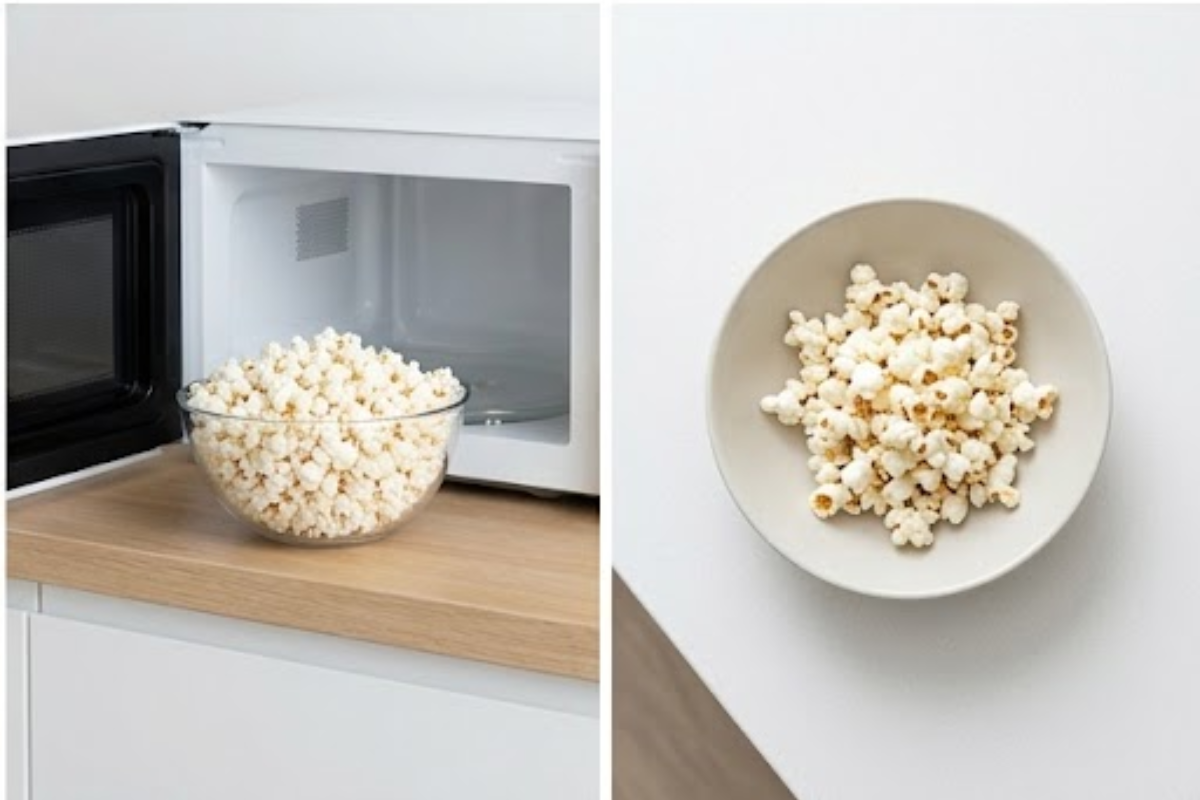
That’s why plain kernels popped in a microwave-safe container can be quite different nutritionally from a heavily seasoned commercial bag.
A simpler option
If you enjoy popcorn regularly, buying plain kernels gives you much more control.
You can pop them in a microwave-safe bowl or dedicated microwave popcorn maker and add your own amount of oil, salt or seasoning. That makes it easier to control sodium and saturated fat while still getting the convenience of microwave cooking.
You can also compare labels when buying packaged popcorn. Look at the serving size first, then check calories, saturated fat, sodium and added sugars. A bag that looks like one snack may contain multiple servings.
For a deeper explanation of how microwave popcorn bags work, the microwave popcorn entry on Wikipedia covers the bag design, susceptor technology and history of the product.
The bottom line
Microwave popcorn isn’t simply “corn with chemicals,” but it isn’t always equivalent to plain popcorn either.
The kernels themselves can make a nutritious, fiber-containing snack. The added oils, salt, sugars and flavorings determine how that basic food ends up on the nutrition label. Concerns about older PFAS-containing popcorn bags also need some context, since U.S. food-packaging rules and industry practices have changed.
If you like microwave popcorn, there’s no need to treat the entire category as off-limits. Read the ingredient and nutrition labels, compare varieties and consider plain kernels when you want more control over what’s going into the bowl.