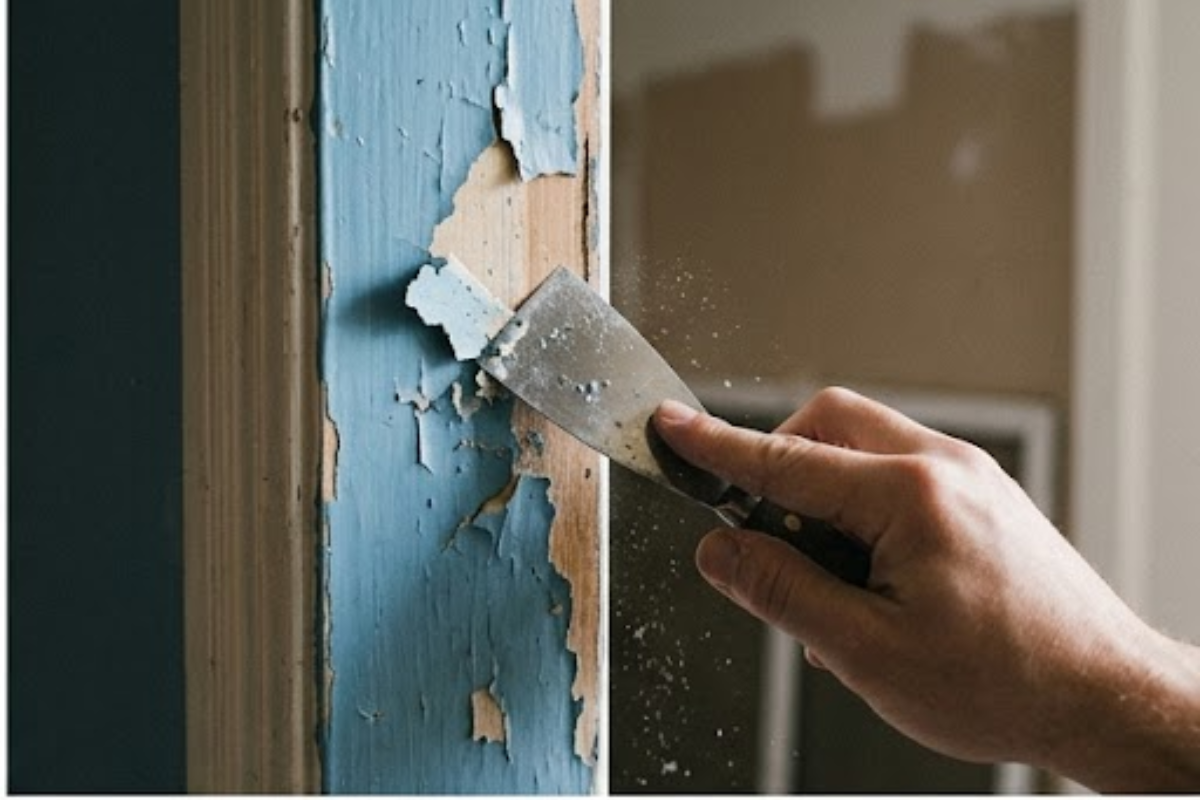
Peeling paint rarely happens for no reason. When paint starts lifting, cracking, or coming away from a wall, the visible damage usually points to a problem underneath. Moisture, poor surface preparation, heat, age, and incompatible paint layers can all cause the finish to lose its grip.
The good news: small areas of peeling paint can often be repaired without repainting the entire room. The important part involves finding the cause before covering the damaged area with fresh paint.
Why Paint Starts Peeling
Moisture ranks among the most common causes
Water can get behind paint through leaks, condensation, plumbing problems, or water entering through exterior walls. Once moisture reaches the surface beneath the paint, the bond between the paint and wall can weaken.
Bathrooms, kitchens, laundry areas, and basement walls often face this problem because of higher humidity or occasional water exposure.
If peeling keeps returning in the same spot, check for a leak or moisture problem before doing another coat of paint.
Poor surface preparation can cause trouble
Paint needs a clean, dry, sound surface to stick properly. Dust, grease, loose paint, wallpaper residue, and dirt can interfere with adhesion.
Painting directly over a glossy finish can create another problem. New paint may struggle to grip the smooth surface, particularly when the old coating hasn’t been lightly sanded or prepared with the right primer.
Old paint can eventually lose its bond
Paint doesn’t last forever. Years of temperature changes, sunlight, humidity, and normal wear can weaken older coatings.
If several layers of old paint have accumulated, the lower layers may also begin separating from the surface. In that situation, simply painting over the peeling area usually provides only a temporary fix.
Heat and humidity can damage the finish
Large temperature swings can make walls and paint expand and contract at different rates. High humidity can also soften some coatings and encourage moisture to move into the wall.
Exterior walls exposed to strong sunlight may develop peeling or cracking faster than shaded areas.
How to Fix Peeling Paint
1. Remove the loose paint
Start by scraping away all paint that has already lifted or feels loose. A paint scraper works well for larger areas, while a putty knife can handle smaller sections.
Don’t stop at the most obvious peeling. Run the scraper around the damaged area and remove anything that comes away easily.
Wear eye protection and a dust mask when scraping older paint, particularly in homes built decades ago. Older coatings may contain lead.
2. Smooth the edges
Once the loose paint has been removed, sand the edges where the old paint meets the exposed surface. The goal isn’t to remove every bit of existing paint. Instead, create a smooth transition so the repaired area doesn’t leave a noticeable ridge.
Wipe away sanding dust before moving on.
3. Repair holes and uneven areas
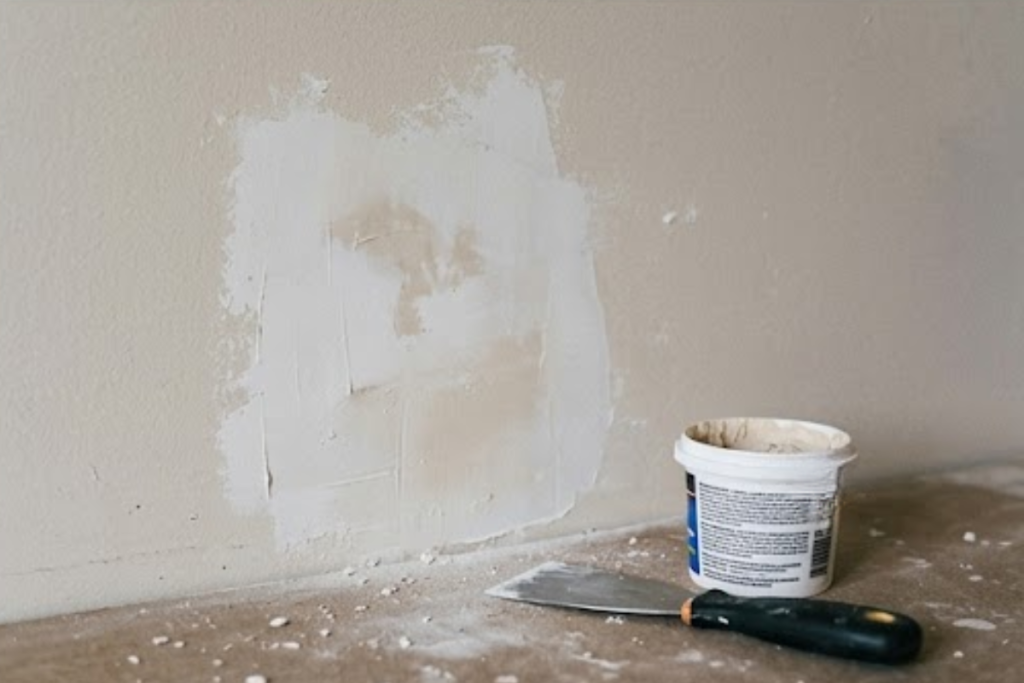
Peeling paint can sometimes pull small pieces of drywall, plaster, or other material away with it. Fill shallow holes and dents with an appropriate patching compound.
Allow the repair to dry, then sand it smooth. Repeat the process if the surface still feels uneven.
4. Apply the right primer
Primer can help create a consistent surface for the new paint and improve adhesion. Choose one suited to the surface and the problem.
For areas affected by stains or moisture, a suitable stain-blocking or problem-surface primer may work better than ordinary wall primer. If moisture caused the peeling, however, primer won’t solve the underlying issue.
5. Repaint the area
Use paint compatible with the existing surface and primer. Apply thin, even coats rather than trying to cover everything with one heavy layer.
Allow each coat to dry according to the manufacturer’s instructions before applying another.
When Painting Alone Won’t Fix It
Repeated peeling usually calls for a closer look. A leaking pipe, roof problem, damaged exterior siding, persistent condensation, or poor ventilation can keep introducing moisture to the same area.
Widespread peeling can also indicate multiple layers of failing paint. Removing the damaged coating and preparing the surface properly may take more work than a small patch.
If the wall feels damp, has a musty smell, shows water stains, or keeps developing new peeling areas, deal with the source before repainting.
How to Prevent Paint From Peeling Again
Keep bathrooms and kitchens properly ventilated, wipe away persistent condensation, and address leaks quickly. Clean walls before painting, remove loose coatings, sand glossy surfaces when appropriate, and use primer when the surface calls for it.
Good preparation often matters more than adding extra coats of paint. A fresh coat can make a wall look better for a while, but paint won’t stay attached to a dirty, damp, or poorly prepared surface.
The simplest rule: fix the surface first, then fix the paint.
One thought on “The Truth About Peeling Paint and How to Fix It”