Dry, cracked heels can make your feet feel rough, tight, and uncomfortable. The skin around the heel tends to become thicker because it takes a lot of pressure from walking and standing. Hot showers, dry weather, open-back shoes, and skipping regular foot care can make the problem more noticeable.
The good news: a simple home routine can help soften rough skin and make cracked heels look smoother. The trick involves gentle exfoliation, regular moisturizing, and giving the skin time to recover.
1. Soak your feet in warm water
Start by soaking your feet in warm—not hot—water for about 10 to 15 minutes. This helps soften hardened skin around the heels, making it easier to remove some of the surface buildup.
You can do this after a shower or before bed. Avoid using very hot water, since it can strip oils from the skin and leave your feet feeling even drier.
After soaking, gently pat your feet dry with a towel rather than rubbing them aggressively.
2. Gently remove rough skin
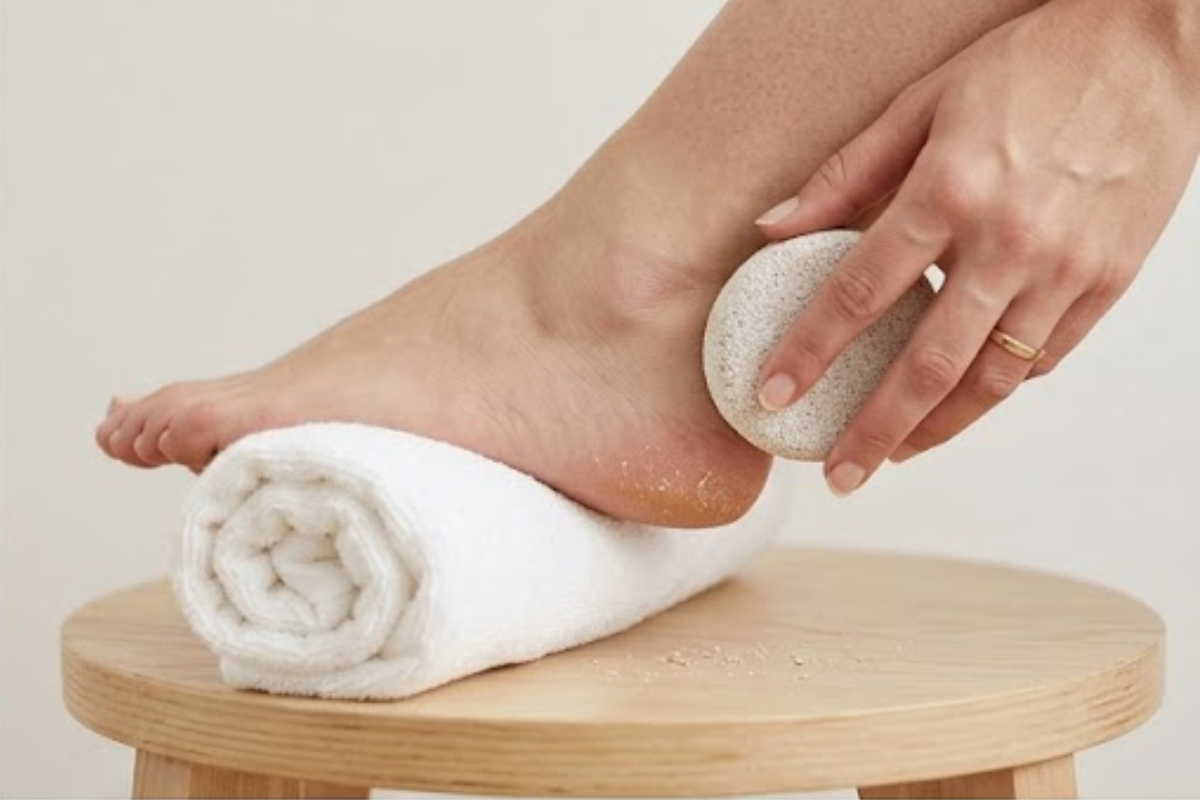
Once the skin has softened, use a pumice stone or gentle foot file on areas that feel thick and rough. Move it lightly across the heel rather than scrubbing hard.
There’s no need to remove every bit of hard skin in one session. Over-exfoliating can leave the skin irritated and may make cracks more uncomfortable.
If your heels have deep, painful cracks, bleeding, or open areas, skip the foot file until the skin has healed.
3. Apply a thick moisturizer
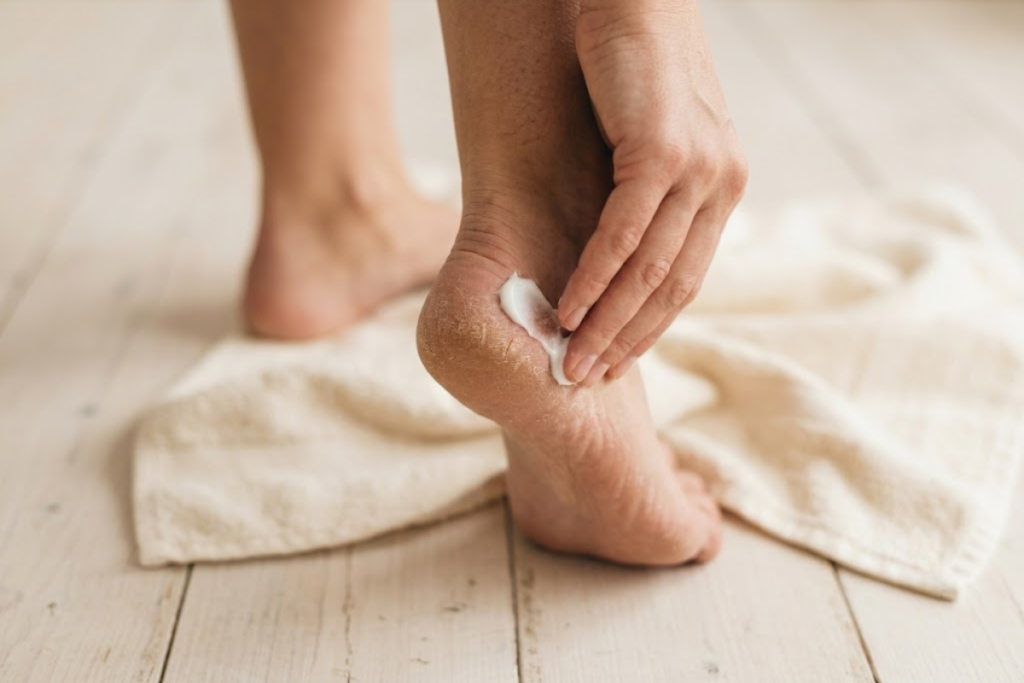
Moisturizing after bathing or soaking can make a noticeable difference. Look for a thick foot cream or ointment containing ingredients such as urea, lactic acid, or salicylic acid. These ingredients can help soften and loosen hardened skin while providing moisture.
For very dry heels, a plain petroleum jelly-based ointment can also help reduce moisture loss.
Apply a generous layer while the skin still feels slightly damp. Pay particular attention to the thickest areas around the edges of the heel.
4. Try the overnight sock method
One easy way to keep moisturizer on your heels for longer involves wearing cotton socks at night.
Before bed, apply a thick layer of foot cream or petroleum jelly to clean, dry heels. Put on a pair of comfortable cotton socks and leave them on overnight.
The socks help prevent the moisturizer from rubbing off onto your sheets and give the product several hours to sit against the skin.
Repeat this routine regularly rather than expecting one treatment to transform rough heels overnight.
5. Give your heels a break from open-back shoes
Flip-flops and backless shoes can leave the heel exposed and may allow the skin to dry out. They can also increase pressure on the back and edges of the heel while you walk.
When possible, choose shoes that fit comfortably and provide some support around the heel. Soft socks can also reduce friction between your feet and footwear.
You don’t have to stop wearing open shoes altogether, but switching between different types of footwear may help if your heels frequently become rough.
6. Don’t cut thick skin with sharp tools
It can be tempting to use scissors, razors, or other sharp objects to remove thick skin quickly. Avoid doing this at home. Cutting too deeply can cause bleeding, irritation, or infection.
A pumice stone or foot file provides a gentler approach. Use it gradually over several sessions instead of trying to remove a large amount of hardened skin at once.
7. Make foot care a regular habit
Once your heels become smoother, maintaining them usually takes less effort than repairing severely dry skin.
A simple routine might involve moisturizing your feet every day, gently exfoliating once or twice a week when needed, and applying a thicker moisturizer before bed.
Pay attention to your heels after long periods of walking, during dry weather, or when you notice the skin becoming rough again. Starting your routine early can prevent small areas of dryness from turning into deeper cracks.
When to get medical advice
Home care may not be appropriate for every type of cracked heel. Seek medical advice if cracks become deep, painful, swollen, red, warm, or start bleeding. Persistent cracking can sometimes occur alongside conditions that need specific treatment.
With consistent care, gentle exfoliation, and plenty of moisture, many cases of dry, rough heels can gradually become softer and smoother without complicated treatments.