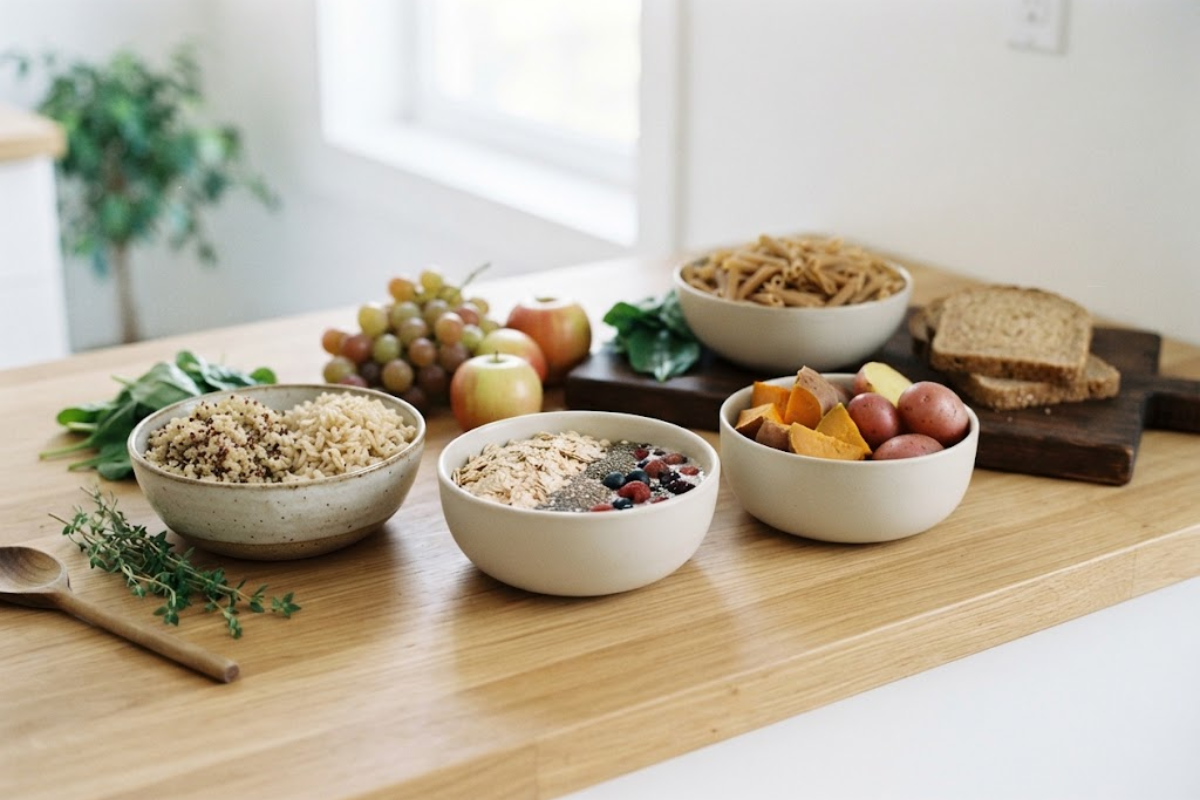
Carbohydrates often get a bad reputation, especially when low-carb diets dominate nutrition conversations. But carbs appear in plenty of nutritious foods, from oats and beans to apples and sweet potatoes. The bigger question isn’t whether carbs belong in a balanced diet, but which carbohydrate-rich foods make sense to eat regularly.
Carbohydrates provide glucose, which the body uses for energy. Foods such as whole grains, fruits, vegetables, and beans also bring fiber, vitamins, minerals, and other nutrients to the table.
Here are several healthy carb choices that can fit into everyday meals.
1. Oatmeal
Oatmeal makes an easy breakfast because it provides carbohydrates along with fiber. Oats contain soluble fiber, including beta-glucan, and can be paired with foods such as berries, bananas, nuts, seeds, or plain yogurt.
Instead of loading a bowl with flavored syrups or sugary toppings, try cinnamon, sliced fruit, peanut butter, or chopped walnuts. Rolled or steel-cut oats also tend to be less processed than many instant flavored varieties.
2. Sweet Potatoes
Sweet potatoes provide carbohydrates along with fiber, potassium, vitamin C, and vitamin B6. Their naturally sweet flavor can make them useful when you want something more interesting than another serving of rice or bread.
Try a baked sweet potato topped with black beans and salsa, or serve roasted cubes alongside chicken and vegetables. Keeping the skin on adds more fiber.
3. Beans and Lentils
Black beans, kidney beans, chickpeas, and lentils combine carbohydrates with fiber and plant-based protein. Fiber-rich legumes digest more slowly than many highly refined carbohydrate foods, making them a practical addition to balanced meals.
They can go into chili, soups, salads, tacos, grain bowls, or wraps. Canned beans can also save time. Look for low-sodium or no-salt-added varieties when possible.
4. Brown Rice
Brown rice keeps the bran and germ that get removed during the processing of white rice. That means it provides more fiber and nutrients than its refined counterpart.
A serving of brown rice can work as the base for a simple bowl with grilled chicken, tofu, beans, roasted vegetables, or avocado. Portion size still matters, since even nutritious carbohydrate foods can add substantial calories when served in large amounts.
5. Quinoa
Quinoa works well when you want something other than rice or pasta. It provides carbohydrates, fiber, and protein, and it can be served hot or cold.
Try quinoa with roasted vegetables and chickpeas for lunch, or use it as a side dish with salmon or chicken. It also works nicely in salads with cucumber, tomatoes, herbs, and a simple vinaigrette.

6. Whole-Grain Bread
Bread doesn’t automatically need to disappear from a balanced diet. The type of bread makes a difference.
Whole-grain bread typically provides more fiber and nutrients than bread made primarily from refined flour. When shopping, check the ingredient list and look for “whole wheat” or another whole grain near the beginning. Whole grains such as oats, barley, brown rice, and whole wheat retain more of the grain’s original components.
A slice of whole-grain toast with eggs and avocado can make a filling breakfast, while a turkey sandwich with vegetables can work for lunch.
7. Fruit
Fruit contains naturally occurring sugars, but whole fruit also comes with water, fiber, vitamins, minerals, and plant compounds. Apples, oranges, pears, berries, peaches, and bananas can all fit into a balanced eating pattern.
The distinction between whole fruit and fruit-flavored products matters. An apple provides fiber that juice doesn’t provide in the same amount. For everyday snacks, whole fruit can be an easy option.
8. Barley
Barley can add variety to meals that usually revolve around rice or pasta. It contains fiber and has a chewy texture that works particularly well in soups, grain bowls, and salads.
Pearled barley takes less time to cook than some less-processed forms, although it undergoes more processing. It can still provide a useful carbohydrate option alongside vegetables and protein.
9. Potatoes
Potatoes sometimes get lumped together with less nutritious carbohydrate foods, but a plain baked or roasted potato provides carbohydrates along with potassium, vitamin C, and other nutrients. Preparation matters.
A baked potato topped with beans, Greek yogurt, vegetables, or a small amount of cheese can fit comfortably into a balanced meal. French fries and heavily processed potato products create a different nutritional picture because of added fats, salt, and preparation methods.
Making Carbs Part of a Balanced Meal
Healthy carbohydrate choices don’t need to dominate the plate. One simple approach involves pairing a fiber-rich carb with protein, vegetables, and a source of healthy fat.
For example, brown rice can go with grilled chicken and broccoli. Oatmeal can pair with berries and nuts. Beans can accompany whole-grain tortillas, vegetables, and avocado.
The goal doesn’t need to be eliminating carbohydrates. Choosing minimally processed sources more often can make room for carbs while keeping meals satisfying and nutritionally varied. Harvard’s Healthy Eating Plate similarly places whole grains, fruits, vegetables, and beans among its preferred carbohydrate sources.
For a basic explanation of how carbohydrates work, see Wikipedia’s overview. For more practical food ideas, EatingWell’s guide to complex carbohydrates covers whole grains, legumes, fruits, vegetables, and potatoes.