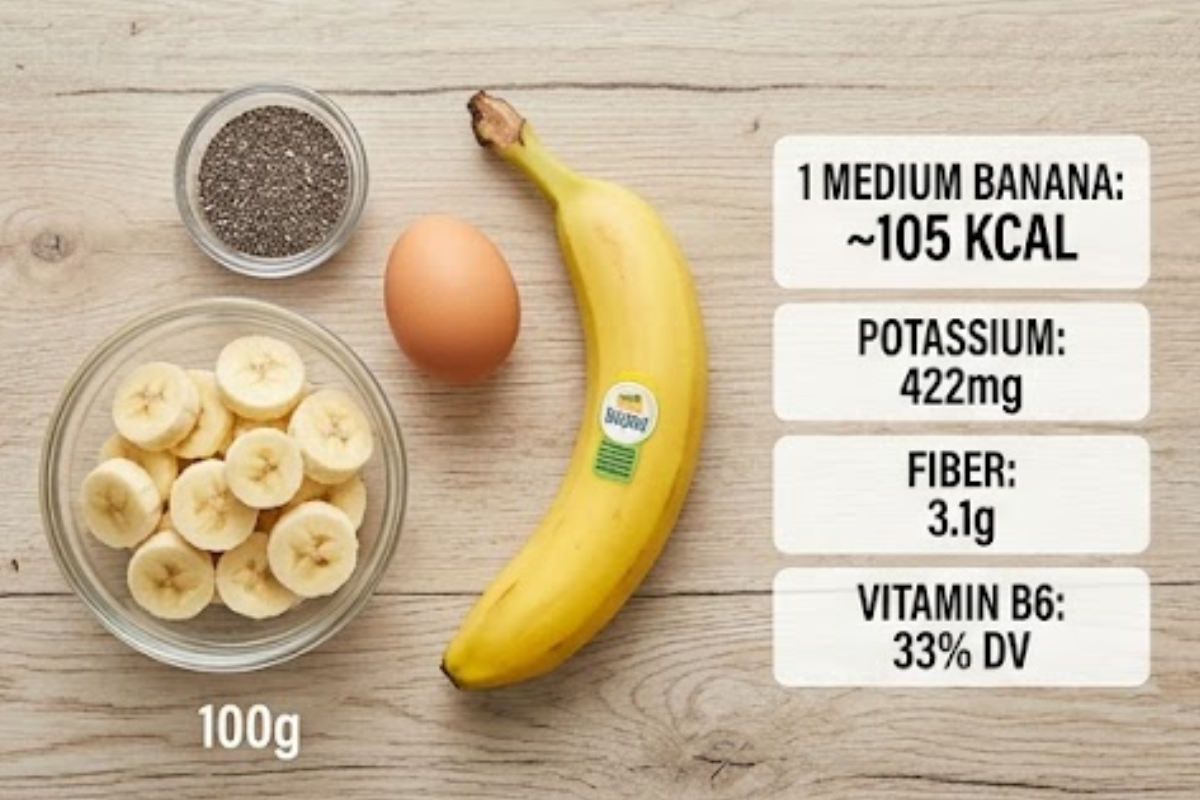
Many people wonder whether the calories in a banana make it less healthy than lower-calorie fruits such as berries or melons. Bananas are among the world’s most popular fruits, providing carbohydrates, fiber, and a convenient source of natural energy. So, are bananas really worth the calories? For most people, the answer depends on overall dietary habits, activity level, and nutritional needs rather than calorie count alone.
Calories in a Banana by Size
The calorie content of a banana varies with its size:
- Small banana (about 100 g): approximately 90 calories
- Medium banana: approximately 105 calories
- Large banana: approximately 120 calories
While bananas contain more calories than some fruits, they also provide a combination of carbohydrates, fibre, vitamins, and minerals that many lower-calorie fruits contain in smaller amounts.
Banana Calories, Carbohydrates, and Natural Sugar
Bananas are often criticised for their sugar content, but the sugars occur naturally alongside fibre. This fibre slows digestion, helping the body absorb carbohydrates more gradually than foods containing added sugars.
A medium banana typically provides:
- Around 27 grams of carbohydrates
- About 3 grams of fibre
- Less than 1 gram of fat
- Roughly 1 gram of protein
Unlike sweets or sugary drinks, bananas also contribute valuable nutrients that support everyday health.
Banana Nutrition Beyond Calories
One of the biggest nutritional advantages of bananas is their potassium content. Potassium plays an important role in maintaining normal muscle function, nerve signalling, and fluid balance. Adequate potassium intake may also support healthy blood pressure when combined with an overall balanced diet.
Bananas also contain:
- Vitamin B6, which helps support normal metabolism and brain function
- Vitamin C, an antioxidant that contributes to immune health
- Magnesium, important for muscles and bones
- Manganese, which supports normal metabolism and connective tissue
Although bananas should not be considered a complete source of any one nutrient, they can make a meaningful contribution to daily intake.
Are bananas filling?
One reason bananas are often considered “worth the calories” is their ability to promote fullness.
The combination of carbohydrates, fibre, and water may help people feel satisfied between meals. While a banana alone may not keep hunger away for several hours, pairing it with protein or healthy fats can create a more balanced snack.
Examples include:
- Banana with natural peanut butter
- Banana and Greek yoghurt
- Banana sliced over porridge
- Banana with a handful of nuts
Adding protein helps slow digestion further and may increase satiety.
Good for exercise and recovery
Athletes and recreational exercisers frequently choose bananas before or after workouts.
Before exercise, bananas provide easily digestible carbohydrates that can help fuel activity. After exercise, they help replenish glycogen stores while supplying potassium that supports normal muscle function.
For endurance sports, many people find bananas to be a practical alternative to highly processed energy snacks.
Calories in a Banana and Weight Loss
Many people trying to lose weight avoid bananas because they assume they contain too many calories.
However, no single food determines whether someone gains or loses weight. Sustainable weight management depends primarily on overall calorie intake, dietary quality, physical activity, sleep, and consistency over time.
Because bananas are naturally filling and portable, they may even help reduce the temptation to snack on highly processed foods that are often higher in calories, added sugars, and saturated fat.
Replacing a packet of biscuits or a sugary pastry with a banana can reduce overall calorie intake while improving nutritional quality.
When might bananas not be the best choice?
Although bananas are healthy for most people, they may not be ideal in every situation.
Individuals with certain kidney conditions may need to limit potassium intake under medical supervision. People managing diabetes can generally include bananas as part of a balanced diet, but portion size and overall carbohydrate intake remain important considerations.
Very ripe bananas also contain slightly more readily available sugars than greener bananas, although the calorie difference is minimal.

The verdict
For most healthy adults, bananas offer considerably more than their calorie count suggests. They provide natural carbohydrates for energy, dietary fibre for fullness, and several important vitamins and minerals that support overall health.
Rather than focusing solely on calories, it is more helpful to consider the overall nutritional value of foods. A medium banana delivers around 105 calories along with nutrients that can support an active lifestyle, making it a nutritious choice for many people.
As with nearly every food, moderation and balance matter. Eating bananas as part of a varied diet rich in fruits, vegetables, whole grains, lean proteins, and healthy fats is likely to offer greater health benefits than concentrating on the calorie content of any single food.
Disclaimer: This article is provided for informational purposes only and should not be considered medical, nutritional, or dietary advice. Individual nutritional needs vary. Consult a qualified healthcare professional or registered dietitian before making significant changes to your diet.

2 thoughts on “Are bananas worth the calories?”