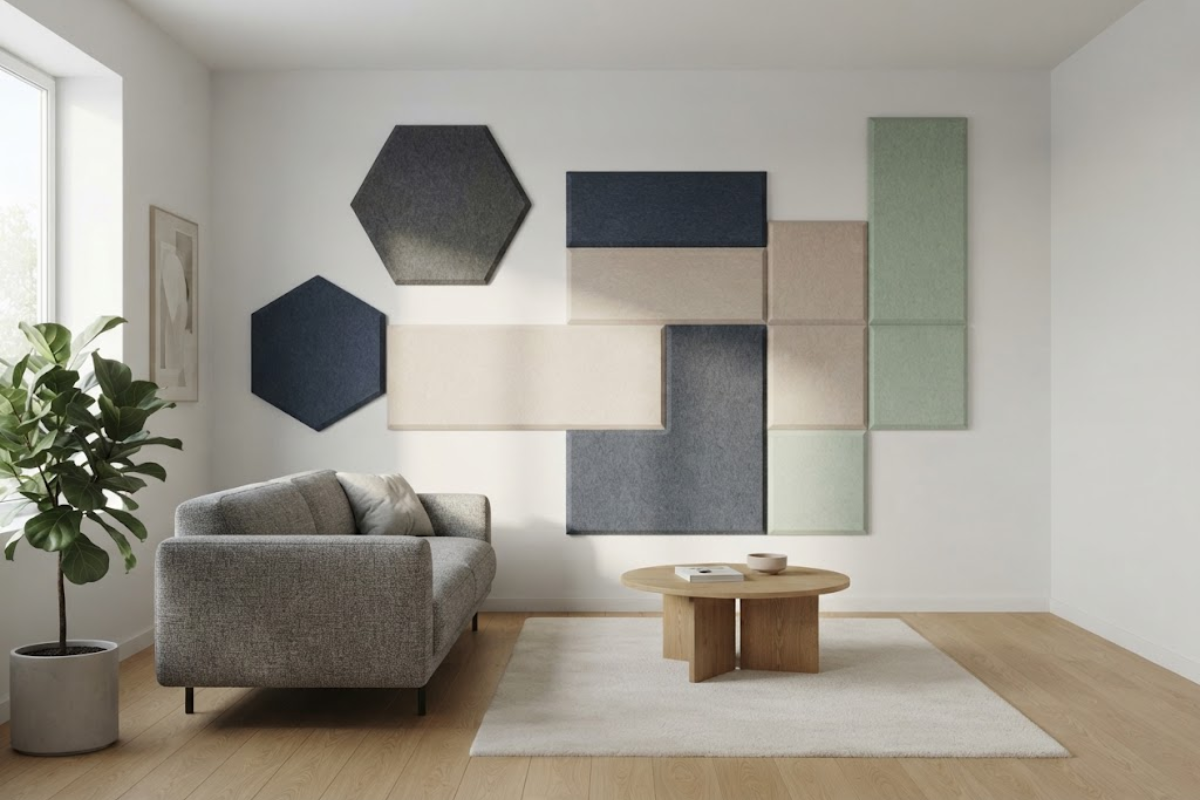
A noisy room can make it harder to work, relax, watch TV, or have a conversation. Hard surfaces such as drywall, glass, tile, and hardwood can bounce sound around a room, creating echoes and making everyday noise feel louder. Acoustic panels can help absorb some of those reflections without requiring a major renovation.
From simple wall panels to ceiling treatments, these ideas can fit different rooms, budgets, and decorating styles.
1. Create a Large Wall Panel Behind the TV
The wall behind a television often has plenty of unused space for acoustic treatment. A group of fabric-covered panels can absorb some of the sound that would otherwise bounce between the TV wall and opposite surfaces.
For a cleaner appearance, choose panels in a neutral shade that matches the room. Larger panels can create a more intentional look than several small pieces scattered across the wall.
This setup works particularly well in family rooms where conversations, television audio, and other household sounds overlap.
2. Turn Acoustic Panels Into Wall Art
Acoustic treatment does not have to look like office equipment. Panels covered in patterned fabric can double as decorative wall pieces.
Try arranging several square or rectangular panels in a geometric pattern. Different shades of the same color can create visual variation without making the wall feel busy.
For homeowners who enjoy DIY projects, acoustic panels can also provide a starting point for custom designs using fabric, wood frames, and sound-absorbing insulation.
3. Add Panels to a Home Office
A home office can become surprisingly noisy when sound travels through nearby rooms. Reflections from bare walls may also make video calls sound less clear.
Place acoustic panels on the wall directly behind your desk or on the wall opposite it. A few strategically positioned panels can help reduce reflected sound around the workspace.
Pairing panels with a rug, curtains, upholstered chair, or bookcase can add more soft surfaces to the room without covering every wall.
4. Use a Ceiling Acoustic Panel
Walls aren’t the only surfaces that bounce sound. A ceiling treatment can help when a room has lots of hard flooring, large windows, or minimal furniture.
Suspended acoustic panels, sometimes called acoustic clouds, hang horizontally above a seating or work area. They can absorb sound before it repeatedly travels between the ceiling and floor.
This idea works particularly well in open-plan rooms, dining areas, and home offices with high ceilings.
5. Build a Quiet Reading Corner
A reading nook can benefit from acoustic treatment without requiring panels throughout the room. Place a few panels around the seating area, particularly on nearby walls that have hard surfaces.
Add a thick rug, upholstered chair, curtains, and a full bookshelf. Books and other irregular surfaces can help break up reflections, while softer furnishings absorb some sound.
The result can feel quieter without making the entire room look like a recording studio.
6. Install Wood Slat Acoustic Panels
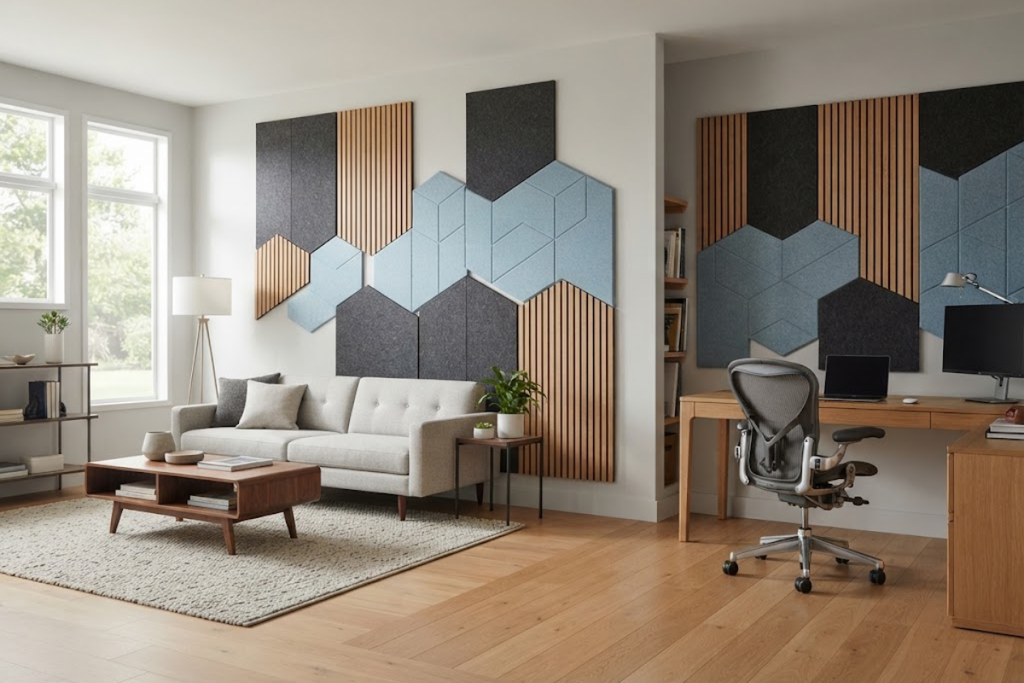
Wood slat panels combine a decorative surface with sound-absorbing material behind the slats. They can work particularly well in modern living rooms, bedrooms, offices, and entertainment spaces.
Use them on one section of a wall rather than covering the entire room. Behind a desk, sofa, or television, a wood-slat treatment can create a defined zone while helping manage echoes.
A guide to acoustic treatment can also help when deciding where panels make the most sense in a room.
7. Treat the Wall Opposite a Large Window
Large windows create hard reflective surfaces, particularly when paired with hardwood floors or bare walls. Heavy curtains can absorb some sound, while acoustic panels on the opposite wall can address additional reflections.
Floor-to-ceiling curtains paired with a few strategically positioned panels can work better visually than trying to cover every available surface.
8. Use Panels Around a Home Theater
Home theaters benefit from thoughtful sound absorption because excessive reflections can make dialogue and other audio less distinct.
Instead of covering every wall, consider placing panels at reflection points around the seating area. Side walls, the rear wall, and sections near the front speakers can all be considered when planning the layout.
Thicker carpet, upholstered furniture, and curtains can add further sound absorption.
9. Make a Bedroom Quieter With Fabric Panels
Bedrooms usually need less acoustic treatment than entertainment rooms, but panels can help reduce echoes in rooms with hardwood floors and minimal furniture.
Fabric-covered panels behind the bed can create a soft headboard effect while reducing reflections from the wall. Choose colors that already appear in the bedding or curtains for a cohesive look.
10. Cover Only the Noisiest Parts of the Room
More panels do not automatically mean a better result. Start by identifying where sound seems to bounce or where conversations become difficult to follow.
Treating a few problem areas can make more sense than covering every wall. Combining acoustic panels with rugs, curtains, upholstered furniture, bookshelves, and other soft or irregular surfaces can also change how sound behaves inside the room.
The best acoustic-panel setup usually depends on the room itself. A small home office may need only a few wall panels, while an open family room with hard floors and high ceilings may benefit from a combination of wall and ceiling treatments.