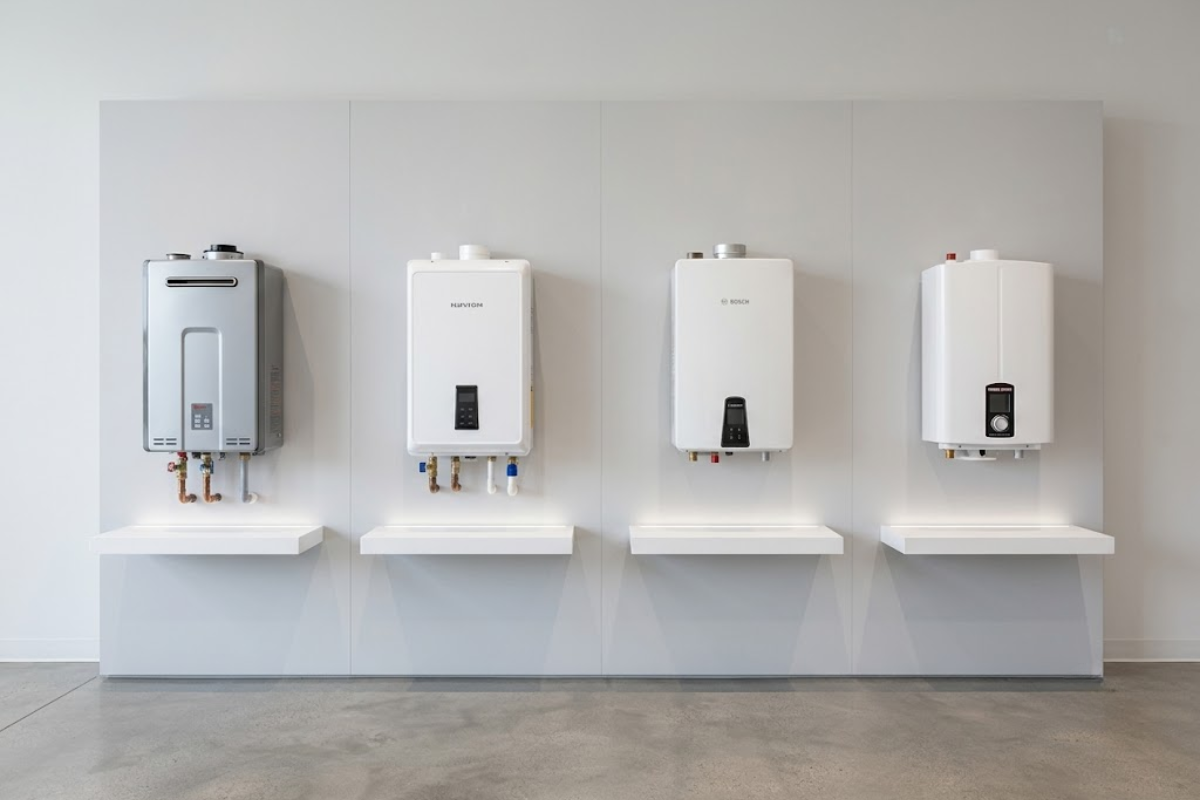
For many homeowners, hot water is something that is rarely thought about until the system stops working. When it’s time to replace an aging water heater, one option that often comes up is a tankless water heater. Marketed as an energy-efficient, space-saving alternative to traditional storage tank models, tankless systems have gained popularity in recent years.
But is switching to tankless water heating actually worth it? The answer depends on your household size, hot water usage, installation costs, and long-term goals. Understanding the advantages and potential drawbacks can help you decide whether the investment makes sense.
How does a tankless water heater work?
Unlike conventional water heaters that continuously heat and store water in a large tank, tankless water heaters heat water only when you need it. When you turn on a hot water tap, cold water passes through a heat exchanger powered by either gas or electricity. The water is heated almost instantly before reaching your faucet or appliance.
Since there is no storage tank, the unit does not use energy to keep water hot throughout the day, which can reduce standby energy losses.
Potential benefits of switching
Improved energy efficiency
One of the biggest reasons homeowners choose tankless systems is energy efficiency. Traditional storage tanks repeatedly reheat water to maintain the set temperature, even when no one is using hot water.
Tankless units only operate during active water use, which can lower energy consumption, particularly in households with moderate hot water demand.
Endless hot water
Because water is heated on demand, a properly sized tankless system can provide a continuous supply of hot water. This can be especially useful for larger families or homes where multiple people shower one after another.
Instead of waiting for a storage tank to refill and reheat, the system continues producing hot water as long as it remains within its rated capacity.
Space savings
Tankless water heaters are significantly smaller than traditional tanks. Most wall-mounted models free up valuable floor space in utility rooms, garages, closets, or basements.
For smaller homes, apartments, or renovation projects, the compact size can be an added advantage.
Longer service life
Tankless units often have a longer expected lifespan than traditional storage water heaters when properly maintained. While many conventional tanks last around 8 to 12 years, tankless systems can often remain in service for 15 to 20 years or more.
Many components are also replaceable, making repairs possible without replacing the entire unit.
Factors to consider before switching
Higher upfront cost
The biggest obstacle for many homeowners is the initial investment. Tankless water heaters generally cost more to purchase than conventional models.
Installation may also be more expensive, especially if gas lines, electrical service, ventilation, or plumbing modifications are required.
Although lower energy bills can offset some of the expense over time, the payback period varies depending on energy prices and household usage.
Flow rate limitations
Tankless systems heat water as it flows through the unit, so every model has a maximum flow rate. If several hot water fixtures are used simultaneously, the system may struggle to keep up if it isn’t properly sized.
For example, running multiple showers while operating a dishwasher and washing machine at the same time may exceed the capacity of a smaller unit.
Larger homes sometimes install multiple tankless units to meet higher demand.
Regular maintenance
Like any water heating system, tankless units require maintenance to perform efficiently.
In areas with hard water, mineral deposits can build up inside the heat exchanger. Periodic flushing helps maintain performance and extend the system’s lifespan.
Some manufacturers recommend annual maintenance, particularly where water hardness is high.
When switching makes the most sense
A tankless water heater may be a good choice if you:
- Are replacing an aging water heater anyway.
- Want to reduce energy use over the long term.
- Have limited installation space.
- Prefer a continuous supply of hot water.
- Plan to stay in your home for many years.
On the other hand, homeowners who have relatively low hot water usage or are looking for the lowest initial purchase cost may find that a traditional storage tank remains the more economical option.
Gas vs. electric tankless systems
Both gas and electric models are widely available.
Gas tankless water heaters generally provide higher flow rates and are better suited for larger households with significant hot water demand. However, they often require venting and may need upgraded gas lines.
Electric tankless water heaters are easier to install in some homes but may require substantial electrical upgrades depending on the home’s existing service. They are often suitable for smaller households, apartments, or point-of-use applications.
Is the switch worth it?
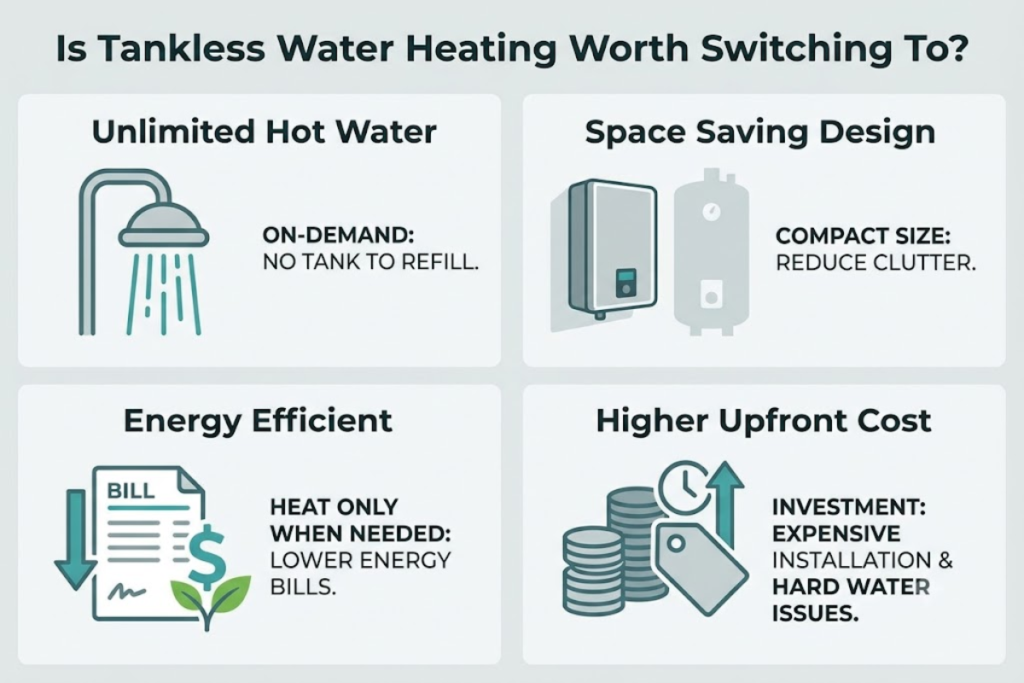
Tankless water heating can offer meaningful benefits, including improved energy efficiency, continuous hot water, longer equipment life, and valuable space savings. However, these advantages come with higher upfront costs and the need to choose a system that matches your household’s water demand.
For homeowners planning a long-term investment, especially those replacing an older water heater, a properly installed tankless system can provide lasting value. For others, particularly those focused on minimizing installation costs, a high-efficiency storage tank water heater may remain the more practical choice.
Ultimately, the best decision depends on balancing installation expenses, expected energy savings, household usage patterns, and how long you expect to remain in your home. A system that is correctly sized and professionally installed is far more important than simply choosing the latest technology.