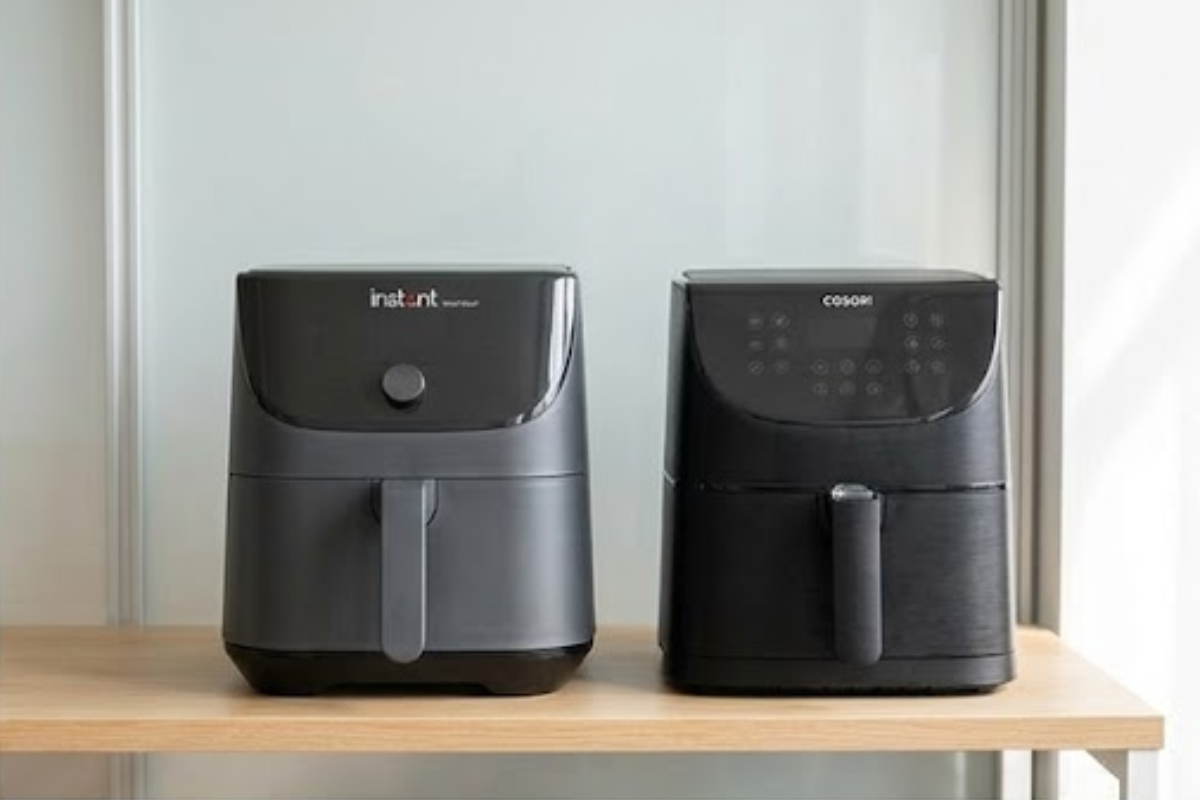
Air fryers have become one of the most popular kitchen appliances in recent years, with many households using them for everything from frozen snacks to roasted vegetables and full meals. They are often promoted as a faster, more energy-efficient alternative to traditional ovens. But do they actually save time and energy, or is the convenience overstated?
The answer depends on what you’re cooking, how often you use the appliance, and the size of your household. For many everyday meals, an air fryer can offer noticeable advantages, but it is not the perfect replacement for every cooking method.
How an air fryer works
Despite the name, an air fryer does not actually fry food with air. Instead, it uses a powerful heating element combined with a high-speed fan that circulates hot air around the food. This rapid airflow cooks food evenly while helping create a crispy outer layer similar to frying, but with little or no added oil.
Because the cooking chamber is much smaller than a conventional oven, it heats up quickly and maintains a consistent temperature with less energy.
Does it really save time?
In many situations, yes.
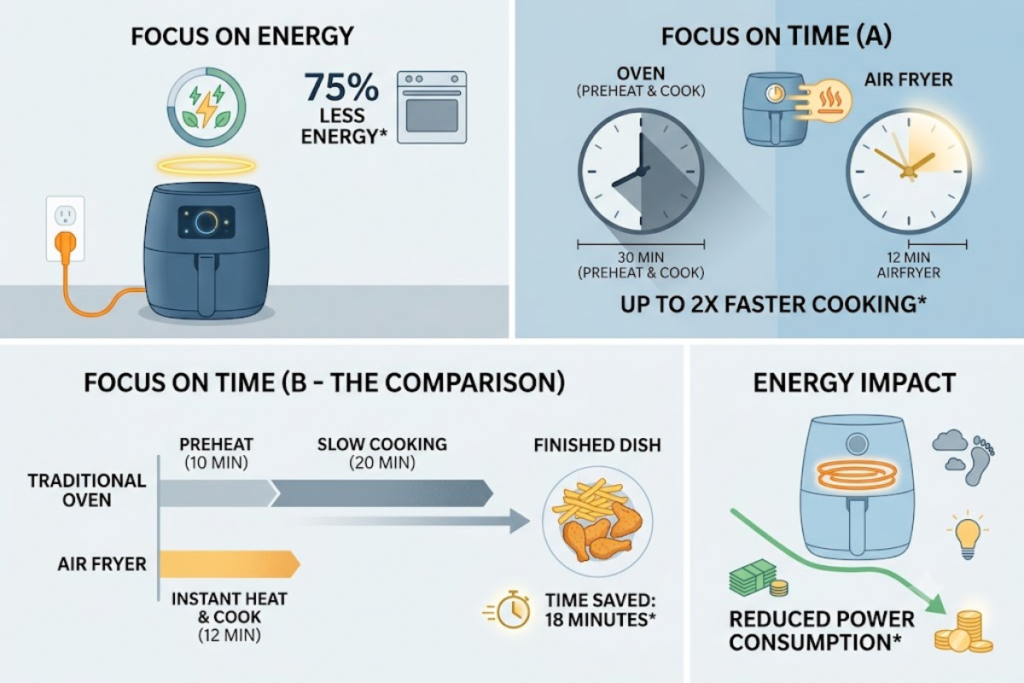
One of the biggest time-saving benefits is that most air fryers require little or no preheating. While a traditional oven may take 10 to 15 minutes to reach the desired temperature, many air fryers are ready in just a few minutes.
Cooking times are often shorter as well. Foods such as chicken wings, fries, vegetables, fish fillets, and frozen appetizers frequently cook 20% to 40% faster than they would in a conventional oven.
The smaller cooking space also allows hot air to circulate more efficiently, reducing the overall cooking time without sacrificing texture.
For busy individuals or families preparing quick weeknight dinners, these time savings can add up over the course of a week.
Can it reduce energy use?
Air fryers generally use less electricity than a full-sized electric oven because they operate with a smaller cooking chamber and shorter cooking times.
Although an air fryer’s heating element may consume a similar amount of power while running, it usually runs for fewer minutes and does not need to heat a large oven cavity. As a result, the total electricity used for many small meals is often lower.
The greatest energy savings occur when preparing:
- Single servings
- Meals for one or two people
- Frozen foods
- Vegetables
- Small portions of meat
If you’re cooking a large roast, baking several trays of food, or preparing meals for a large family, a conventional oven may be more practical since an air fryer may require multiple cooking batches.
What foods work best?
Air fryers perform particularly well with foods that benefit from dry circulating heat.
Popular choices include potatoes, chicken, seafood, vegetables, tofu, frozen snacks, and reheating leftovers such as pizza or fried foods. Many people also use them for baking small desserts, muffins, or cookies.
Foods coated in wet batter are generally less successful because the batter can drip before it sets. Likewise, dishes requiring large baking pans or significant cooking space may not fit comfortably inside many air fryer baskets.
Other advantages
Beyond saving time and energy, many users appreciate the convenience.
Air fryers are generally easy to clean, especially models with dishwasher-safe baskets. They also produce less heat in the kitchen than conventional ovens, making them more comfortable to use during warm weather.
Because they require little oil, they can also help reduce added fat when preparing foods that would otherwise be deep-fried. However, healthier results still depend on the ingredients being cooked rather than the appliance itself.
Are there any downsides?
Like any appliance, air fryers have limitations.
Basket capacity can be small, requiring multiple batches for larger families. Some foods may dry out if overcooked, while baked goods may not achieve exactly the same results as those made in a conventional oven.
Counter space is another consideration, especially in smaller kitchens. In addition, very inexpensive models may have fewer cooking functions or less consistent temperature control compared with higher-quality units.
For households that rarely cook at home, purchasing another appliance may not provide significant value.
The bottom line
For many households, air fryers do save both time and energy when preparing everyday meals. Faster preheating, shorter cooking times, and a compact cooking chamber make them especially useful for small portions and quick recipes.
However, they are not a complete replacement for a conventional oven. Large family meals, baking projects, and oversized dishes may still be better suited to traditional cooking methods.
If you frequently prepare meals for one or two people, enjoy crispy foods with minimal oil, and want a convenient appliance for everyday cooking, an air fryer can be a practical addition to your kitchen. The greatest benefits come from using it for the types of meals it handles best rather than expecting it to replace every appliance you already own.
Disclaimer: This article is for informational purposes only and should not be considered professional cooking, nutritional, or energy-efficiency advice.