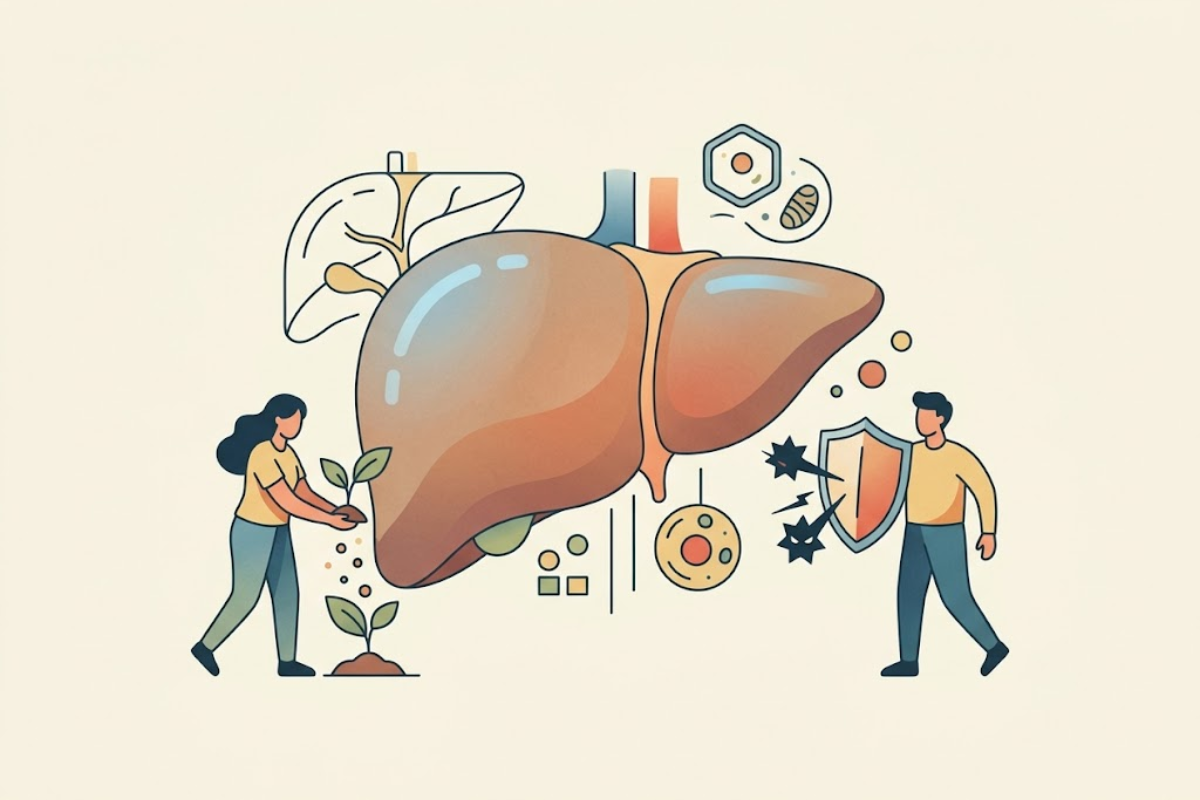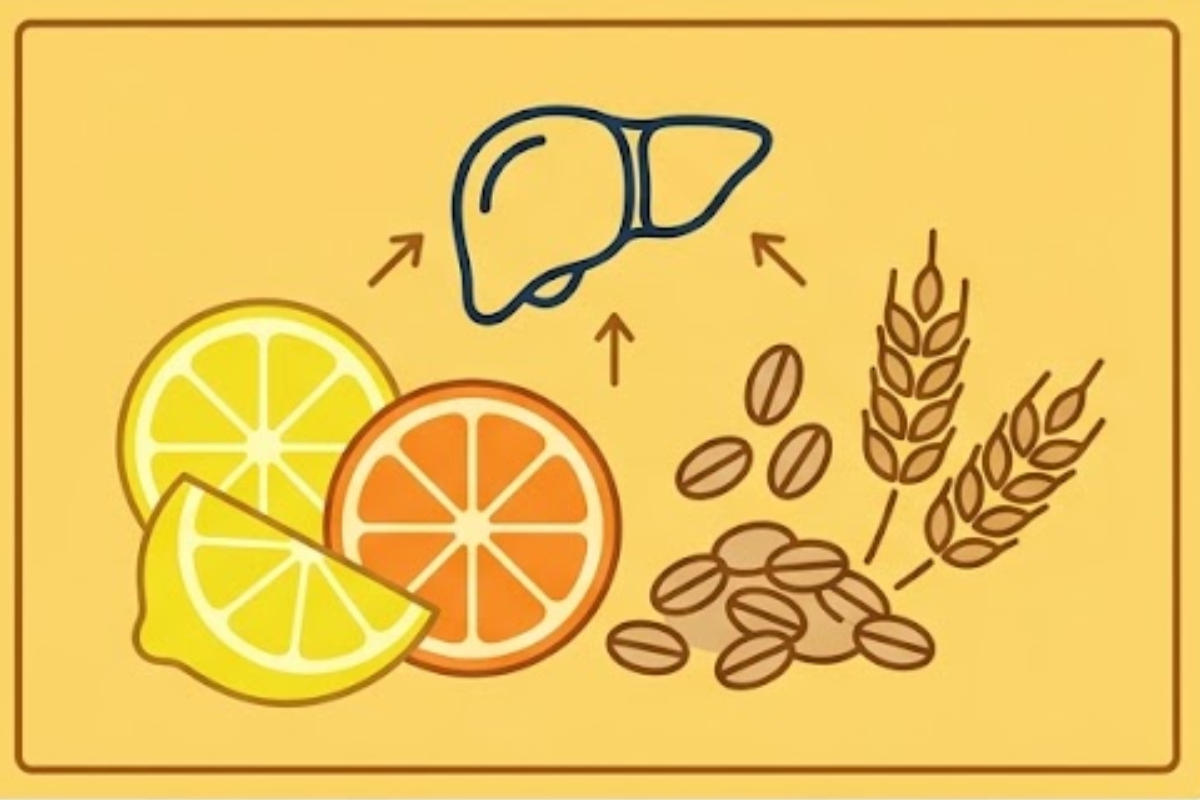
Foods for liver health do not have to come from a specialty health-food aisle. Many familiar staples fit a liver-friendly eating pattern. Many everyday staples already contain fiber, unsaturated fats, antioxidants, or other nutrients that can support overall metabolic health.
Diet alone cannot prevent or treat every liver condition, but what you regularly put on your plate can matter, particularly when meals center on whole foods and contain less added sugar, highly processed food, and unhealthy fats.
Here are some common kitchen staples worth keeping around.
Foods for liver health: oatmeal
A bowl of plain oatmeal makes an easy breakfast while adding plenty of fiber to the diet. Oats contain beta-glucan, a type of soluble fiber associated with better cholesterol and blood sugar control.
That matters because metabolic problems such as high blood sugar and excess body fat can increase the risk of fatty liver disease. Try topping oatmeal with berries, walnuts, or sliced banana instead of loading it with brown sugar or flavored syrups.
2. Beans
Black beans, kidney beans, chickpeas, and lentils can provide a combination of fiber and plant-based protein. Their fiber content can help with fullness and blood sugar management, while replacing some higher-fat meats with beans can reduce saturated fat intake. This contrasts with some everyday foods that may be harder on the liver.
Add them to soups, salads, grain bowls, tacos, or chili for an easy weeknight option.
3. Leafy greens
Spinach, kale, collard greens, and other leafy vegetables pack fiber and plant compounds into relatively few calories. Research has linked diets containing more vegetables with better metabolic health, and spinach has received particular attention in studies of fatty liver disease.
Fresh or frozen greens can work equally well in omelets, smoothies, soups, and stir-fries. Learn more about the nutritional value of frozen vegetables.
4. Extra-virgin olive oil
Swapping butter or other sources of saturated fat for extra-virgin olive oil can be a simple change. Olive oil contains mostly monounsaturated fat along with plant compounds called polyphenols.
Research has associated olive oil consumption with favorable measures of liver fat, blood lipids, and insulin sensitivity.
Use a small amount for roasting vegetables, making salad dressing, or sautéing.
5. Walnuts
A handful of walnuts makes an easy snack and adds unsaturated fats, fiber, and plant compounds to the diet. Research has linked higher nut intake with a lower prevalence of fatty liver disease, although nuts should still be eaten in sensible portions because they’re calorie-dense.
Try adding chopped walnuts to oatmeal, plain yogurt, or a salad.
6. Broccoli
Broccoli brings fiber and a range of plant compounds to the plate. Other cruciferous vegetables, including cauliflower, cabbage, and Brussels sprouts, can fit the same type of eating pattern.
Roast broccoli with olive oil and garlic, or add it to grain bowls and stir-fries. An air fryer can be another option; see whether air-fried foods are healthier than traditionally fried foods.
7. Garlic
That little bulb sitting in the pantry can add plenty of flavor without relying on heavy sauces, excess salt, or sugar. Garlic also contains sulfur-containing compounds and plant compounds that have been studied for their potential health effects.
Use fresh garlic in vegetable dishes, bean recipes, soups, sauces, and marinades.
8. Coffee
For many Americans, coffee already forms part of the daily routine. Research has found associations between regular coffee consumption and a lower risk of several liver problems, including fatty liver disease and liver fibrosis.
The way you drink it matters, too. A plain cup or coffee with a small amount of milk generally adds far less sugar than a heavily sweetened specialty drink.

9. Berries
Blueberries, strawberries, raspberries, and blackberries provide fiber and naturally occurring plant compounds while satisfying a sweet craving. Fresh or frozen berries can go into oatmeal, yogurt, smoothies, or salads.
Choosing whole fruit also makes it easier to avoid the large amounts of added sugar found in many desserts and sweetened drinks.
10. Brown rice and other whole grains
Brown rice, whole-wheat bread, barley, quinoa, and other whole grains can replace some refined grains while adding more fiber. Fiber comes from plant foods such as whole grains, vegetables, fruits, legumes, nuts, and seeds.
A simple meal of brown rice, beans, roasted vegetables, and a little olive oil can check several liver-friendly boxes at once.
Making the everyday choice
There doesn’t need to be a complicated food list in the kitchen. Oatmeal, beans, greens, olive oil, nuts, vegetables, whole grains, berries, and coffee can all fit into a balanced eating pattern.
The bigger dietary picture matters more than any single ingredient. Regularly choosing fiber-rich plant foods and unsaturated fats while cutting back on added sugar, heavily processed foods, fried foods, and excess alcohol can make everyday meals more supportive of liver health.
Building meals around several foods for liver health is more useful than relying on any one so-called superfood.