
Choosing jeans for body shape can feel harder than it should. Two pairs with the same waist size may fit completely differently because the rise, leg shape, waistband, and placement all affect the final silhouette.
There’s no single “best” jean cut for every body shape. The trick comes from knowing which proportions you want to balance, define or simply feel comfortable in.
1. Straight-Leg Jeans Balance Most Body Shapes
Straight-leg jeans run fairly evenly from the thigh to the ankle, without hugging the legs like skinny jeans or widening dramatically like wide-leg styles.
They can work particularly well on hourglass and rectangle body shapes because the relatively consistent leg line creates a balanced silhouette. A mid- or high-rise waistband can also add definition around the waist without making the outfit feel overly fitted.
For petite frames, look for a cropped straight leg or a pair with a shorter inseam. Too much fabric around the ankle can overwhelm a smaller frame.
2. Bootcut Jeans Balance Hips and Thighs
Bootcut jeans fit closer through the hips and thighs before widening slightly from the knee downward. That small flare creates a longer-looking leg line, especially when paired with boots or shoes with some height.
People with pear-shaped bodies may like this cut because the wider hem can visually balance fuller hips and thighs. It can also work nicely on hourglass figures, where the fitted upper portion follows the waist and hips while the lower leg adds proportion.
A high-rise bootcut can create an especially streamlined look when worn with a tucked-in top.
3. Wide-Leg Jeans Add Lower-Body Volume
Wide-leg jeans have plenty of fabric from the hip or thigh through the ankle. That doesn’t automatically make the legs look wider. The right rise and length can create a long, clean line.
For taller people, full-length wide-leg jeans can look particularly polished and elevated. On shorter frames, a high waist and a hem that sits close to the floor can help prevent the jeans from looking too bulky.
If you have broader shoulders or an inverted-triangle shape, the volume through the lower half can help balance the upper body.
4. Skinny Jeans Create a Defined Silhouette
Skinny jeans follow the body closely from the waist through the ankle. Because they reveal the shape of the legs, they can work well when you want a fitted silhouette.
They can suit hourglass figures particularly well when combined with a defined waist. People with slimmer legs may also appreciate how the cut creates a clean, fitted line.
The rise matters just as much as the leg. A high-rise skinny jean can create more waist definition, while a mid-rise version may feel less restrictive.
5. Flared Jeans Create Longer Lines
Flared jeans widen more noticeably from the knee downward than bootcut jeans. That extra volume at the hem can create a dramatic, elongated effect.
They can work well on pear and hourglass shapes because the flare balances the hips. On a straight or rectangle body shape, a high-rise flare can also create the appearance of more definition between the waist and hips.
The hem deserves attention. A flare that ends too high can interrupt the leg line, while one that nearly reaches the floor can make the legs appear longer.
6. Relaxed Jeans Prioritize Comfort
Relaxed and boyfriend jeans provide more room around the hips, thighs and legs. They create a casual silhouette rather than a body-hugging one.
These cuts can work well on athletic or rectangle body shapes because the looser fit adds visual volume. They can also be useful for anyone who dislikes tight denim around the thighs.
To keep relaxed jeans from looking shapeless, pair them with a more fitted top or tuck in a shirt to give the waist some definition. This also helps avoid common outfit proportion mistakes.
7. Jean Rise Changes Body Proportions
The leg cut gets most of the attention, but the rise can make just as much difference.
High-rise jeans sit closer to the natural waist and can create more definition through the middle. They often work well with hourglass and pear shapes, particularly when the waistband fits securely without digging in.
Mid-rise jeans sit between the waist and hips and can provide a more neutral proportion. Low-rise styles sit closer to the hips and create a different visual balance, especially when paired with longer tops.
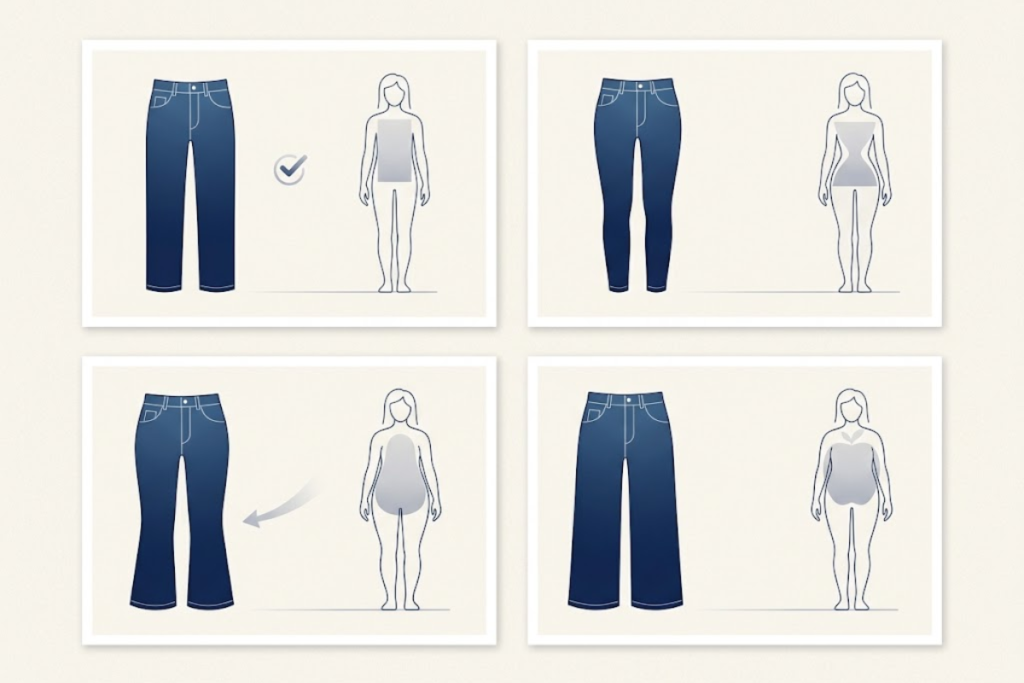
How to Choose Jeans for Body Shape
Body-shape guides can be useful starting points, but they shouldn’t dictate what you wear. The same principle applies when choosing flattering clothing styles at any age. Fit through the waist, seat and thighs matters more than a label such as “pear” or “rectangle.”
Try different leg cuts while keeping the rise and inseam consistent. Then change one element at a time. You may find that a straight leg feels better than a skinny cut, or that a wide leg works once the waist fits correctly.
The most flattering jeans for body shape usually aren’t the pair that follows a rule perfectly. It’s the pair that fits comfortably, creates the proportions you like and lets you move without constantly adjusting your jeans.

2 thoughts on “The Truth About Denim Cuts and Which Ones Flatter Different Body Shapes”