
Buying a mattress often comes down to comfort, firmness, and price. But a mattress that feels great for five minutes in a showroom may not work well after several nights of sleep. Body type, sleeping position, temperature, mattress materials, and even the bed frame can change how a mattress feels.
Here are some common mattress-buying mistakes that can leave you tossing and turning instead of sleeping comfortably.
1. Choosing a Mattress Based Only on Firmness
A firm mattress does not automatically mean better support, and a soft mattress does not necessarily mean poor support. The right firmness depends partly on your sleeping position, body weight, and personal preference.
Side sleepers often need enough cushioning around the shoulders and hips to avoid pressure points. Back and stomach sleepers may prefer a firmer surface that keeps the body from sinking too far.
Instead of choosing based on a label such as “firm” or “plush,” consider how well the mattress supports your usual sleeping position.
2. Testing a Mattress for Only a Few Minutes
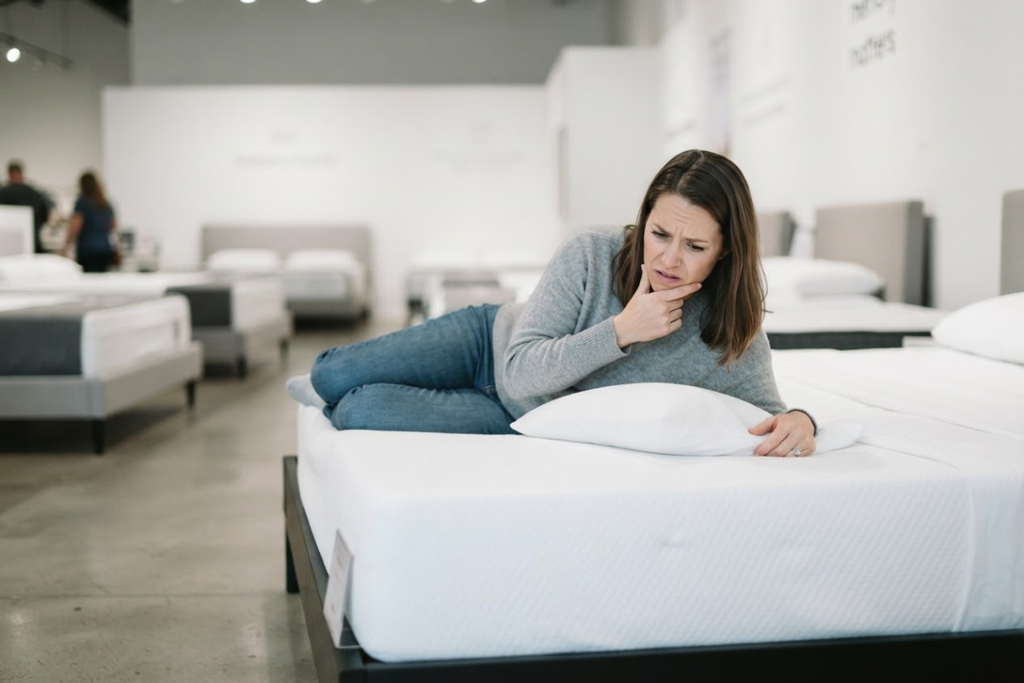
Lying on a mattress for two minutes in a store can tell you whether it feels comfortable initially. It cannot tell you how your body will feel after seven or eight hours.
Try lying in your normal sleeping position for at least several minutes when testing a mattress. Pay attention to pressure around your shoulders, hips, lower back, and neck.
Online shoppers should pay close attention to the trial period. A sleep trial gives you an opportunity to experience the mattress in your own bedroom rather than making a decision based on a brief test.
3. Ignoring Your Sleeping Position
Your sleeping position can change what you need from a mattress.
Side sleepers usually benefit from some pressure relief around the shoulders and hips. Back sleepers often need a balance between cushioning and support. Stomach sleepers may prefer a surface that prevents excessive sinking around the midsection.
If you switch positions during the night, a mattress with a middle-ground feel may work better than one designed heavily around a single position.
4. Buying Without Considering Your Body Weight
The same mattress can feel completely different to two people.
A heavier sleeper may sink farther into a soft mattress, while a lighter sleeper may barely compress the same surface. This can affect support, pressure distribution, and how easy it feels to move during the night.
Couples with substantially different body weights may need to pay particular attention to support and motion transfer rather than simply choosing a mattress based on one person’s preference.
5. Forgetting About Temperature
Some mattresses can feel warmer than others. Foam layers, thick comfort materials, bedding, room temperature, and airflow around the bed can all affect nighttime comfort.
If you tend to sleep hot, look at the mattress construction rather than relying solely on marketing terms about cooling. Breathable materials and a bedroom with good airflow can also make a difference.
The National Sleep Foundation discusses several factors associated with comfortable sleep, including the bedroom environment.
6. Overlooking Motion Transfer
Sharing a bed creates another consideration: movement.
A mattress with poor motion isolation can transfer movement when one person rolls over, gets out of bed, or changes position. That may become especially annoying for couples with different sleep schedules.
If you share your bed, test the mattress with another person when possible. Have one person move around while the other remains lying down. This gives you a better idea of how much movement travels across the surface.
7. Buying the Mattress Without Checking the Bed Frame
A mattress does not work independently from the surface beneath it. An unsuitable foundation or bed frame can affect how the mattress feels and may even interfere with its warranty requirements.
Before buying, check the manufacturer’s requirements for slat spacing, foundations, and compatible bases. A new mattress paired with an old or poorly supported frame can create problems that have nothing to do with the mattress itself.
8. Shopping Only by Price
The cheapest mattress may not provide the comfort or durability you need, but spending more does not guarantee better sleep either.
Mattress prices vary based on materials, construction, brand positioning, size, and other factors. Instead of setting your decision around a specific price tag, compare construction, firmness, trial periods, warranty terms, and return policies.
The Sleep Foundation provides a useful breakdown of factors to consider when choosing a mattress, including firmness, sleeping position, and mattress type.
9. Ignoring the Return Policy
Even careful shoppers can choose the wrong mattress. Your body may react differently after several nights than it does during a showroom test.
Before ordering, check how long the trial lasts, whether returns cost anything, whether pickup comes with a fee, and whether the mattress needs to remain in good condition.
A generous trial period can make an online mattress purchase much less stressful.
10. Assuming One Mattress Works for Everyone
There may not be a universally perfect mattress. Personal comfort varies considerably.
Your sleeping position, body type, temperature preferences, partner’s needs, and tolerance for firmness all matter. A mattress that gives one person excellent sleep could leave another person uncomfortable.
The better approach involves matching the mattress to the people sleeping on it rather than choosing one based purely on reviews, advertising, or popularity.