
Getting older can make certain movements feel less natural. Bending down to tie your shoes, reaching for something on a high shelf, turning your head while driving, or getting up from a chair may take a little more effort than they once did. That does not necessarily mean these movements need to become harder every year.
Daily stretching can help maintain flexibility and make ordinary movements feel more comfortable. But stretching alone cannot replace walking, strength training, or balance exercises. For adults over 60, it works best as one part of a broader activity routine.
1. Stretching can help maintain everyday flexibility
Flexibility describes how freely a joint can move through its available range of motion. Regular stretching can help maintain or improve that range, particularly when muscles and joints have become stiff from inactivity.
Stretching and flexibility overview
This can matter during simple activities. Reaching behind your back to put on a jacket, stepping into a bathtub, getting in and out of a car, or bending down to pick something up all require some degree of mobility.
The goal does not need to be becoming exceptionally flexible. For many people, maintaining enough flexibility for comfortable daily movement makes a short stretching routine worthwhile.
2. A few minutes can fit into a normal day
Stretching does not need to become a 30-minute workout. A routine of 5 to 10 minutes can target several areas that commonly feel tight, including the calves, hamstrings, hips, shoulders, chest and upper back.
For example, you might spend a minute or two on each area after a morning walk or later in the day.
Mayo Clinic recommends warming up with light activity before stretching and using slow, controlled movements rather than bouncing. A gentle pull should be enough; pain signals that the stretch has gone too far.
3. Stretching may make movement feel easier
One practical reason to stretch after 60 has little to do with athletic performance. It can simply make certain movements feel less restricted.
Improved range of motion can make activities such as walking, gardening, reaching, dressing and household chores more comfortable. The U.S. Physical Activity Guidelines note that flexibility exercises can help older adults maintain the range of motion needed for physical activity and everyday tasks.
That makes stretching particularly useful for people who spend long periods sitting or who notice stiffness after being inactive.
4. Daily stretching does not replace strength or balance training
This distinction matters.
Stretching works on flexibility, but it does not provide the same training stimulus as resistance exercises. It also does not automatically improve balance.
The CDC recommends that adults 65 and older include aerobic activity, muscle-strengthening exercises and balance activities each week. The recommended target includes at least 150 minutes of moderate-intensity aerobic activity, muscle-strengthening activity on at least two days, and activities that improve balance.
Someone who spends 10 minutes stretching every morning but rarely walks or works on strength and balance would be missing other forms of activity that support physical function.
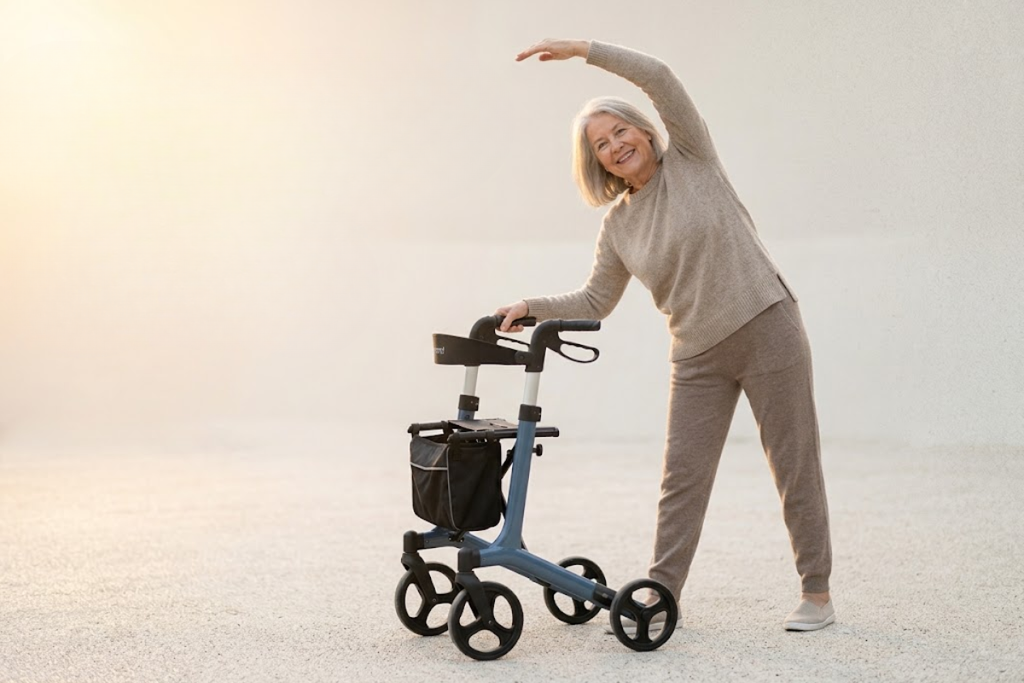
5. Gentle stretches can be easier to stick with
A stretching routine works best when it fits naturally into the day.
Try attaching it to something you already do. Stretch after a short walk, after getting out of bed, while taking a break from television, or after a warm shower.
Simple movements might include:
- Calf stretches against a wall
- Seated hamstring stretches
- Gentle hip stretches
- Shoulder rolls
- Chest stretches
- Neck movements within a comfortable range
- Standing or seated upper-back stretches
There is no need to force a deep stretch. Slow movements and steady breathing generally make more sense than trying to push flexibility quickly.
6. There are situations where extra caution makes sense
Stretching should feel controlled rather than painful. Existing injuries, joint problems, recent surgery, balance difficulties or certain health conditions can change which exercises make sense.
The CDC advises older adults with health conditions to discuss appropriate activity with a healthcare professional when necessary.
Someone who has not exercised for a long time may also want to start with very gentle movements rather than jumping into an intensive flexibility routine.
So, are daily stretching exercises worth doing after 60?
For many older adults, yes—but think of stretching as a small daily habit rather than a complete exercise program.
Five to 10 minutes of gentle stretching can help maintain flexibility and make everyday movements more comfortable. The bigger payoff comes when stretching sits alongside walking or other aerobic activity, strength exercises and balance work.
The best routine may be the one that feels easy enough to repeat. A few gentle stretches performed consistently can be more practical than an ambitious routine that gets abandoned after a week.