You clean the inside, wipe down the door, run a cleaning cycle—and yet that unpleasant smell comes right back when you open the dishwasher. It can seem strange. After all, a dishwasher spends its time blasting dishes with hot water and detergent.
The problem usually comes down to areas that are easy to overlook. Food particles, grease, trapped water and buildup can hide underneath or behind parts you rarely see.
Here are some of the most common reasons your dishwasher still smells after cleaning it.
1. The filter may still be holding food debris
The filter at the bottom of the dishwasher catches bits of food before they circulate through the machine. Over time, grease and small food particles can collect there and create a sour or rotten-food smell.
Simply wiping the visible interior won’t clean the filter.
Remove the lower rack and locate the filter, then follow your dishwasher manufacturer’s instructions for removing it. Rinse it under warm running water and gently scrub away stubborn residue with a soft brush. Whirlpool recommends regular filter cleaning, with some models calling for monthly maintenance.
If you’re not familiar with how a dishwasher works, the filter plays a much bigger part in the cleaning process than you might expect.
2. Dirty water could be sitting in the drain area
A dishwasher can look spotless while having a drainage problem underneath.
Check the bottom of the tub after a cycle. A small amount of water may be normal for some models, but standing dirty water can point to a clogged filter, drain or other drainage issue. Trapped water can develop an unpleasant smell, particularly when food residue mixes with it.
If water remains in the bottom after several cycles, cleaning the interior again may not solve the problem. The drain system may need attention.
3. The door gasket is easy to forget
Open the dishwasher door and run your finger around the rubber gasket.
The narrow folds around the seal can collect grease, food particles and moisture. Because this area doesn’t receive the same direct spray as the inside of the tub, buildup can remain even after repeated wash cycles.
Wipe the gasket and the surrounding door frame with a damp cloth and mild cleaner. Pay special attention to the bottom corners and the area where the door meets the tub.
4. Food may be hiding around the door
The dishwasher’s interior walls aren’t the only places where food gets trapped.
Small particles can collect around the door edges, underneath the lower rack or near the bottom corners. Soap residue can also leave a sticky film that gives food particles something to cling to.
Consumer Reports lists food remnants around the interior and door area among the common causes of persistent dishwasher odors.
A flashlight can help you spot buildup that isn’t obvious under normal kitchen lighting.
5. The spray arms could be partially clogged
The spray arms send water around the dishwasher during a cycle. Tiny food particles and mineral deposits can block some of the holes.
When that happens, parts of the dishwasher may not receive enough water to wash away grease and debris.
Remove the spray arms if your model allows it and inspect the openings. Rinse them thoroughly and clear visible debris without damaging the holes.
6. Your garbage disposal may be part of the problem
If the dishwasher drains into the garbage disposal, don’t automatically assume the smell originates inside the dishwasher.
Food residue inside the disposal can produce odors that travel through the connected drain system. Whirlpool specifically recommends running the garbage disposal to clear debris when investigating dishwasher odors associated with the disposal.
Run the disposal and check whether the dishwasher smell changes afterward.
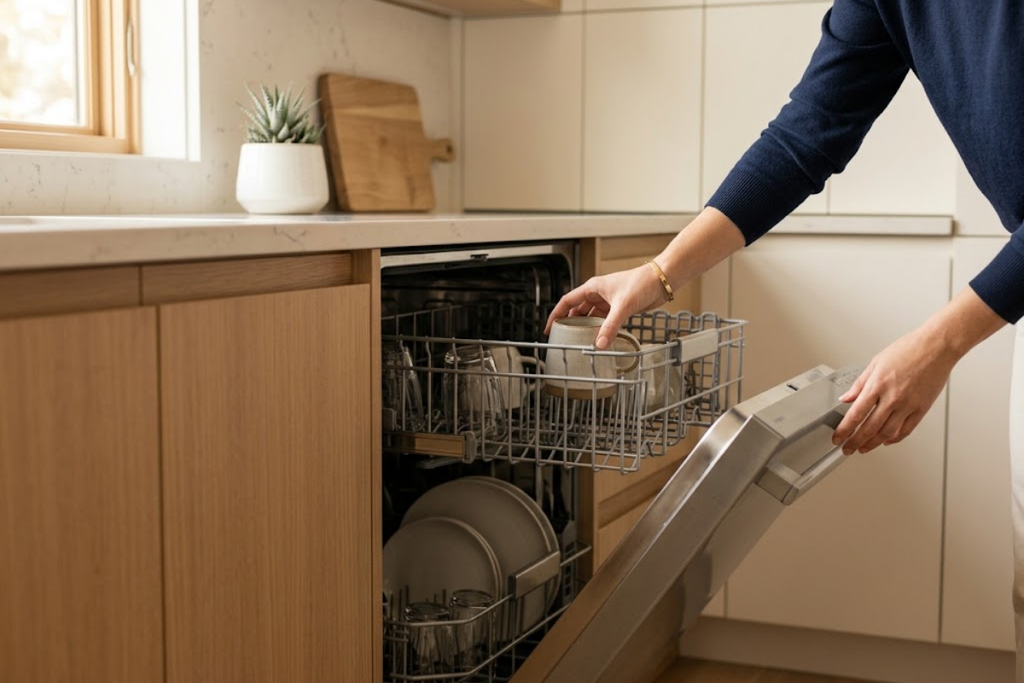
7. Grease may have coated areas you can’t easily see
A quick wipe-down removes surface grime, but it won’t necessarily remove grease from the internal parts of the dishwasher.
For a deeper clean, run an empty cleaning cycle using a dishwasher cleaner appropriate for your machine. Popular Mechanics also recommends cleaning the filter, spray arms, door seals and interior rather than relying on the dishwasher to clean itself.
Avoid mixing cleaning chemicals, particularly bleach and vinegar.
8. A sewage-like smell points to a different problem
There’s a difference between a stale-food smell and an odor that resembles sewage or rotten eggs.
If the dishwasher has been thoroughly cleaned but the smell keeps returning, especially alongside standing water, the drain hose, air gap, garbage disposal connection or household plumbing could be involved. A drainage problem won’t necessarily disappear after another cleaning cycle.
The quickest place to start
If your dishwasher still smells after cleaning it, don’t immediately scrub the entire appliance again. Start at the bottom: check the filter, inspect for standing water, clean the gasket and look around the drain area.
Those overlooked spots often explain why a dishwasher that looks clean can still smell anything but clean.