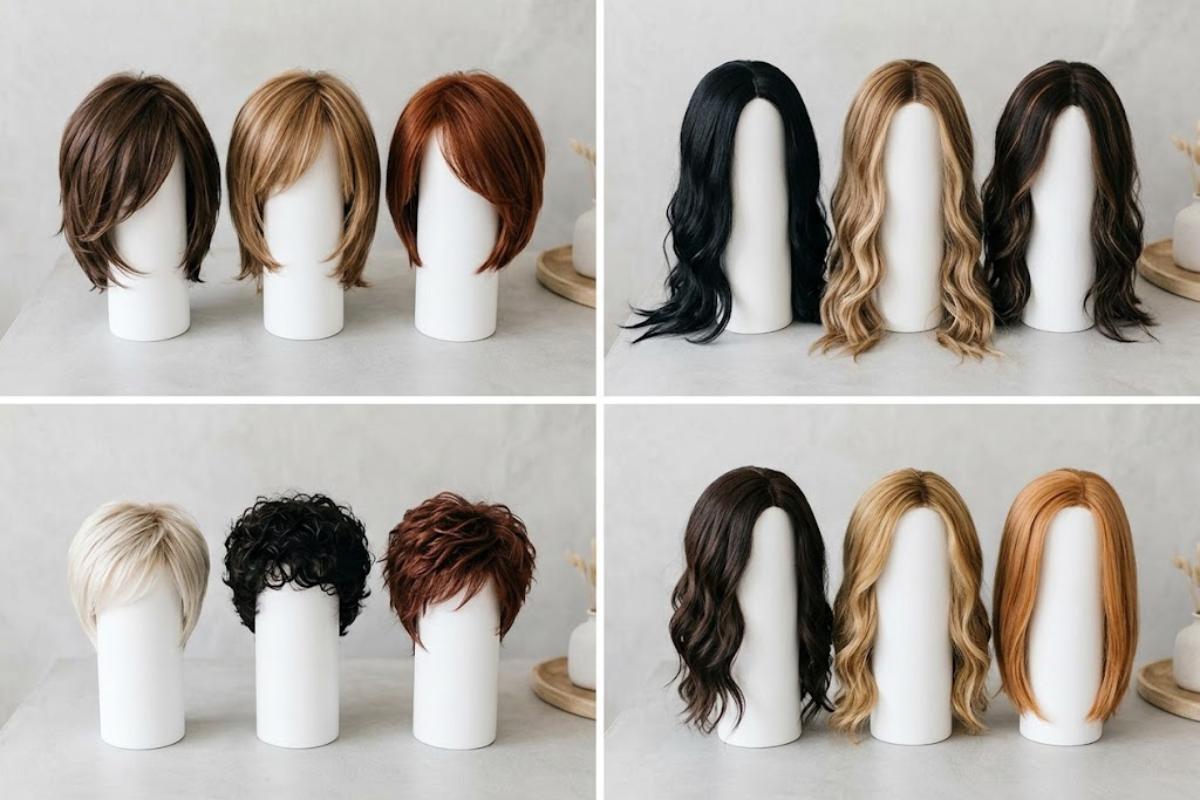
Choosing a wig for face shape starts with more than finding the right color or length. The cut, part, and volume can change how your features appear, so the same style may look completely different from one person to another.
Knowing your face shape provides a practical starting point for narrowing the options.
1. Identify Your Face Shape
Before shopping for a wig, take a quick look at your face proportions. Pull your hair away from your face and look straight into a mirror. Pay attention to the widest part of your face, the shape of your jaw, and whether your face looks longer than it does wide.
Most faces fall into a few common categories: oval, round, square, heart, oblong, or diamond. You may not fit perfectly into one category, and that’s fine. The goal isn’t to follow strict rules but to find styles that work with your natural proportions.
2. Wig Styles for Oval Faces
Oval faces tend to have balanced proportions, with the face slightly longer than it is wide and a gently curved jawline. This shape gives you plenty of freedom when choosing a wig.
Short bobs, long layers, waves, straight styles, and side parts can all work well. If you want to bring attention to your cheekbones, try a layered style that adds movement around the sides of the face.
Very heavy bangs can sometimes hide the proportions that make an oval face easy to style, but they can still work if you prefer a fuller fringe.
3. Wig Styles for Round Faces
Round faces typically have similar width and length, with softer cheeks and a rounded jawline. A wig with some height at the crown and length around the sides can create a more elongated appearance.
Long layers, side-swept bangs, and wigs that fall below the chin can work particularly well. Loose waves that begin below the cheekbones can also add shape without adding extra width around the cheeks.
Very full curls or chin-length cuts with lots of volume at the sides may make the face appear wider.
4. Wig Styles for Square Faces
Square faces usually have a broader forehead and a defined jaw with fairly similar widths across the face. Styles with softness and movement can balance those stronger angles.
Consider layered wigs, loose waves, side-swept bangs, and styles that fall around the shoulders. Curly or wavy textures can add softness around the jaw.
If you prefer a shorter wig, a textured bob can work better than an extremely blunt cut that ends directly at the jawline.
5. Wig Styles for Heart-Shaped Faces
Heart-shaped faces tend to have a wider forehead and narrower chin. The right wig can add some fullness toward the lower half of the face while keeping the upper portion from looking too heavy.
Chin-length bobs, shoulder-length cuts, and wigs with layers around the jaw can work nicely. Side parts can also draw attention diagonally across the face rather than concentrating it at the forehead.
Very short, heavily layered styles with lots of volume at the crown may make the forehead appear wider.
6. Wig Styles for Oblong Faces
Oblong faces tend to look noticeably longer than they do wide. Styles that add some width at the sides can create a more balanced appearance.
Waves, curls, layered bobs, and side-swept bangs can all help. A shoulder-length wig with volume around the sides can also work well. If you prefer added length without changing wigs, compare the lifespan of hair extensions before choosing a method.
Very long, straight hair with little movement may visually lengthen the face even more, especially when paired with a center part.
7. Wig Styles for Diamond Faces
Diamond-shaped faces typically have prominent cheekbones with a narrower forehead and chin. Wigs that add softness around the forehead and jaw can complement this shape.
Side-swept bangs, chin-length bobs, layered cuts, and soft waves can work well. Styles with some fullness near the chin can also create a smoother transition between the cheekbones and lower face, similar to how well-chosen clothing cuts can balance overall proportions.
8. Match the Hairline and Part
Face shape isn’t the only factor. Your natural hairline, forehead height, and preferred part can change how a wig sits on your face.
A side part can add an angled effect and shift attention away from the center of the face. A middle part creates more symmetry and can work especially well with balanced face shapes. Bangs can also change the apparent size of the forehead, making them useful for adjusting proportions.
9. Choose Wig Length for Your Face Shape
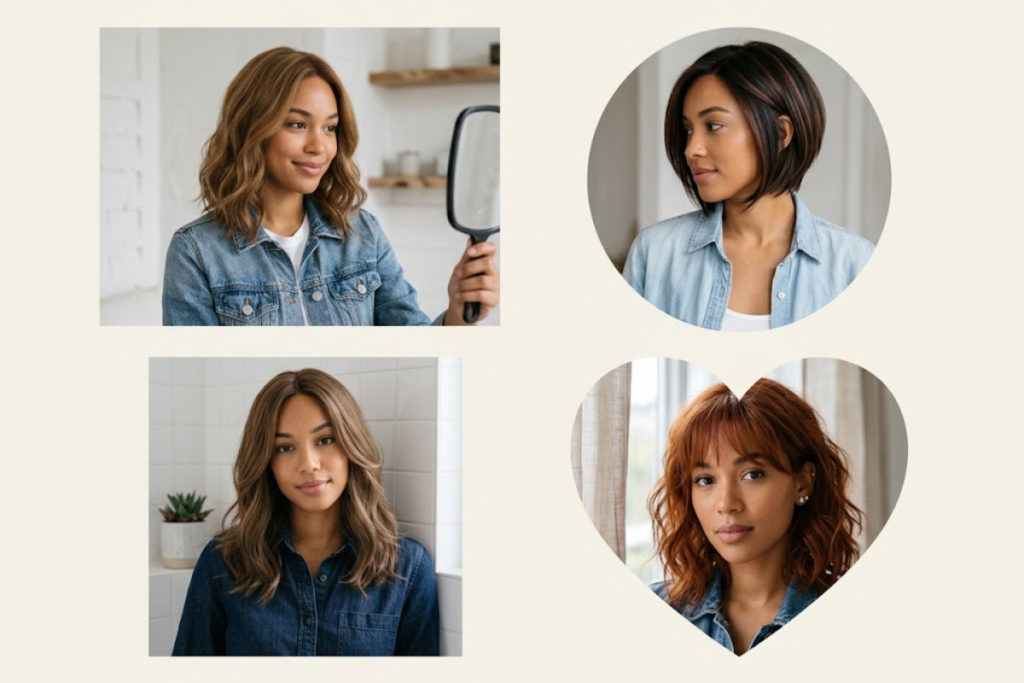
The length of a wig can change the overall effect just as much as the cut. A chin-length style draws attention toward the jaw, while shoulder-length hair creates a frame around the lower face. Longer styles create vertical lines that can make the face appear longer.
If you’re unsure, a shoulder-length layered wig offers a flexible starting point. You can also trim or reshape it later if the wig allows for customization.
10. Try a Wig for Face Shape Before Deciding
A wig can look completely different once it’s positioned correctly. Adjust the part, move the hair away from your face, and check the style from several angles. Pay attention to where the volume sits rather than judging the wig only by its length or color.
The best match doesn’t have to follow every face-shape rule. Comfort, personal style, hair texture, and how much styling you’re willing to do matter just as much. A wig for face shape simply gives you a practical way to narrow down the options before trying them on.
Read more: Hairstyle Guide
One thought on “How to Find a Wig That Actually Matches Your Face Shape”