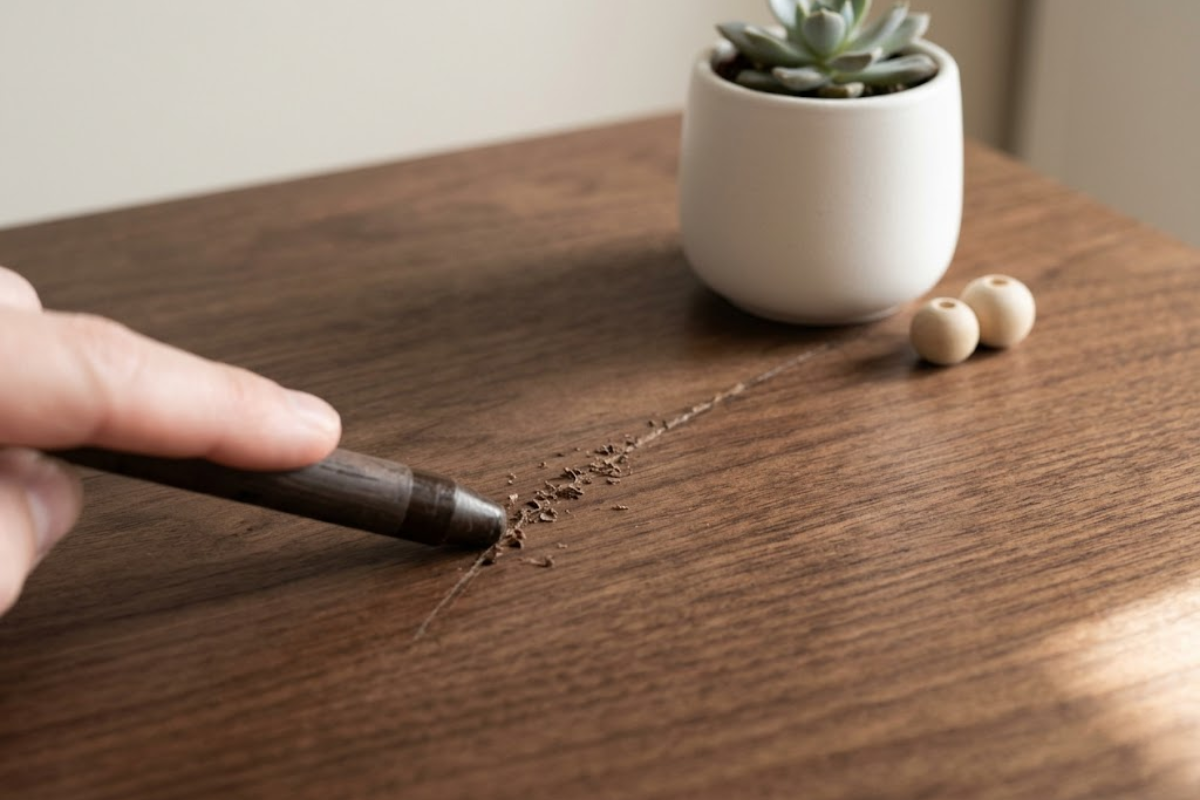
You can often fix scratches on wood furniture without professional refinishing. A chair gets dragged, keys land on a tabletop, or a pet jumps onto a cabinet, and suddenly there is a noticeable mark.
The good news? Most scratches don’t require professional refinishing. The right fix depends on how deep the scratch goes and what type of finish covers the wood.
Fix scratches on wood by checking their depth
Before reaching for a repair product, run your fingernail lightly across the mark.
If your nail barely catches, you’re probably dealing with a surface scratch in the finish. These marks often respond well to polishing or touch-up products.
If your nail catches slightly, the scratch may have gone through the finish and into the wood. You’ll need something that adds color as well as disguising the damage.
Deep scratches that expose pale wood, create a groove, or show chipped edges require more work. You may need wood filler, sanding, stain, and a new protective finish.
This simple test can prevent you from sanding an entire tabletop when all it needed was a small touch-up.
Use a Walnut for Small Scratches
One of the simplest tricks for minor scratches involves an ordinary walnut.
Crack open a walnut and rub the nut gently over the scratch, following the direction of the wood grain. The natural oils can darken the exposed area and make a shallow scratch much harder to notice.
This works best on darker wood and small surface marks. It won’t repair a deep gouge, but it can be useful when you need a quick cosmetic fix.
Test it on an inconspicuous area first, particularly if the furniture has a light or unusual finish. For a different type of furniture mark, see how to remove water rings from wooden furniture.
Try a Matching Furniture Marker
Furniture touch-up markers can work well when a scratch has removed some of the wood’s color.
Choose a shade close to the existing finish and apply a small amount directly over the damaged area. Avoid drawing heavily across the entire scratch in one pass. A lighter application gives you more control.
Afterward, wipe away excess color with a soft cloth.
For furniture with several tones or visible grain, one marker may not produce a perfect match. A slightly lighter shade underneath followed by a darker shade along the grain can create a more convincing repair.
Wax Fill Sticks Can Hide Deeper Marks
For scratches that create a shallow groove, a furniture wax fill stick can provide a better result than a marker.
Warm the wax slightly with your fingers, press it into the damaged area, and remove the excess with a plastic card or soft cloth. Once the surface feels level, buff it gently.
Choose a wax color that matches the surrounding wood rather than the darkest part of the grain. You can add small darker lines afterward to imitate the original pattern.
Wax repairs work particularly well on tables, cabinets, dressers, and other finished surfaces where sanding would create a larger patch.
Don’t Sand Every Scratch
Sanding can fix damaged wood, but it can also make a small problem much bigger.
Aggressive sanding may remove surrounding finish, flatten a rounded edge, or create a lighter patch that becomes more noticeable than the original scratch.
For a deeper scratch, start with very fine sandpaper and work only on the damaged area. Sand in the direction of the grain, not across it. Once the surface feels smooth, wipe away the dust and apply a matching stain or finish. Similar care is useful when trying to refresh old hardwood floors.
If the furniture has veneer rather than solid wood, take extra care. Veneer consists of a thin layer of real wood over another material, so excessive sanding can cut through it.
Petroleum Jelly Can Help With Hairline Marks
For some dark finished furniture, a tiny amount of petroleum jelly can temporarily make fine scratches less visible.
Apply a very small amount to the mark, allow it to sit briefly, and buff the area with a clean microfiber cloth.
This approach mainly disguises the scratch rather than repairing it, so it works better as a quick cosmetic solution than a permanent fix.
When a Scratch Needs More Than a Touch-Up
A deep gouge, cracked veneer, missing wood, or large area of damaged finish may need proper restoration.
If the scratch has exposed raw wood across a large area, simply coloring it in can leave an uneven surface. Sanding, filling, staining, and refinishing may produce a cleaner result.
For antique furniture, expensive pieces, or furniture with complicated finishes, experimenting with household fixes can create more damage. In those cases, professional restoration may make more sense.
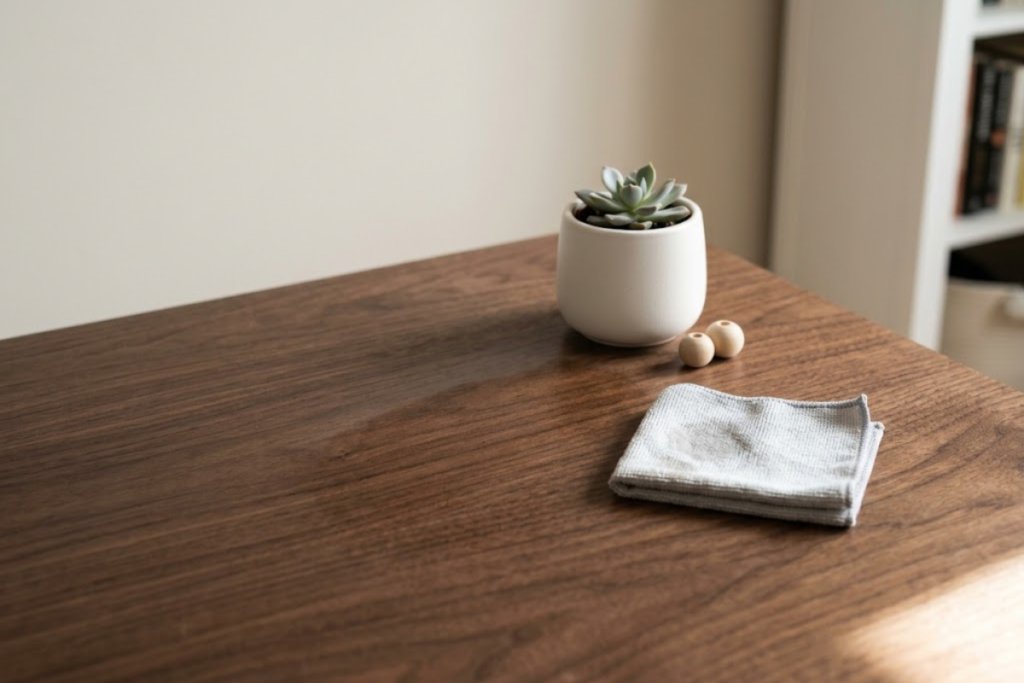
The Best Way to Keep Scratches From Coming Back
Once the repair looks good, prevention becomes much easier.
Use coasters and placemats on wooden tables, felt pads under decorative objects, and furniture pads beneath anything that gets moved frequently. Lift furniture rather than dragging it across a wooden surface.
Keep keys, pet accessories, and other hard objects away from finished tabletops when possible.
Most small scratches do not mean a piece of furniture needs to be replaced. With the right touch-up method, you can fix scratches on wood so many marks blend into the existing finish without refinishing the entire piece. Small repairs can also help a property look maintained and avoid common home selling mistakes.


One thought on “The Truth About Scratches on Wooden Furniture and How to Hide Them”