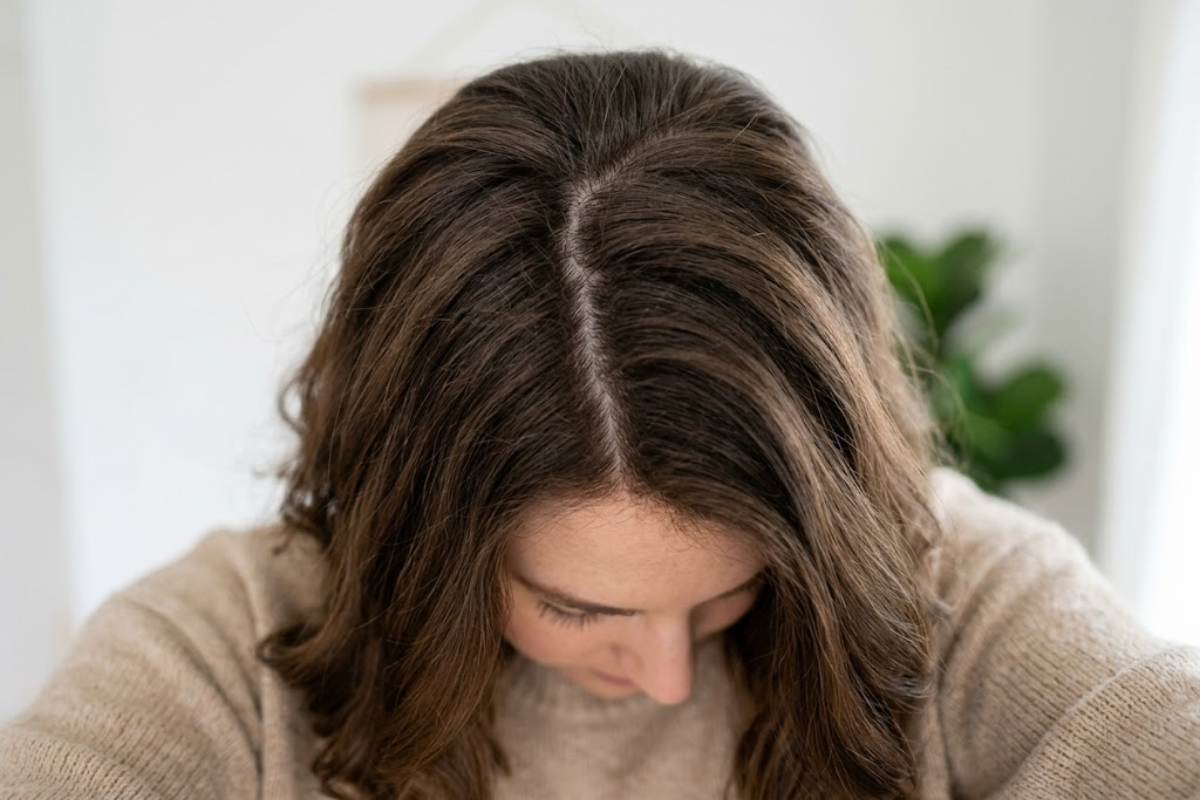
Thinning hair can make the scalp more visible and leave hair looking flatter than it used to. While styling products, teasing, and heat tools can create temporary volume, they are not the only ways to make hair appear fuller. A few simple changes to washing, cutting, drying, and everyday hair care can help create a thicker-looking appearance without spending time styling it each morning.
1. Choose a haircut with less weight
The right haircut can make a noticeable difference in how full hair appears. Very long, heavy hair can pull strands downward, making the roots look flatter. A shorter or medium-length cut can remove some of that weight and allow the hair to sit closer to its natural shape.
For fine or thinning hair, blunt or softly layered cuts often work better than heavily textured styles. Too many layers can make the ends look sparse, particularly when the hair already lacks density.
2. Keep the roots clean
Oil and product buildup can cause individual strands to stick together. When several hairs clump into one section, the scalp can become easier to see.
Wash your hair often enough to prevent excess oil from accumulating, but avoid washing so aggressively that the scalp becomes dry or irritated. A lightweight shampoo can work well for hair that becomes oily quickly. Pay particular attention to the scalp rather than repeatedly scrubbing the ends.
3. Avoid heavy conditioners at the roots
Conditioner helps reduce dryness and tangling, but applying a rich conditioner directly to the roots can leave fine hair looking flat.
Apply conditioner mainly from the middle of the hair toward the ends. If your hair gets oily easily, using a smaller amount can also prevent the roots from becoming weighed down.
4. Try a lighter hair-washing routine
Hair can look thinner when it becomes coated with oils, heavy conditioners, masks, or styling residue. If your usual routine involves several products, removing one or two may make your hair look naturally lighter and fuller.
A clarifying shampoo used occasionally can help remove buildup, although frequent use may leave some hair types feeling dry. The goal isn’t to strip the hair completely, but to keep the scalp and strands from becoming overloaded.
5. Change your part
Wearing your hair in exactly the same part every day can make the roots settle in one direction. Changing the part slightly can give the roots a different position and make the hair appear less flat.
You don’t need a dramatic change. Moving the part by an inch or even switching sides can create a subtle difference without requiring styling products.
6. Let your hair dry in a different direction
Hair tends to settle as it dries. If you always let it dry flat against your scalp, the roots may remain close to the head.
Instead, gently move your hair in the opposite direction while it dries naturally. You can also occasionally change which side you part your hair on. No brush, curling iron, or styling product needs to be involved.
Avoid rubbing wet hair vigorously with a towel. Wet strands stretch more easily and can break when handled roughly. Gently squeezing out excess water with a soft towel or T-shirt can be kinder to the hair.
7. Sleep on a smoother fabric
Friction from rough bedding can cause tangling and breakage, particularly if your hair already feels fragile. A smoother pillowcase can reduce some of that friction while you sleep.
Keeping hair loosely arranged rather than tightly tied can also reduce pulling around the hairline. Tight ponytails, buns, and other styles that repeatedly pull on the same areas may contribute to breakage over time.
8. Protect your hair from unnecessary damage
Frequent bleaching, chemical treatments, high heat, and aggressive brushing can weaken the hair shaft. Damaged strands may snap more easily, leaving the hair looking thinner.
If you regularly color your hair, spacing out chemical treatments and following with appropriate conditioning can help limit damage. When brushing, start at the ends and gradually work upward instead of pulling through knots from the roots.
9. Pay attention to nutrition
Hair growth depends on adequate nutrition. Regular meals containing protein, iron, zinc, healthy fats, and a range of vitamins can support normal hair growth.
That doesn’t mean taking a collection of hair supplements automatically makes hair thicker. If hair suddenly starts shedding much more than usual, or thinning progresses quickly, talking with a doctor or dermatologist can help identify possible causes.
10. Give your scalp a little attention
A clean, comfortable scalp provides a good environment for growing hair. Gentle washing is usually enough; aggressive scalp scrubbing or excessive massage isn’t necessary.
If you notice persistent itching, scaling, redness, or sudden shedding alongside thinning, it’s worth getting the scalp checked rather than trying to solve the problem through cosmetic changes alone.
The simple approach
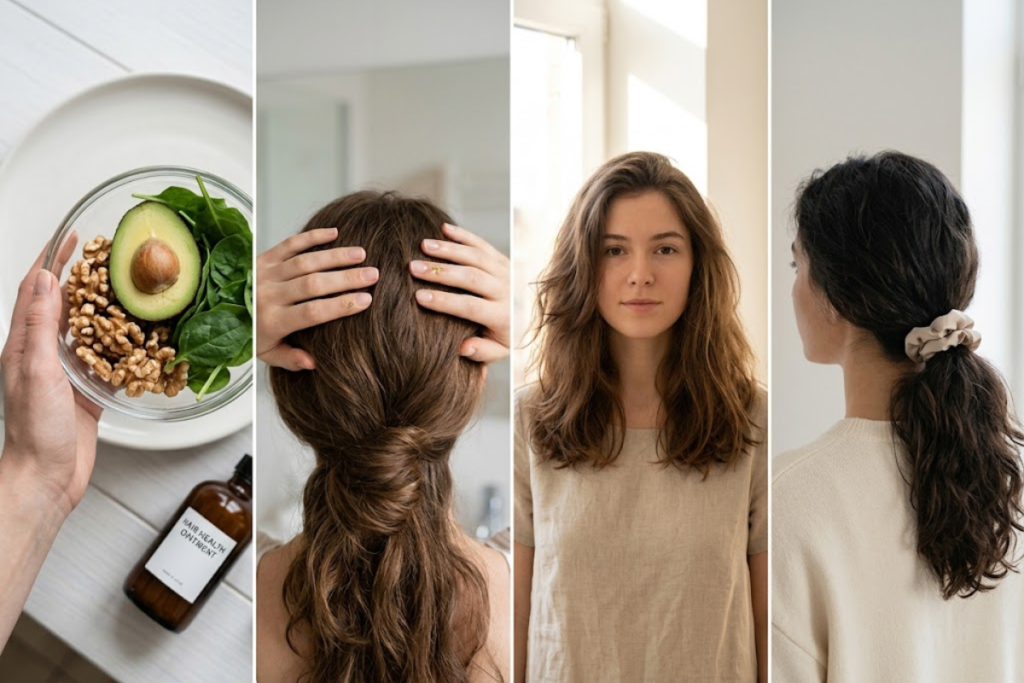
Making hair look thicker without styling it often comes down to reducing the things that flatten or damage it. A suitable haircut, lighter products, a clean scalp, gentle drying, less heat, and fewer tight hairstyles can all help hair look fuller in everyday life.
These changes won’t increase the number of hairs growing from the scalp, but they can help existing hair look less weighed down and reduce avoidable breakage.