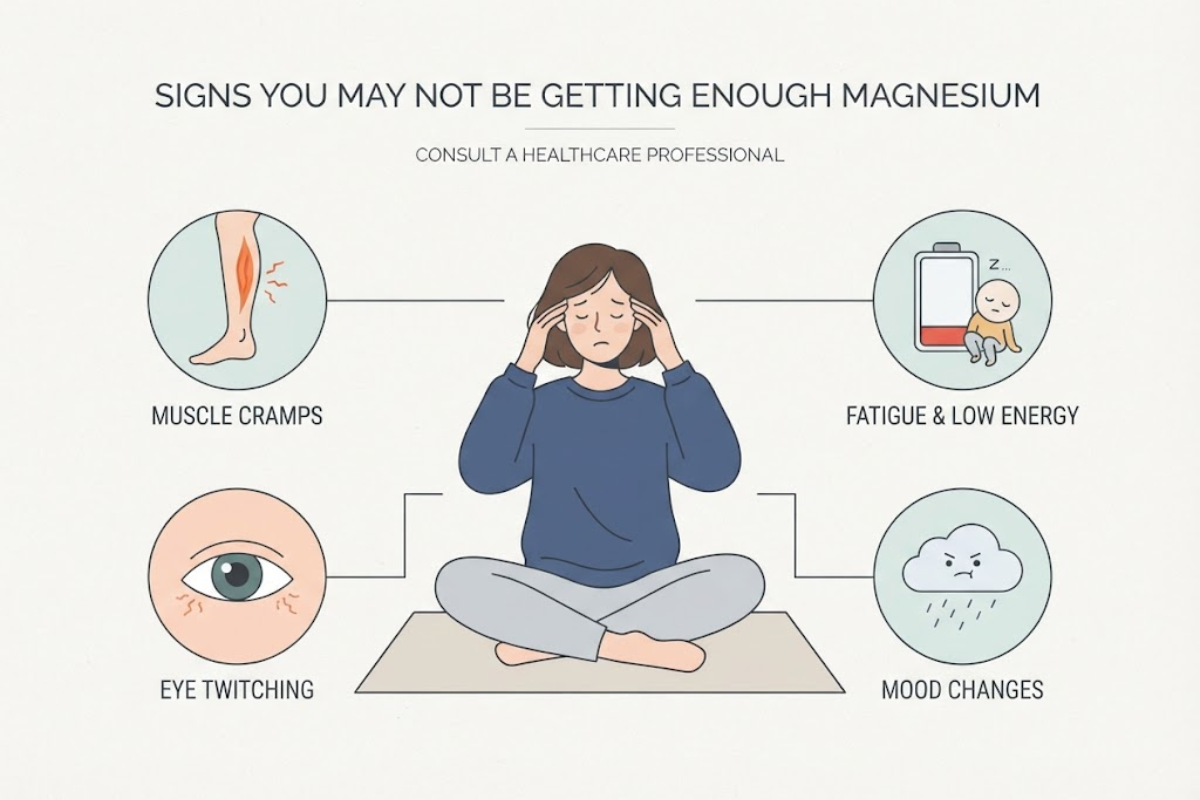
Magnesium often gets less attention than nutrients such as calcium, iron, or vitamin D, yet the body uses it in hundreds of biochemical reactions. It helps with muscle and nerve function, energy production, blood glucose regulation, and normal heart rhythm. Getting too little over a long period can eventually lead to magnesium deficiency, although symptoms may not appear right away.
For healthy people, a short period of low magnesium intake does not usually cause obvious symptoms. The kidneys can conserve magnesium when intake falls. Problems become more likely when low intake continues or when a health condition or medication increases magnesium losses.
Here are some signs worth paying attention to.
1. Persistent fatigue
Feeling tired after a poor night’s sleep or a busy week does not automatically point to magnesium. But ongoing fatigue can occur with magnesium deficiency, particularly when it appears alongside weakness or other symptoms.
Magnesium participates in energy production, so inadequate levels can affect how the body handles energy. Fatigue also has many other possible causes, including insufficient sleep, anemia, stress, infections, and other nutrient deficiencies.
2. Muscle cramps or spasms
Unexpected muscle cramps, twitching, or spasms can sometimes occur when magnesium levels become too low. Magnesium helps regulate muscle contraction and nerve signaling, so a deficiency can affect normal neuromuscular activity.
An occasional leg cramp does not necessarily mean you need more magnesium. Dehydration, exercise, certain medications, and other electrolyte changes can also cause cramps. More frequent or persistent muscle symptoms deserve closer attention.
3. Numbness or tingling
A persistent pins-and-needles sensation in the hands, feet, or other areas can occur with more pronounced magnesium deficiency. Cleveland Clinic lists numbness and tingling among symptoms that may develop as magnesium levels fall.
This symptom can also come from nerve compression, diabetes, vitamin deficiencies, circulation problems, and several other conditions, so magnesium should not automatically get the blame.
4. Loss of appetite, nausea, or vomiting
Some of the earlier symptoms associated with magnesium deficiency include reduced appetite, nausea, and vomiting. These symptoms can make it even harder to maintain adequate nutrient intake if they continue.
Because digestive symptoms have such a long list of possible causes, looking at the overall pattern matters more than any single symptom.
5. General weakness
Weakness can accompany magnesium deficiency, particularly when magnesium levels become substantially depleted. It may appear together with fatigue, muscle cramps, or other neurological symptoms.
If weakness appears suddenly, becomes severe, or interferes with normal activities, it deserves medical attention rather than simply adding a supplement.

6. Tremors or unusual muscle movements
More pronounced magnesium deficiency can affect the nervous system and produce tremors, muscle contractions, or other abnormal movements. These symptoms tend to occur with more serious deficiency rather than from simply missing magnesium in the diet for a few days.
Severe deficiency can also cause seizures and abnormal heart rhythms, which require urgent medical care.
7. Your diet contains very few magnesium-rich foods
Sometimes the first clue comes from looking at what you regularly eat rather than how you feel.
Magnesium occurs naturally in foods such as nuts, seeds, beans, whole grains, leafy green vegetables, and some fruits. People who regularly eat a limited range of these foods may have difficulty reaching recommended intake levels. NIH data found that 48% of Americans across age groups consumed less magnesium from food and beverages than their estimated average requirement during the 2013–2016 survey period.
You can learn more about the mineral itself through magnesium and explore food-focused information through Cleveland Clinic’s magnesium guide.
Who may have a higher risk?
Low magnesium can become more likely in people with gastrointestinal conditions that interfere with absorption, including Crohn’s disease and celiac disease. People with type 2 diabetes, alcohol dependence, and older adults also have higher risk of magnesium inadequacy. Certain medications can increase magnesium losses as well.
What to do if several signs fit
Symptoms alone cannot confirm magnesium deficiency because fatigue, cramps, weakness, nausea, and tingling can have many causes. A healthcare professional can look at your symptoms, diet, medications, medical history, and laboratory results when appropriate.
Food provides a straightforward way to increase magnesium intake. Nuts, seeds, beans, whole grains, and leafy greens can add magnesium to everyday meals without relying on supplements. If a supplement becomes appropriate, the amount and form matter, and high doses can cause diarrhea, nausea, and abdominal cramping.