A frozen windshield can turn a five-minute morning routine into a frustrating chore. When temperatures drop, it may be tempting to reach for whatever seems fastest—hot water, aggressive scraping, or maximum heat. Some of these shortcuts can put sudden stress on the glass, particularly when a windshield already has a small chip or crack.
Understanding how thermal shock works can help explain why certain defrosting habits create problems.
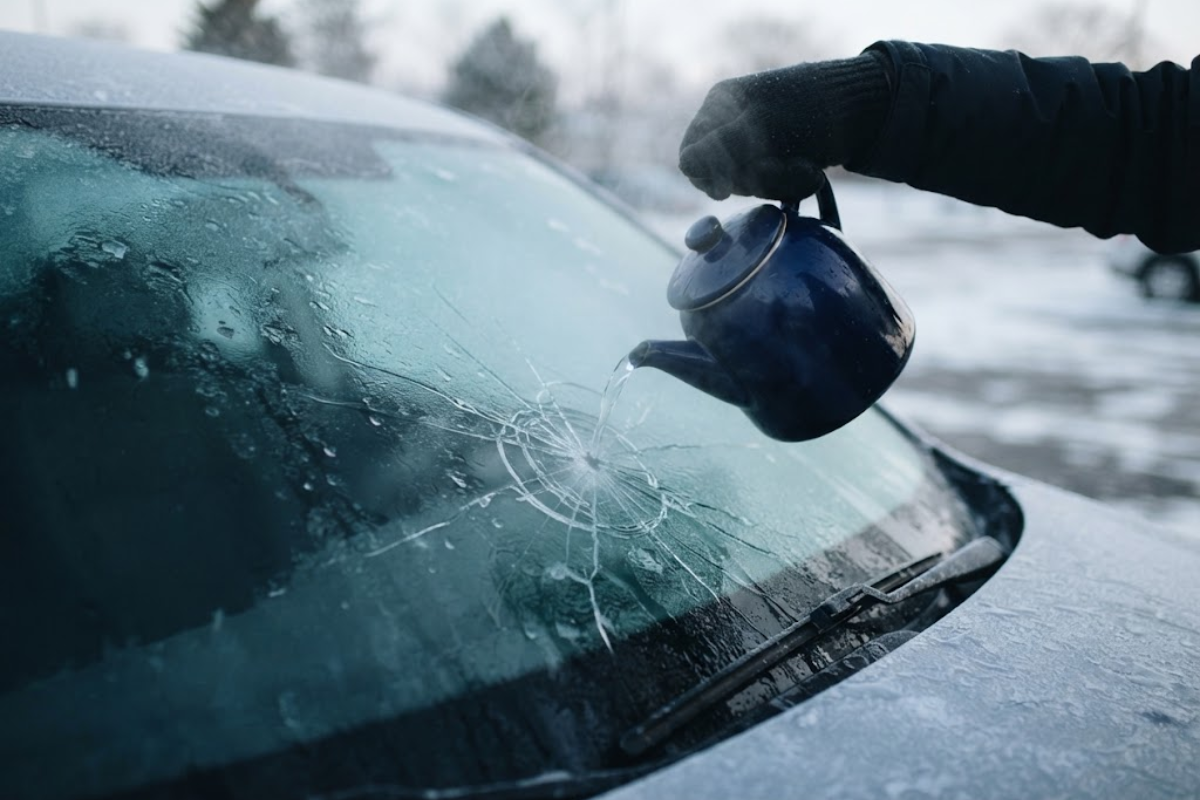
1. Pouring Hot Water on a Frozen Windshield
This remains one of the most common mistakes. Hot water can cause the outer surface of the windshield to heat and expand rapidly while other parts of the glass remain extremely cold.
That uneven temperature can create enough stress to crack the glass. AAA specifically advises against using hot water to remove windshield ice, noting that the sudden temperature change can cause thermal shock.
The problem can become worse if the windshield already has a tiny chip that isn’t immediately noticeable. The damaged area can provide a weak point where a new crack begins.
2. Blasting Maximum Heat at the Glass
Using the car’s defroster makes sense, but immediately directing extremely hot air at a deeply frozen windshield can create a large temperature difference across the glass.
The windshield doesn’t warm evenly. The area closest to the vents can heat much faster than the rest of the surface. Popular Mechanics has described this type of rapid, uneven heating as a potential cause of cracks, particularly around existing chips.
A better approach involves starting the vehicle and allowing the defroster to warm the glass gradually while loosening ice with a proper scraper.
3. Using Cold Water on a Warm Windshield
The problem isn’t limited to hot water.
Suppose the windshield has already warmed up from the defroster or direct sunlight. Pouring very cold water over it creates the opposite temperature shock: the surface suddenly cools while areas underneath remain warmer.
AAA notes that major differences between the temperature of the glass and water can cause windshield cracking, including situations involving cold water and a hot windshield.
When removing ice, skipping water altogether usually makes more sense than trying to find the perfect water temperature.
4. Scraping Too Aggressively
Ice can stick surprisingly firmly to glass, especially after freezing rain. Pressing a scraper down hard or attacking one stubborn patch repeatedly can put unnecessary mechanical stress on the windshield.
Use a plastic ice scraper rather than a metal tool. AAA recommends plastic scrapers, rubber squeegees, or soft brushes and warns that metal scrapers can scratch the glass.
If the ice doesn’t come away easily, allow the defroster or de-icer to loosen it instead of trying to force it off.
5. Turning on Frozen Wipers
Starting the windshield wipers while they’re frozen to the glass creates another problem. The blades can stick firmly to the ice, and the motor may try to move them against that resistance.
The result can include damaged rubber, bent wiper arms, or strain on the wiper mechanism. AAA recommends allowing the defroster to melt the ice around the blades before trying to move them.
It also makes sense to clear snow and ice from the windshield before relying on the wipers to finish the job.
6. Ignoring a Small Chip During Winter
A tiny chip might look harmless when the windshield remains at a steady temperature. Freezing weather and repeated heating cycles can change that.
Water can enter a chip, freeze and expand, putting additional pressure on the damaged area. Popular Mechanics notes that moisture entering windshield damage can freeze and enlarge the flaw.
A chip also gives thermal stress somewhere to concentrate. If you notice one before winter weather arrives, having it inspected early can be much easier than dealing with a long crack later.
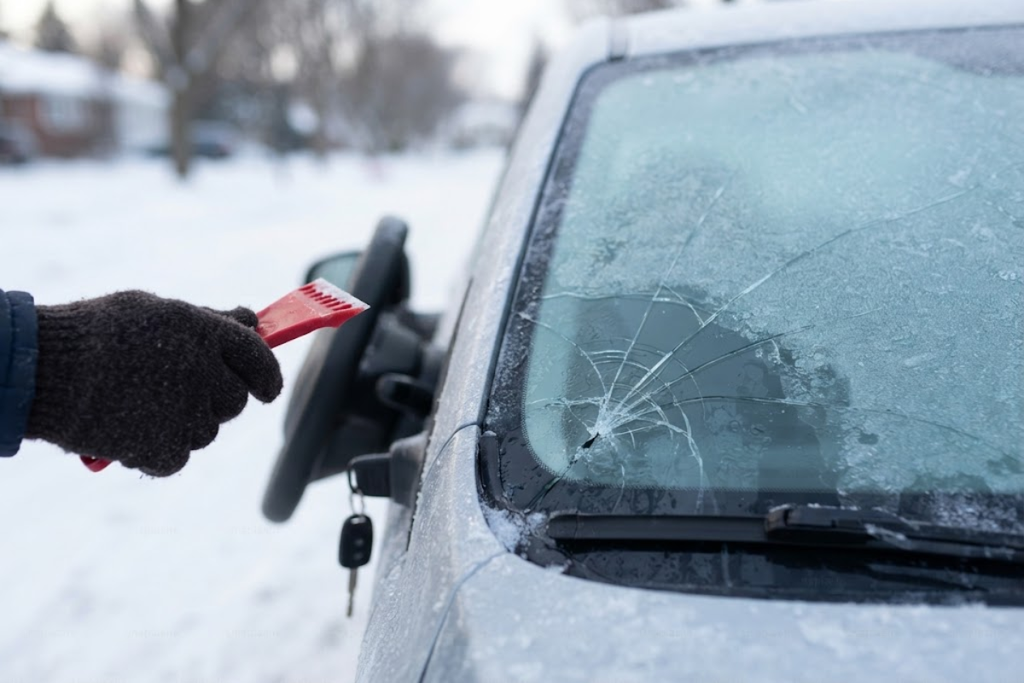
7. Using Makeshift Tools to Break Ice
Keys, screwdrivers, knives and other hard objects don’t belong on a frozen windshield. They can scratch the glass or create small points of damage.
The same goes for striking stubborn ice with a tool. The combination of mechanical force and cold glass can turn a minor problem into a much bigger one.
A plastic scraper and a little patience usually beat improvising with whatever happens to be sitting in the garage.
A Safer Way to Defrost
Start the vehicle and use the windshield defroster while the glass warms gradually. Clear loose snow with a soft brush, then use a plastic scraper on remaining ice. A proper commercial de-icer or an appropriate alcohol-and-water mixture can also help loosen frost. AAA recommends a mixture of one part isopropyl alcohol to two parts water for DIY de-icing.
If you spot a chip or existing crack, avoid putting sudden temperature changes through the glass. A little extra time on a cold morning can be much cheaper than turning a small windshield flaw into a replacement job.