A small backyard does not automatically rule out having a pool. The trick comes down to choosing a pool shape, depth, and layout that fit the space instead of trying to squeeze a full-size backyard pool into a compact area. From plunge pools to narrow lap pools, several options can work well when square footage comes at a premium.
1. Plunge Pools
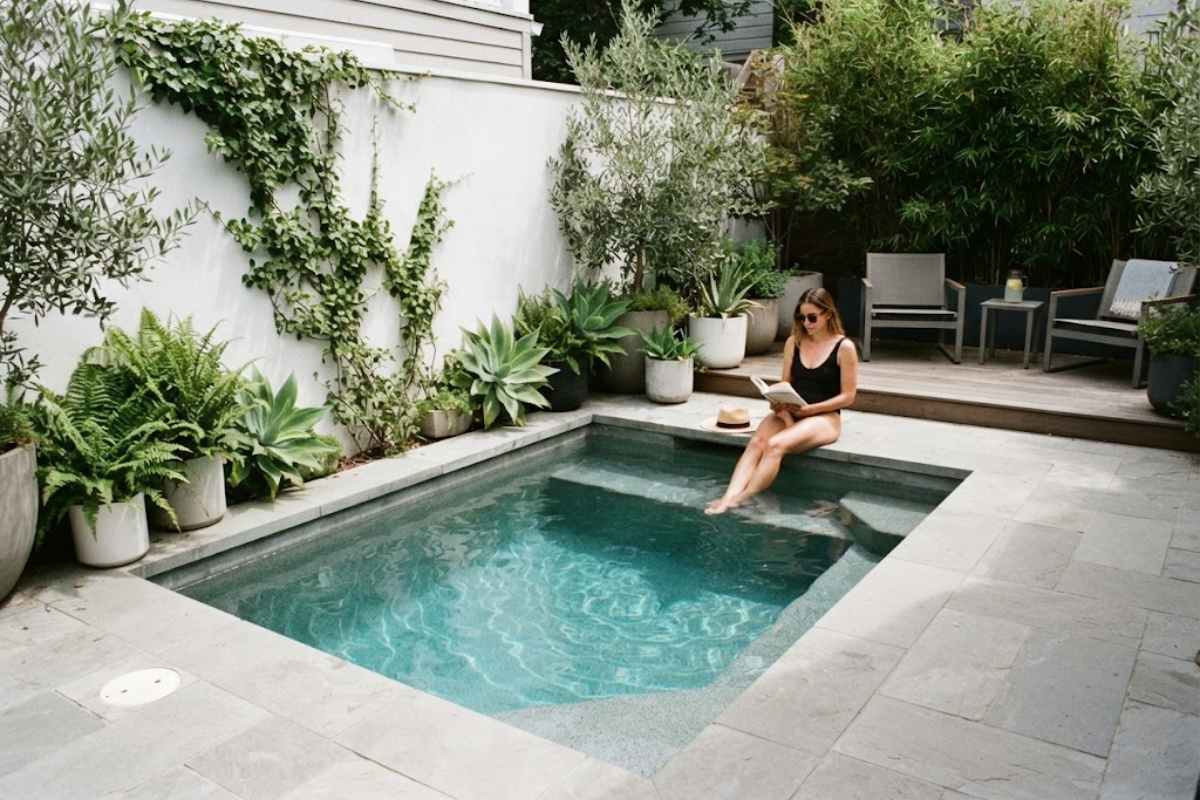
Plunge pools take up far less room than traditional swimming pools and work particularly well for homeowners who mainly want a place to cool off, sit, or relax.
Many plunge pools measure roughly 6 to 12 feet wide and 10 to 20 feet long, although dimensions vary. Their greater depth compared with their footprint gives them a pool-like feel without requiring a huge yard.
A plunge pool can sit close to a patio, deck, or exterior wall while leaving enough room for chairs and walking space. Some homeowners also add built-in benches or steps, turning part of the pool into a comfortable sitting area.
2. Cocktail Pools
Cocktail pools sit somewhere between a spa and a traditional swimming pool. They typically have a compact footprint and can include features such as benches, jets, steps, and shallow lounging areas.
For a small backyard, this type can make more sense than installing a pool designed primarily for swimming laps. The available space can instead go toward entertaining and relaxing.
A cocktail pool also works well alongside a small patio. With careful placement, the pool, seating, and landscaping can share the same area without making the backyard feel crowded.
3. Spool Pools
A spool combines the basic idea of a spa with a small swimming pool. The name comes from “spa” and “pool,” and these installations generally fit into relatively compact spaces.
Some designs include swim jets that create resistance for swimming in place. That means homeowners can get some of the exercise associated with a larger pool without needing a long swimming lane.
For households that want both relaxation and exercise, a spool can provide more flexibility than a conventional small pool. It can also work in a narrow section of the yard where a traditional rectangular pool would not fit comfortably.
4. Narrow Lap Pools
A lap pool does not necessarily need to stretch across an enormous backyard. A long, narrow design can fit against one side of a property while leaving the rest of the yard available for other uses.
Even a relatively narrow pool can provide enough length for swimming if the layout allows it. For homeowners who care more about swimming than lounging, giving up width can make sense.
A narrow pool can also create a clean visual line through the yard. Positioning it along a fence or beside the house may leave an open strip for seating or plants.
5. Spool-Style Plunge Pools
Combining elements from plunge pools and spools can work particularly well when space comes in an awkward shape. A compact pool can include deeper water, seating, and swim jets without requiring the dimensions of a standard pool.
This option suits homeowners who want several functions from one small installation. One section can work for cooling off, another for sitting, and jets can provide resistance for light exercise.
The exact design depends heavily on the available footprint, so measuring the yard before settling on a shape can prevent expensive layout changes later.
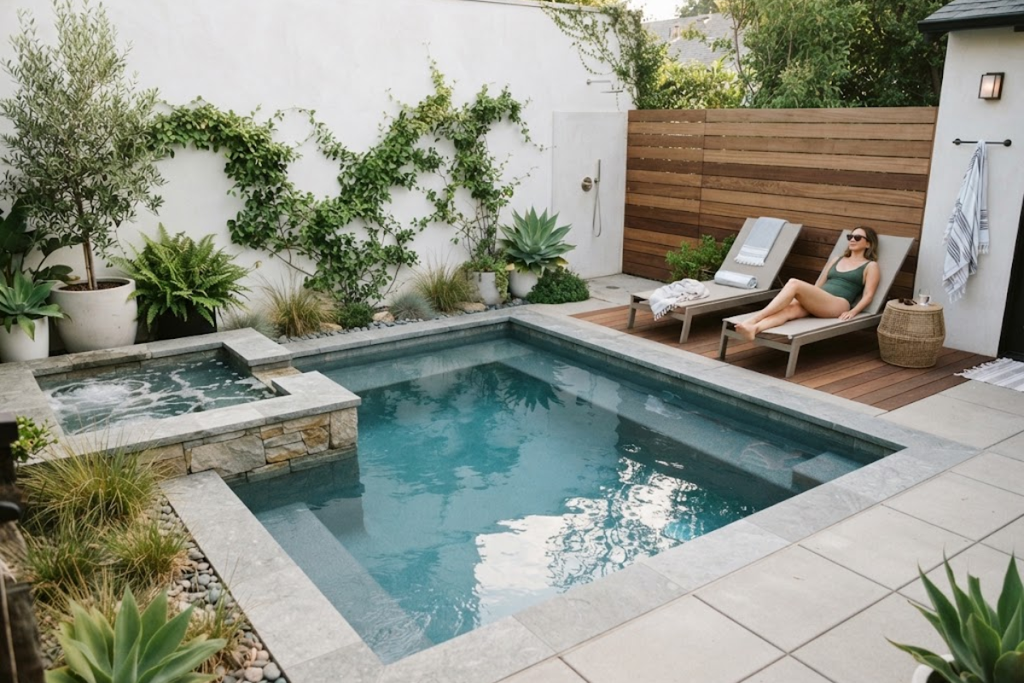
6. Freeform Small Pools
Rectangular pools usually make efficient use of space, but a freeform pool can sometimes work better when the backyard contains unusual corners, existing trees, or irregular property lines.
A curved pool can follow the shape of the yard rather than forcing the yard to accommodate a rectangle. This approach can create room for a small seating area or walkway around sections of the pool.
The tradeoff comes with usable swimming space. Curves can reduce the amount of straight swimming room compared with a narrow rectangular design.
7. Above-Ground Pools
Above-ground pools can provide another option for homeowners who want to avoid major excavation. They come in different sizes and shapes, including compact round and rectangular models.
The surrounding area matters just as much as the pool itself. A simple deck or platform can make access easier while creating space for a few chairs without taking over the entire backyard.
Before installation, homeowners should check local building requirements, property restrictions, fencing rules, and any requirements related to electrical equipment or drainage.
Choosing the Right Pool for a Small Yard
Start by measuring the entire usable backyard rather than looking only at the area where the pool might go. Leave room for access, drainage, equipment, fencing, and at least some outdoor living space.
For homeowners who primarily want a place to cool down, a plunge or cocktail pool may make the most sense. Those interested in exercise could look at a narrow lap pool or spool. An irregular backyard might work better with a freeform design, while an above-ground pool can provide a simpler alternative.
Small backyards can support more pool styles than many homeowners expect. The best choice usually comes from matching the pool to how the space will actually be used, rather than trying to recreate a large resort-style pool on a smaller footprint.