Mobility aids can seem like simple tools for getting from one room to another. In practice, the right device can change how much someone does on their own each day. A cane can make a short walk feel manageable. A rollator can make an afternoon outing possible without searching for a place to sit. Even small devices around the house can reduce the need to ask someone else for help.
The important part comes down to choosing an aid that matches the person’s balance, strength, endurance and daily routine. Here are several options that can provide more independence than many people expect.
1. Rollators Can Make Longer Outings Easier
A rollator looks like a walker, but its wheels, hand brakes and built-in seat give it a different feel. Someone who becomes tired while walking can stop and rest without finding a nearby chair.
The storage basket or pouch also has a practical benefit. Groceries, personal items or other small belongings can travel with the user instead of requiring another person to carry them.
Modern walkers can also fold for storage and transportation, making them easier to take in a car or on a trip. AARP notes that rollators can help older adults stay active while maintaining greater autonomy.
2. Canes Can Make Short Trips Feel Manageable
A cane doesn’t need to be reserved for people who struggle to walk. It can provide an extra point of contact with the ground for someone dealing with mild balance problems, weakness or discomfort in one leg.
There are several designs, including single-point and quad canes. A quad cane has a wider base and can provide more stability, although it tends to feel heavier and slower to use.
Proper sizing matters. A cane that’s too tall or too short can interfere with walking mechanics rather than helping. A physical therapist can help determine the right height and type.
For a basic explanation of how these devices work, mobility aids provide a useful overview of canes, walkers and other assistive equipment.
3. Reacher Tools Can Reduce Everyday Bending
A long-handled reacher might look insignificant compared with a walker or wheelchair, but it can make everyday tasks much easier.
Dropped clothing, items on high shelves and objects tucked behind furniture can sometimes be picked up without repeatedly bending, stretching or climbing. For someone with limited balance or difficulty getting back up from a low position, that small change can make household tasks less dependent on another person.
Reachers also work well alongside other mobility aids because they don’t require much space.
4. Shower Chairs Can Make Bathing More Independent
Standing for several minutes in a shower can become tiring or uncomfortable when balance or endurance changes. A shower chair creates the option to sit while bathing, reducing the need to remain upright throughout the process.
AARP recommends shower chairs among home equipment that can help people remain independent, along with bathroom grab bars and other accessibility modifications.
The right setup still matters. A chair should fit securely in the shower, remain stable on the floor and allow enough room for safe movement.
5. Wheelchairs Don’t Always Mean Giving Up Walking
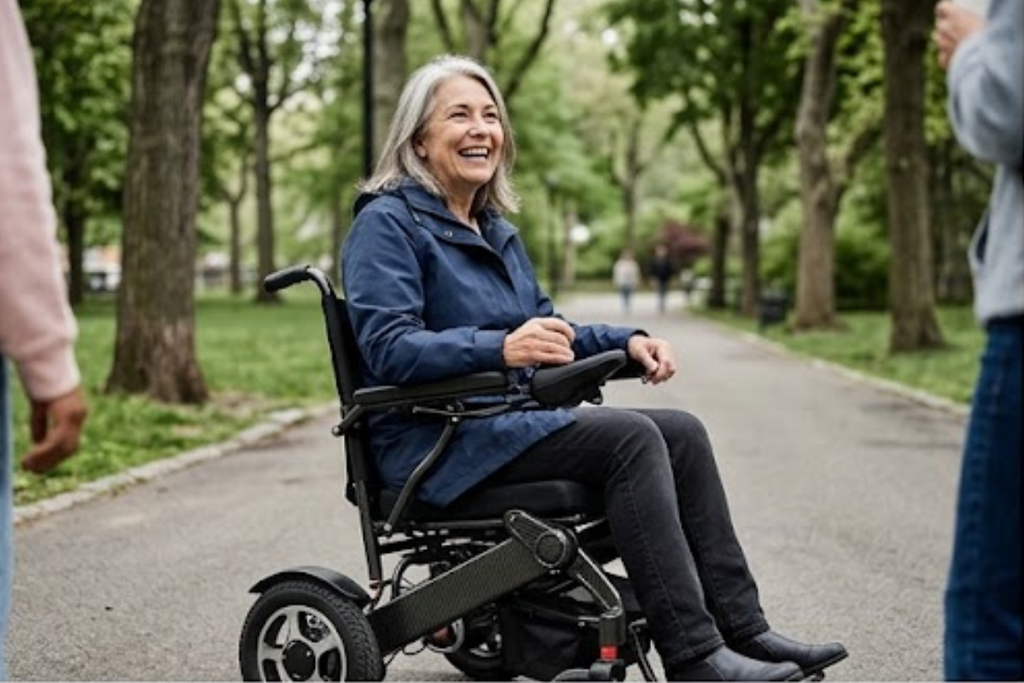
A wheelchair can provide another form of independence rather than replacing walking completely.
Someone might walk around the house but struggle with a large shopping center, airport or museum. Using a wheelchair for longer distances can conserve energy and make these outings more realistic while allowing the person to continue walking when practical.
The same principle applies to people recovering from an injury or dealing with fluctuating mobility. The device can be used when needed rather than treated as an all-or-nothing choice.
6. Grab Bars Can Turn Difficult Movements Into Manageable Ones
Grab bars aren’t technically walking aids, but they can make a major difference in mobility around the home.
A properly positioned bar near a toilet, shower or bathtub can provide something sturdy to hold when sitting down, standing up or changing position. That can reduce the need to rely on furniture, countertops or another person’s arm.
AARP also recommends bathroom grab bars and raised toilet seats as practical home modifications for people who want to remain independent.
7. Medical Alert Devices Can Add Independence Outside the Home
Mobility doesn’t only involve physical movement. Feeling confident about being alone can affect whether someone goes for a walk, runs an errand or spends time at home without a caregiver nearby.
Modern medical alert systems can include wearable devices, fall detection and emergency communication. Some connect users with live operators, while others can contact emergency services or designated contacts.
For someone who worries about what would happen after a fall, having an emergency device within reach can make independent activities feel more manageable.
Choosing the Right Aid Matters
More support doesn’t automatically mean a better mobility aid. A device that’s too difficult to maneuver can discourage activity, while one that doesn’t provide enough support may create unnecessary risk. A physical therapist or other qualified professional can assess walking ability and help determine what fits a person’s needs.
The best mobility aid may ultimately be the one that makes everyday activities feel less complicated: walking to the mailbox, taking a shower, shopping for groceries or simply moving around the house without waiting for someone else.