
A pillow can feel perfectly comfortable in the store and still leave you waking up with a stiff neck. The problem often comes down to the wrong height, firmness, material, or shape for the way you sleep.
A good pillow should keep your head and neck in a neutral position rather than pushing your head too far forward, backward, or to the side. Since pillows come in many shapes and materials, finding the right one starts with understanding what your body needs at night.
Here are the main things to consider before buying your next pillow.
1. Start With Your Sleeping Position
Your usual sleeping position provides one of the easiest ways to narrow down your choices.
Side sleepers generally need a thicker pillow because there is more space between the head and mattress created by the shoulder. A medium-to-high loft can help fill that gap and keep the neck from bending sideways.
Back sleepers typically need less height. A medium-loft pillow can support the natural curve of the neck without pushing the head too far forward.
Stomach sleepers usually do better with a thin, soft pillow. A thick pillow can force the head upward while it remains turned to one side, which may put extra stress on the neck.
If you switch positions during the night, an adjustable pillow can make more sense than choosing an extremely thick or thin option.
2. Pay Attention to Pillow Loft
Loft simply means the thickness of the pillow when it’s not compressed.
A low-loft pillow generally measures less than 3 inches, medium loft falls around 3 to 5 inches, and high loft exceeds 5 inches. These measurements provide a starting point rather than a universal rule.
Your mattress also affects the height you need. A softer mattress lets your body sink farther down, reducing the distance between your head and the mattress. A firmer mattress can leave more space to fill.
Adjustable pillows filled with shredded foam or other loose materials can be useful if you’re unsure about the ideal height because you can remove or add filling.
3. Choose Firmness Based on Support, Not Just Comfort
A pillow that feels wonderfully soft for a few minutes may flatten considerably overnight. On the other hand, an overly firm pillow can feel uncomfortable around the head and neck.
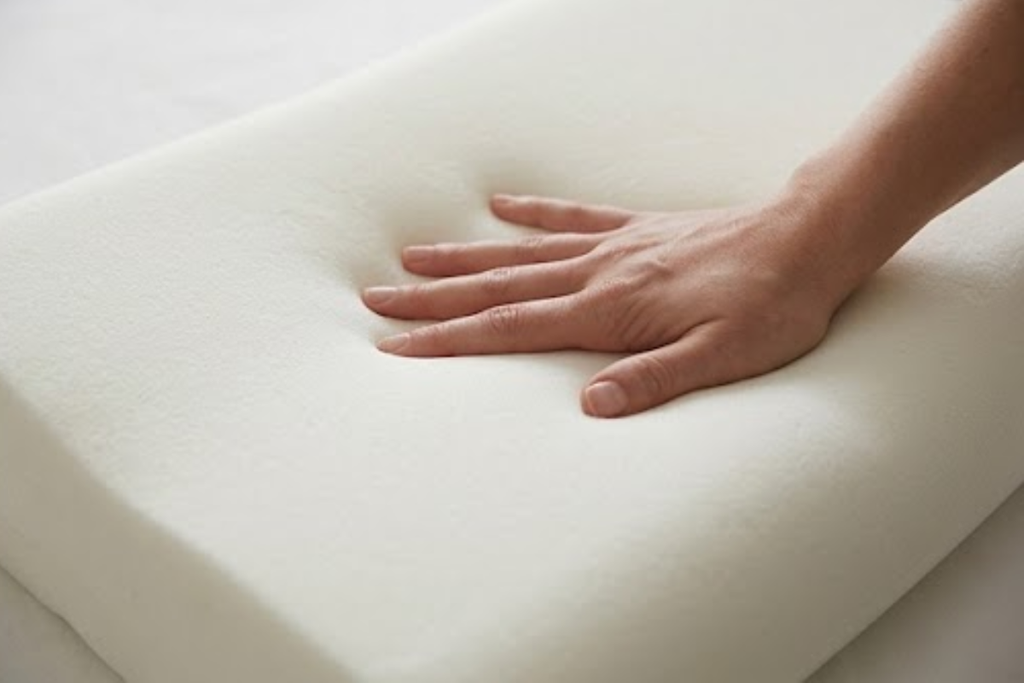
Memory foam and latex tend to provide more structure than down or down-alternative fills. Memory foam can contour around the head, while latex generally provides a springier feel.
Down and down-alternative pillows can appeal to people who prefer a softer, more compressible surface. They may require more frequent fluffing to maintain their shape.
The best firmness depends partly on how much your head sinks into the pillow and whether the remaining support keeps your neck in a comfortable position.
4. Consider a Contoured or Cervical Pillow
If ordinary rectangular pillows never seem to support your neck properly, a contoured pillow may be worth trying.
These pillows typically have a raised section for the neck and a lower section for the head. The shape attempts to maintain a more natural position for the head and neck while sleeping on your back or side.
However, the shape alone doesn’t guarantee comfort. A contour that’s too tall can create the same problem as a conventional pillow that’s too thick.
5. Think About Temperature
Some people sleep hot, and the pillow can add to that problem.
Memory foam can retain heat depending on its construction, while certain latex, fiber, and ventilated foam designs may allow more airflow. The pillowcase also makes a difference. Cotton and other breathable fabrics can feel cooler than heavier materials.
If you regularly wake up with a sweaty head or flip your pillow over searching for the cool side, temperature regulation deserves a place on your shopping checklist.
6. Check Your Neck Alignment Before Buying
One simple test can tell you whether your pillow height looks right: lie down in your normal sleeping position and check whether your head appears to remain roughly in line with your spine.
For side sleepers, the head shouldn’t tilt toward the mattress or upward toward the ceiling. For back sleepers, the chin shouldn’t get pushed toward the chest.
A pillow doesn’t need to feel exceptionally firm to provide support. What matters more is whether it maintains a comfortable position throughout the night.
7. Don’t Ignore the Pillow’s Age and Condition
Even a pillow that once worked well can lose its shape over time. Flattening, permanent lumps, or a pillow that folds easily and stays folded can indicate that its structure has deteriorated.
The typical Western pillow has a lifespan of roughly two to four years, although the actual lifespan depends on the material, construction, care, and usage.
The right pillow doesn’t have to be the most expensive one on the shelf. Start with your sleeping position, consider your mattress firmness, then look at loft, firmness, material, and shape. A pillow that keeps your head comfortable without forcing your neck into an awkward position has a much better chance of giving you a restful night’s sleep.