A washing machine cleans clothes all week, but the machine itself can collect detergent residue, fabric softener, lint, moisture and dirt. Over time, that buildup can leave behind a damp or musty smell that transfers to freshly washed clothes.
The good news: you don’t need a complicated cleaning routine. A few simple habits can help freshen the washer and reduce the conditions that allow unpleasant odors to develop.
1. Run the Washer’s Cleaning Cycle
Many newer washing machines have a self-clean or tub-clean cycle designed to wash the empty drum. If your machine has one, check the owner’s manual for the recommended cleaning product and cycle.
If there isn’t a dedicated cleaning cycle, some manufacturers recommend running an empty hot-water cycle. The exact temperature and cleaning method can vary by model, so it’s worth checking the instructions before adding anything to the machine.
A monthly cleaning routine can help prevent residue and odor from accumulating.
2. Scrub the Detergent Drawer
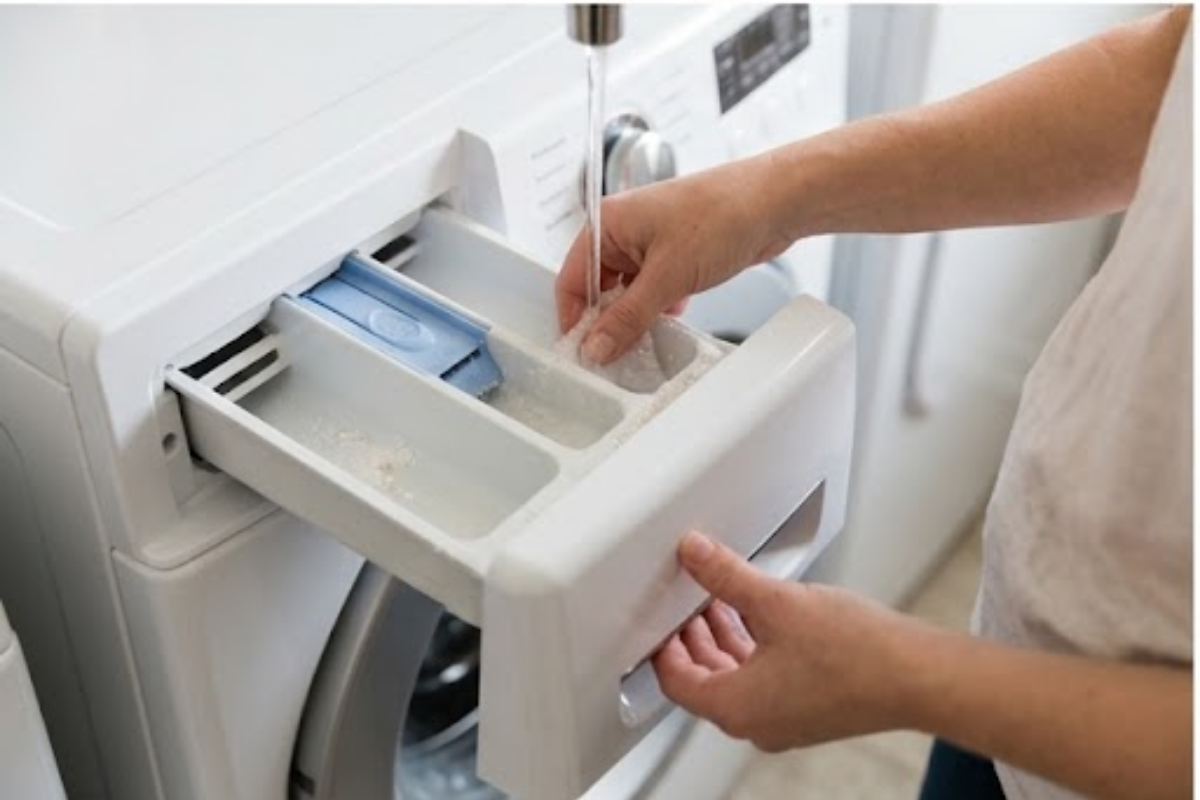
The detergent dispenser can become one of the dirtiest parts of the washer. Liquid detergent and fabric softener can leave a sticky residue, while moisture trapped inside the drawer can encourage mold and mildew.
Remove the drawer if your machine allows it and rinse it under warm water. Use an old toothbrush or soft brush to clean corners, compartments and small openings. Dry the pieces before putting them back.
Good Housekeeping recommends cleaning the dispenser about once a month, or more often when you notice buildup or lingering odors.
For a quick reference on how washing machines work and why they use different wash and rinse stages, see the Wikipedia washing machine guide.
3. Wipe Under the Rubber Gasket
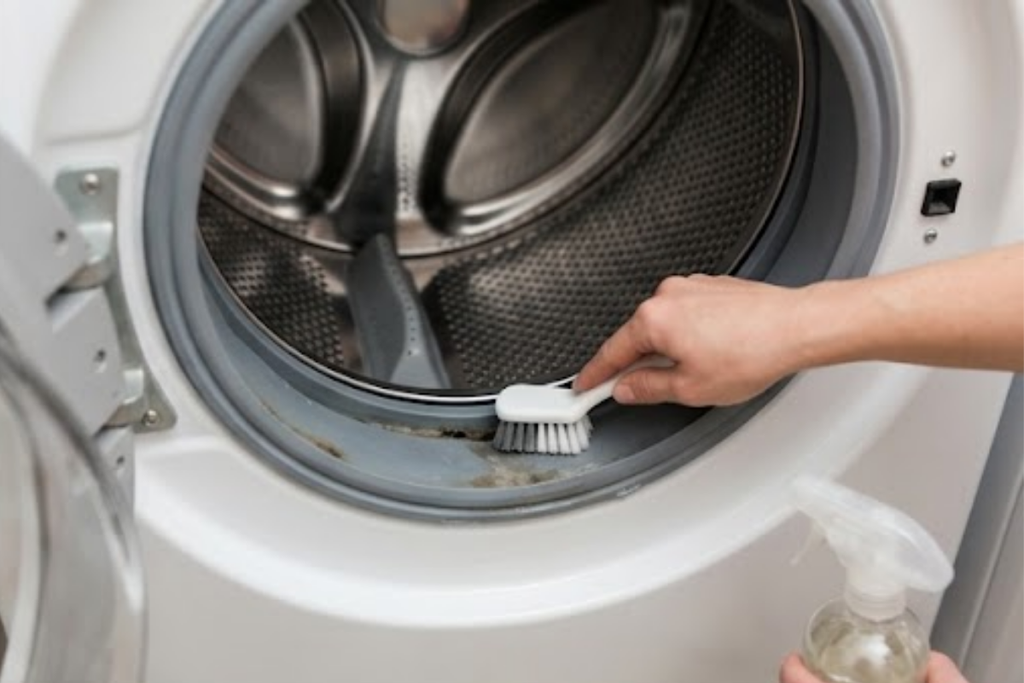
Front-loading washers have a rubber door gasket that can trap water, hair, lint and small pieces of laundry. That damp, enclosed space can eventually develop a musty smell.
Pull the gasket back gently and inspect the folds. Wipe away debris with a clean microfiber cloth, then wipe the area dry.
Pay particular attention to the bottom portion of the gasket, where water tends to collect. If you find visible mildew, follow your washer manufacturer’s cleaning instructions rather than reaching immediately for a harsh chemical.
4. Leave the Door or Lid Open
One of the easiest fixes costs nothing.
After finishing a load, leave the front-loader door slightly open or keep the top-loader lid raised. Air circulation allows moisture inside the drum and gasket to evaporate instead of remaining trapped.
This small habit can make a noticeable difference when musty smells keep returning. Good Housekeeping also recommends leaving the washer open after use to allow the interior to dry.
Keep the door or lid open only when children and pets cannot access the machine.
5. Don’t Leave Wet Clothes Sitting Inside
Forgotten laundry can quickly develop a stale smell, particularly when it sits inside a closed, damp washer.
Try to transfer clothes to the dryer or drying rack soon after the cycle finishes. If you discover a load that has been sitting for several hours and smells unpleasant, running another wash cycle may help before drying the clothes completely.
The washer can also retain some of that odor when wet laundry repeatedly gets left inside.
6. Check the Washer Filter
Some washers have a filter that catches lint, hair, coins and other debris. A dirty or clogged filter can contribute to poor drainage and unpleasant odors.
The filter location varies considerably between machines. Front-loaders commonly have a filter behind a small panel near the bottom, while some top-loaders use different designs.
Check the owner’s manual before opening or removing anything. If your machine has a drain hose near the filter, place a shallow container underneath before opening it because residual water may come out.
7. Don’t Overdo Vinegar or Baking Soda
White vinegar and baking soda often appear in DIY washer-cleaning advice, but more isn’t necessarily better. Good Housekeeping notes that vinegar may not clean a washer as thoroughly as a product designed for the appliance, and repeated use can potentially affect rubber components. Baking soda can help with odors but may not remove deeper deposits or kill bacteria.
If you prefer a commercial washer cleaner, choose one that’s compatible with your machine and follow the label directions.
A Simple Routine Can Keep Odors Away
A fresh-smelling washer doesn’t require hours of scrubbing. Run the cleaning cycle regularly, rinse the detergent drawer, wipe the gasket, check the filter and allow the drum to dry between loads.
Those small tasks can help prevent the damp residue and trapped moisture that often lead to musty odors in the first place.
For another practical cleaning reference, Good Housekeeping’s washing machine cleaning guide covers the drum, dispenser, gasket and filter in more detail.