Choosing between leasing and buying a car is one of the biggest financial decisions many drivers face. While both options put you behind the wheel of a new or used vehicle, they work very differently. The better choice depends on your budget, driving habits, and how long you plan to keep the car.
Understanding the advantages and drawbacks of each option can help you make a decision that fits your lifestyle rather than simply focusing on the monthly payment.
How leasing works
Leasing is similar to renting a vehicle for a fixed period, typically between two and four years. Instead of paying for the car’s full value, you pay for the amount it is expected to depreciate during the lease term, along with fees and financing charges.
When the lease ends, you generally have three choices:
- Return the vehicle.
- Lease another new model.
- Purchase the vehicle if your agreement includes a buyout option.
Lease agreements usually include annual mileage limits, and exceeding those limits may result in additional charges.
How buying works
When you buy a vehicle, either outright or with a loan, you become the owner once the loan is paid off. You can keep the vehicle for as many years as you like, sell it whenever you choose, or trade it in toward another purchase.
Although monthly loan payments are often higher than lease payments for a similar vehicle, ownership gives you long-term value because you build equity in the car.
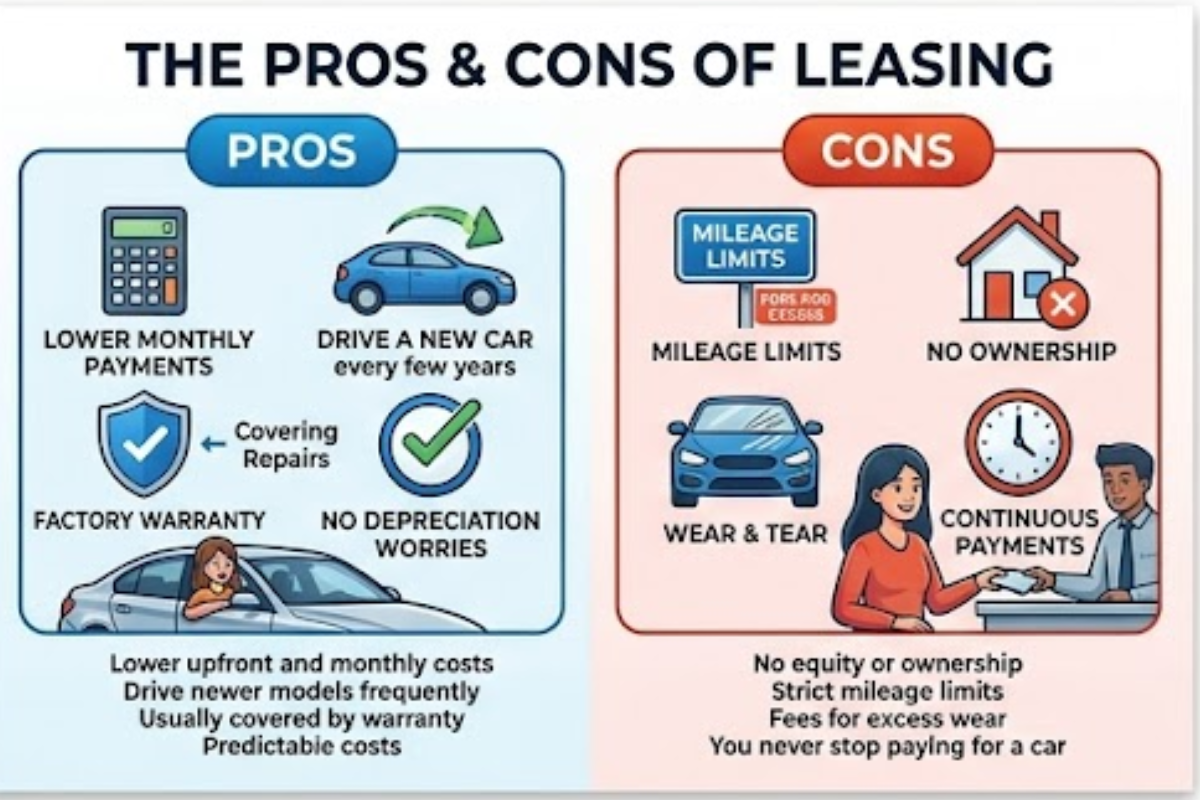
Benefits of leasing
Lower monthly payments
One of the biggest reasons drivers choose leasing is affordability. Since you’re paying only for depreciation during the lease period, monthly payments are often lower than financing the same vehicle.
Access to newer vehicles
Leasing makes it easier to drive a newer model every few years. This means you may regularly enjoy updated safety systems, improved fuel efficiency, and the latest technology features without committing to long-term ownership.
Reduced repair concerns
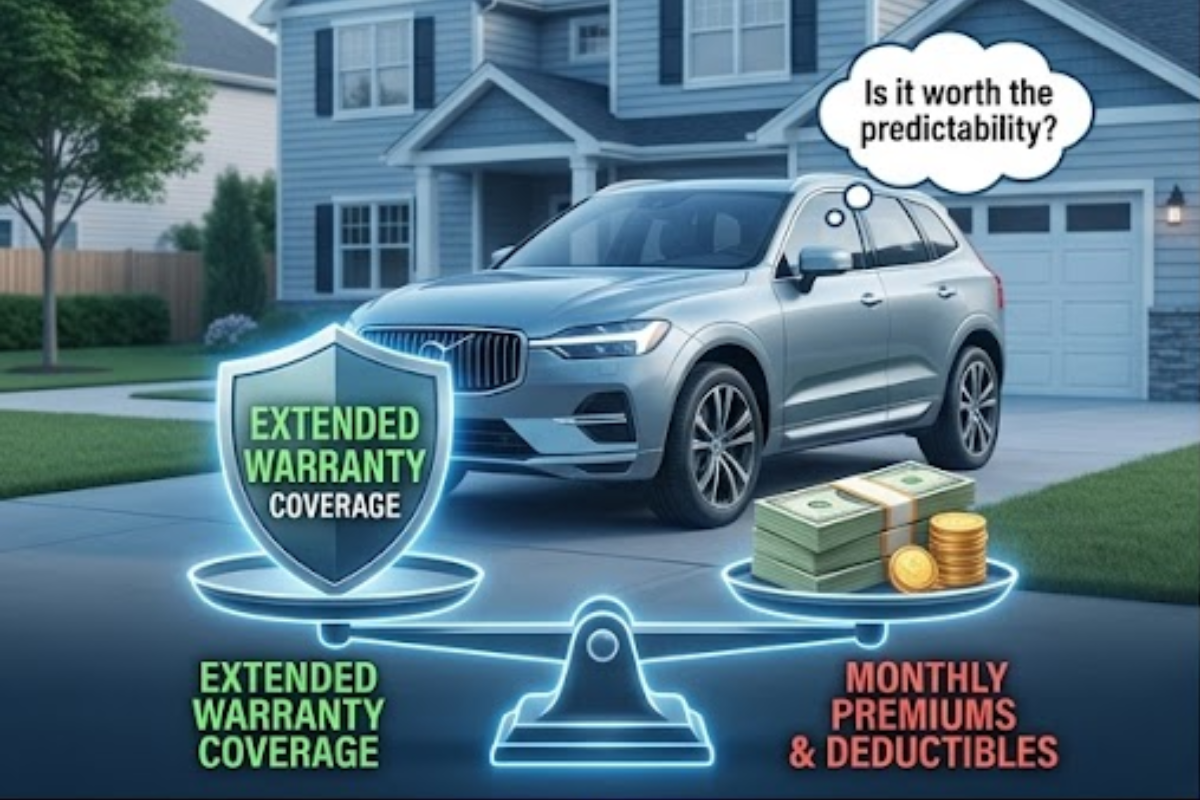
Many leased vehicles remain under the manufacturer’s warranty throughout the lease period. This can reduce unexpected repair expenses, although routine maintenance remains the driver’s responsibility.
Simple upgrade cycle
At the end of the lease, many drivers simply return the vehicle and choose another model. There’s no need to negotiate a trade-in value or sell the vehicle privately.
Drawbacks of leasing
No ownership
Monthly lease payments do not build ownership in the vehicle. Once the lease ends, you typically return the car unless you decide to purchase it.
Mileage restrictions
Most leases include annual mileage allowances. Drivers with long commutes or frequent road trips may face additional charges if they exceed the agreed limit.
Wear and tear charges
Leased vehicles are expected to be returned in good condition. Excessive scratches, dents, interior damage, or other wear beyond normal use may lead to extra fees.
Continuous payments
Drivers who lease repeatedly often continue making monthly payments indefinitely because they never fully own the vehicle.
Benefits of buying
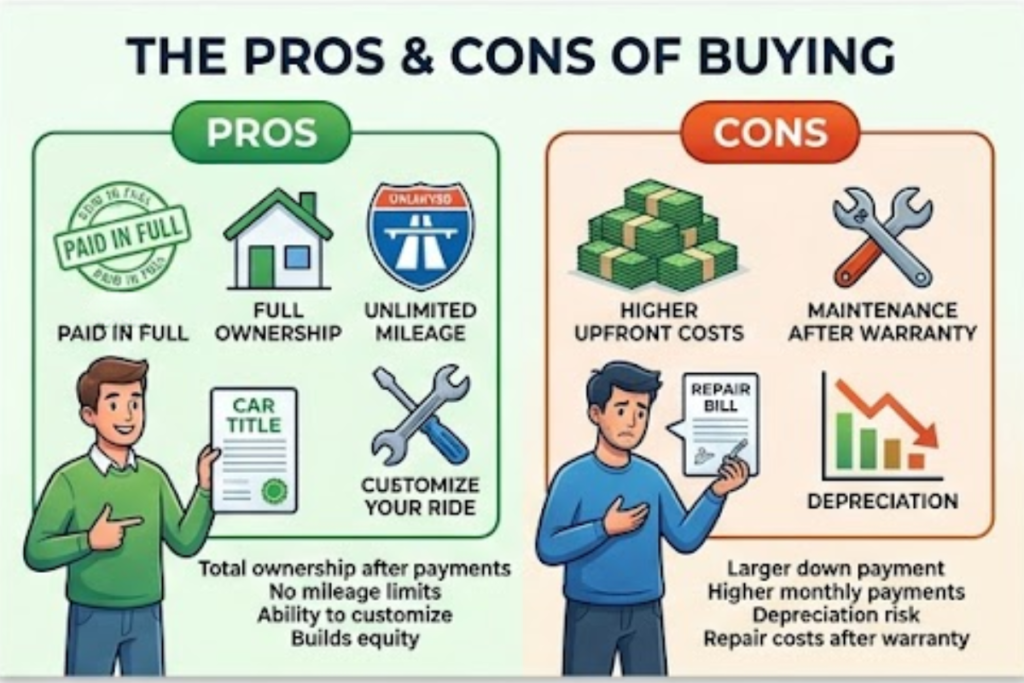
Long-term savings
Although financing may cost more each month initially, payments eventually end. Keeping a paid-off vehicle for several additional years can significantly reduce overall transportation costs.
Unlimited mileage
Owners can drive as much as they like without worrying about mileage penalties, making buying attractive for commuters and frequent travellers.
Freedom to customise
Buying allows you to personalise the vehicle with aftermarket wheels, upgraded audio systems, roof racks, or performance modifications without violating lease agreements.
Resale value
When you’re ready for another vehicle, you can sell or trade in your car. Even older vehicles often retain some value that can offset the cost of your next purchase.
Drawbacks of buying
Ownership also comes with responsibilities.
As the vehicle ages, repair costs can increase after the factory warranty expires. Depreciation may also reduce the vehicle’s resale value over time, particularly during the first few years.
Additionally, monthly finance payments may be higher than comparable lease payments, which can affect short-term budgeting.
Which option suits different drivers?
Leasing may be a better fit if you:
- Prefer driving a new vehicle every few years.
- Drive relatively low annual mileage.
- Want predictable monthly costs.
- Appreciate having the latest safety and technology features.
Buying may make more sense if you:
- Plan to keep your vehicle for many years.
- Drive long distances regularly.
- Want to build ownership and long-term value.
- Prefer complete freedom over how you use and maintain your vehicle.
Questions to ask before deciding
Before signing any agreement, consider these questions:
- How many miles do I drive each year?
- How long do I usually keep a vehicle?
- Can I comfortably afford higher monthly payments if buying?
- Will I want to modify or personalise the vehicle?
- How important is driving the latest model?
Answering these questions can help narrow the option that best matches your financial goals and driving habits.
Final thoughts
Neither leasing nor buying is universally better. Leasing can provide lower monthly payments, access to newer vehicles, and fewer repair concerns during the warranty period. Buying, however, offers ownership, greater flexibility, and the opportunity to save money over the long term by keeping the vehicle after it has been paid off.
Rather than focusing solely on the monthly payment, compare the total cost over several years, your expected mileage, and how long you typically keep a car. A thoughtful comparison can help you choose the option that delivers the greatest value for your personal circumstances.