To remove garage oil stains, absorb fresh oil first, then use grease-cutting dish soap for light marks or a concrete-safe degreaser for older stains. Allow the cleaner time to work before lightly brushing and rinsing according to the product label.
The good news: you usually don’t need to spend an afternoon on your hands and knees scrubbing. The right absorbent material and cleaner can loosen much of the mess with far less effort.
1. Remove Garage Oil Stains While Fresh
If the oil spill just happened, don’t reach for water first. Water won’t absorb motor oil and can spread the mess across a larger area.
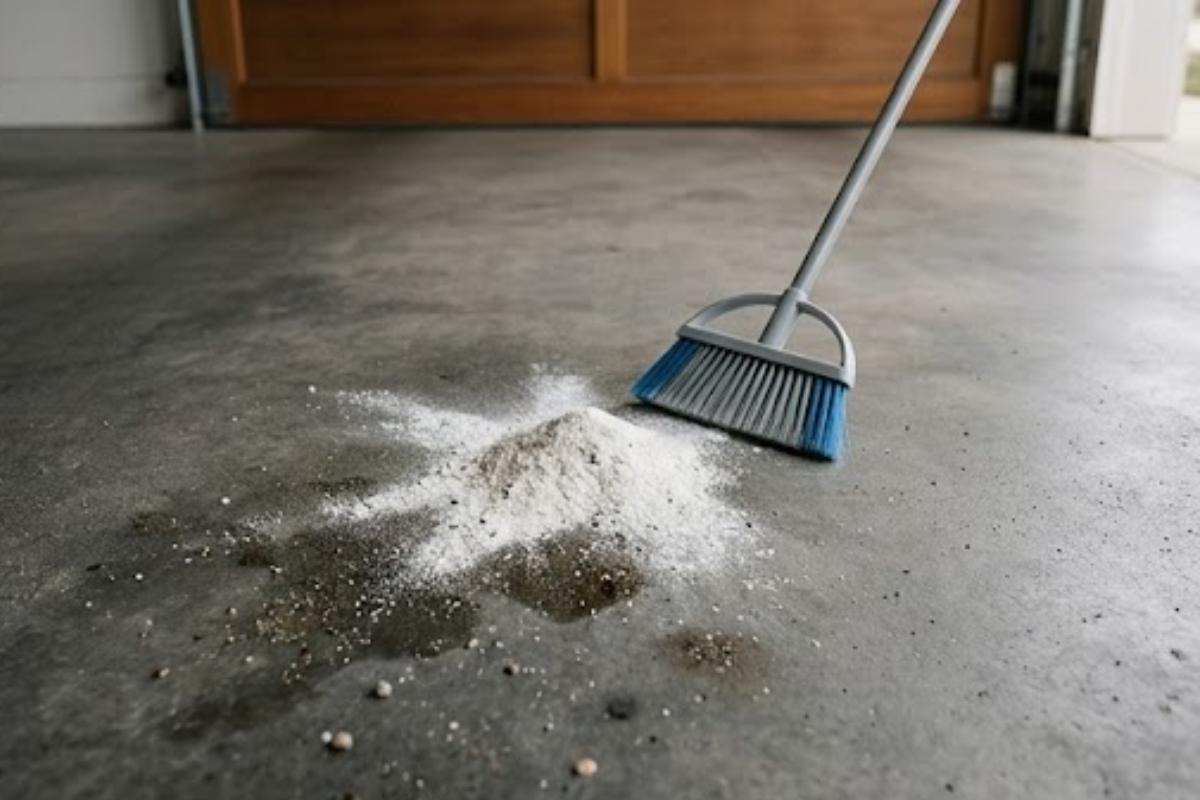
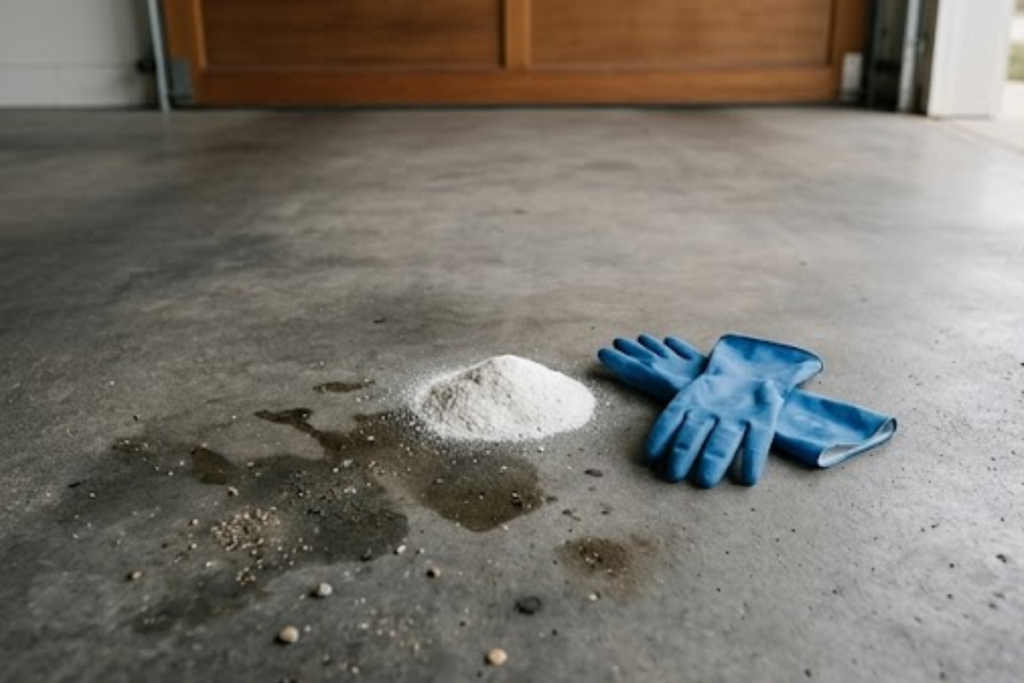
Cover the spill with an absorbent material such as cat litter, baking soda, sawdust, or an oil-absorbent product. Spread a thick layer over the entire stain and leave it alone for several hours. For a larger spill, leaving the absorbent material overnight can give it more time to pull oil from the surface.
Once it has absorbed as much oil as possible, sweep it up and follow local disposal rules. The EPA household hazardous waste guide explains why some automotive products need special handling.
This first step can save a lot of scrubbing later.
2. Try Dish Soap on Light Stains
For a relatively new stain, ordinary grease-cutting dish soap can sometimes do the job.
Pour a small amount directly onto the affected area, then add enough warm water to create a concentrated solution. Give the cleaner a few minutes to break down the greasy residue.
Instead of aggressive scrubbing, use a stiff nylon brush and work over the area briefly. Rinse with clean water and check the result. Repeat the treatment if necessary.
Avoid flooding the floor with water. Too much water can spread loosened oil into nearby areas.
Use Baking Soda on Smaller Spots
Baking soda can help with small oil marks and residue left after an initial cleanup.
Sprinkle a generous layer over the stain and lightly work it into the surface. Leave it for several hours before sweeping it away. Follow up with dish soap and warm water if a greasy film remains.
This method works better on relatively small stains than on large, deeply saturated patches.
4. Use Concrete Degreaser on Old Stains
Old garage oil stains often need something stronger than household soap. A concrete-safe degreaser can break down the oily residue without requiring hours of manual work.
Apply the product according to its label instructions. Many degreasers need several minutes of contact time before rinsing. That waiting period does much of the work, so resist the urge to immediately scrub the area.
For stubborn stains, a stiff brush can help loosen the remaining residue after the cleaner has had time to work.
Always check whether the product suits your type of concrete and follow its safety instructions.
Let the Cleaner Do More of the Work
One of the biggest mistakes people make with oil stains involves applying cleaner and immediately scrubbing.
Give the cleaning solution time to penetrate the residue. Depending on the product and stain, five to 15 minutes may be enough. Some treatments require longer.
Keep the area from drying out if the product instructions call for a wet application. Once the recommended contact time has passed, agitate the stain lightly and rinse.
You may need two or three treatments for an older mark. That can still take less effort than trying to remove everything in one long scrubbing session.
A Pressure Washer Can Help
For a garage floor that can handle it, a pressure washer can make the final cleanup much easier. Once the floor is clean, these garage storage ideas can help keep supplies organized.
Apply a suitable degreaser first and allow it to work. Then use the pressure washer to rinse away the loosened grime. Keep the nozzle at an appropriate distance from the concrete rather than holding it extremely close to the surface.
Be careful with drainage. Oil-contaminated water should not be washed into a storm drain. Capture residue where possible and follow local wastewater and hazardous-waste requirements.
What to Avoid
Bleach won’t solve a typical motor-oil stain and can create other problems when mixed with certain cleaning products. Avoid mixing cleaners unless the labels specifically say they can be combined.
Gasoline and other flammable solvents also are not a safe DIY solution for cleaning a garage floor. If a nearby entry door needs attention, use this guide to fix a squeaky door without adding unnecessary chemicals. They introduce unnecessary fire and health risks while creating another substance that needs proper disposal.
For a stubborn stain, several short treatments with a suitable degreaser usually make more sense than using increasingly aggressive chemicals. For larger project planning, compare home improvements that may increase resale value.
The Best Way to Remove Garage Oil Stains
To remove garage oil stains effectively, absorb as much fresh oil as possible first. For a light stain, dish soap and warm water may be enough. Older, darker patches usually respond better to a concrete-safe degreaser followed by light agitation and thorough rinsing.
The main trick: don’t try to scrub the oil out before loosening it. Let an absorbent material or degreaser do the heavy lifting first, then use a brush or pressure washer to deal with what’s left.