A musty closet smell can make clean clothes smell stale within hours. Air fresheners may cover the odor temporarily, but they do little to address the moisture, poor airflow, or mildew usually responsible for it.
The good news: you can usually freshen a closet with a few simple household fixes. The trick involves finding the source, drying the space, cleaning affected surfaces, and improving airflow.
1. Start by Emptying the Musty Closet
Start by taking everything out of the closet. Clothes, shoes, bags, boxes, and other items can trap moisture and make it difficult to find where the smell comes from.
Leave the closet doors open while you inspect the shelves, walls, floor, corners, and back panels. Pay attention to dark spots, damp patches, peeling paint, or areas that feel cooler or wetter than the rest of the closet.
Check the items you removed, too. A musty smell may come from clothing or shoes rather than the closet itself.
2. Find What Is Causing the Musty Smell
Musty odors often point to excess moisture. A closet against an exterior wall can pick up condensation, while a nearby bathroom, leaking pipe, or damp floor can create the same problem.
Run your hand along the walls and floor to check for dampness. If you find a leak or recurring moisture problem, cleaning alone won’t solve the odor.
For a closet that simply feels humid, leave the doors open for several hours and allow fresh air to circulate. A fan pointed toward the closet can speed up the process.
3. Clean the Shelves and Walls
Once the closet has dried, wipe down hard surfaces with a mild household cleaner. Pay particular attention to corners, shelf undersides, baseboards, and the back wall.
If you notice a small amount of surface mildew, clean it according to the instructions for the surface and cleaning product you’re using. Wear gloves and provide good ventilation while cleaning.
Don’t simply wipe away visible spots and close the door immediately. Give the area plenty of time to dry afterward.
4. Use Baking Soda to Absorb Odors
Baking soda can help with lingering smells without adding another fragrance to the closet.
Place an open container or shallow bowl of baking soda on a shelf. Leave it in the closet for several days, replacing it periodically if the odor returns.
Keep the container somewhere stable and away from children or pets. Baking soda won’t fix a moisture problem, but it can help with residual odors once the underlying issue has been addressed.
5. Try Activated Charcoal
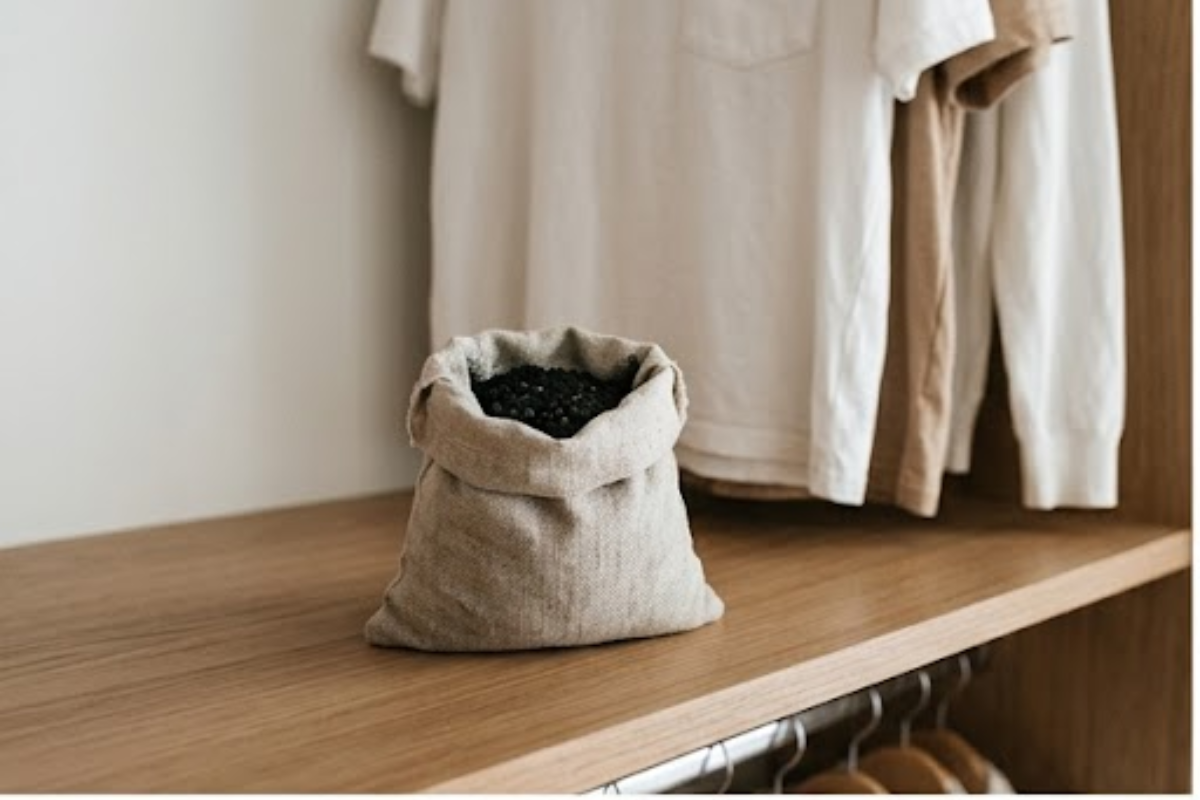
Activated charcoal provides another fragrance-free option for absorbing odors. You can place charcoal odor absorbers inside the closet or use a small breathable container designed for this purpose.
Position one near the area where the smell seems strongest. Larger closets may need more than one.
Like baking soda, charcoal works better after the closet has been cleaned and dried rather than being used to cover up an ongoing dampness problem.
6. Wash Musty Clothes Before Putting Them Back
Don’t put clothes back into the closet simply because the room smells better. Fabric can hold onto musty odors, especially towels, jackets, blankets, and heavier clothing.
Wash washable items according to their care labels and dry them completely before returning them to the closet.
For items that can’t go through a normal wash, follow the manufacturer’s cleaning instructions. Never store clothing while it’s even slightly damp.
7. Give Clothes More Breathing Room
An overcrowded closet restricts airflow. Clothes packed tightly together can trap humidity and make odors harder to remove.
Leave small gaps between garments whenever possible. Avoid pushing boxes, bags, or clothing directly against walls where condensation might occur.
If you have shelves packed with folded clothes, removing a few items can make a noticeable difference in airflow.
8. Prevent the Musty Closet Smell From Returning
After cleaning, focus on keeping humidity under control. A small moisture absorber can help in enclosed spaces, while a dehumidifier may work better for a larger room with persistent humidity.
During dry weather, opening the closet doors periodically can help replace stale air with drier room air.
If the closet repeatedly develops a musty smell despite cleaning and drying, check for hidden water damage, mold growth, or a plumbing leak. Persistent odor usually points to a source that needs attention rather than another odor absorber.
9. Keep Shoes and Damp Items Out
Wet shoes, gym clothes, towels, and recently worn jackets can quickly raise moisture levels inside a small closet.
Allow these items to dry completely before storing them. Shoes can benefit from being left in a well-ventilated area rather than immediately placed inside a closed cupboard.
A little extra airflow can prevent the musty smell from returning.
How to Remove a Musty Closet Smell
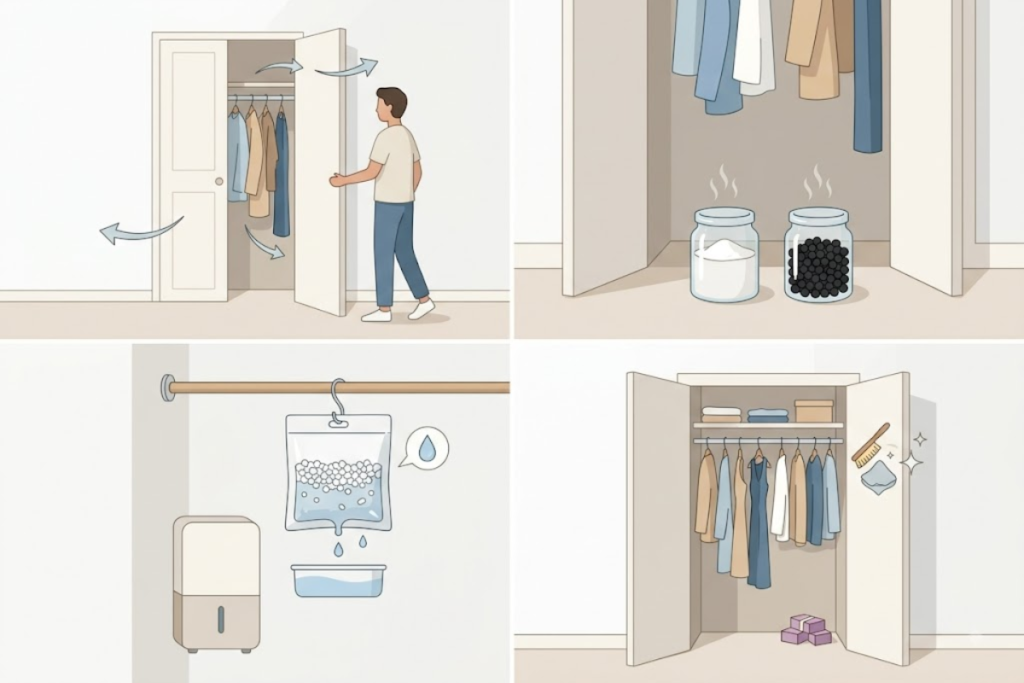
For most closets, removing a musty closet smell comes down to four steps: empty it, find the moisture, clean and dry the surfaces, then improve airflow. Baking soda or activated charcoal can help with the remaining odor, but they work best after the source has been dealt with.
If the smell keeps coming back within days, don’t keep adding odor absorbers. Check behind shelves, along walls, underneath flooring, and around nearby plumbing for a moisture problem.
2 thoughts on “How to Get Rid of Musty Smells in Closets Without Air Fresheners”