Not long ago, investing often felt like something reserved for people with financial advisors, stock-picking skills, or plenty of free time. Today, many people want a simpler way to grow their money without spending hours researching companies or trying to predict market movements. That change has brought index funds into the spotlight.
From first-time investors to those planning for retirement, more people are choosing index funds because they offer a straightforward approach to long-term investing. Rather than trying to beat the market, they aim to follow it.
What exactly is an index fund?
An index fund tracks the performance of a market index. Instead of buying shares in just one company, the fund invests in many businesses that make up a particular index.
For example, a fund tracking the S&P 500 owns shares in hundreds of large U.S. companies. If one company struggles, others in the fund may perform well, helping balance overall returns.
This approach gives investors broad exposure without requiring them to select individual stocks.
Lower costs make a noticeable difference
Fees may look small at first glance, but they can have a meaningful effect over many years.
Many actively managed funds charge higher management fees because professionals research companies and decide what to buy or sell. Index funds follow a published index, so they require fewer investment decisions and generally cost less to operate.
Lower expenses allow investors to keep more of their returns, especially over long investment periods where every percentage point matters.
Diversification comes built in
Buying shares in a single company can produce large gains, but it also brings greater risk. A disappointing earnings report or an unexpected business setback can quickly reduce the value of that investment.
Index funds spread money across dozens, hundreds, or even thousands of companies. That wider mix reduces the impact of any one business performing poorly.
Many investors appreciate this balanced approach because it avoids placing too much weight on a single stock or industry.
Fewer decisions, less stress
Trying to decide when to buy or sell individual stocks can become exhausting. Markets move every day, and headlines often encourage emotional decisions.
Index fund investors usually focus on regular contributions instead of reacting to short-term news. Many simply invest a fixed amount each month, allowing their portfolios to grow gradually over time.
This habit removes much of the pressure that comes with constantly monitoring market movements.
Strong long-term track records
Many investors discover that consistently beating the market remains difficult, even for experienced professionals.
While actively managed funds occasionally outperform, many struggle to stay ahead after accounting for fees over long periods. Index funds simply aim to match the market’s overall performance rather than chase short-term wins.
For people investing over decades, steady market growth often proves more appealing than trying to guess which companies will become tomorrow’s winners.
Easy access for beginners
Opening an investment account has become much simpler than it was years ago. Many brokerage platforms and financial apps allow users to start investing with relatively small amounts of money.
Index funds fit naturally into this trend because they don’t require advanced financial knowledge. Investors don’t need to analyze company earnings, study balance sheets, or follow every market announcement.
That simplicity makes them an attractive starting point for people building their first investment portfolio.
Automatic investing has become popular
Many platforms allow investors to schedule automatic monthly contributions into index funds.
Instead of worrying about the perfect time to invest, money enters the market regularly. This method helps build investing discipline and reduces the temptation to wait for the “right” moment, which often proves difficult to identify.
Over many years, consistent investing can matter more than perfect timing.
Suitable for many financial goals
Index funds appear in a wide range of investment plans.
Some people use them while saving for retirement. Others invest toward buying a home, funding a child’s education, or building long-term wealth.
Because index funds cover different parts of the market, investors can choose funds focused on large companies, international markets, bonds, or total market exposure depending on their personal goals.
Technology has made investing more approachable
Mobile apps, educational videos, and online financial tools have made investing easier to understand.
Instead of relying on complicated paperwork or frequent meetings, many investors can research funds, compare costs, and invest within minutes. Clear performance charts and simple account dashboards also make it easier to stay informed without becoming overwhelmed.
This convenience has encouraged more people to begin investing earlier than previous generations.
Patience often matters more than predictions
Market prices rise and fall, sometimes sharply. Short-term declines can make investors nervous, but many experienced investors prefer to stay invested instead of trying to predict every market swing.
Index funds support that mindset because they encourage long-term thinking rather than frequent trading. Investors who remain consistent through different market conditions often avoid many of the mistakes that come from emotional decision-making.
Final thoughts
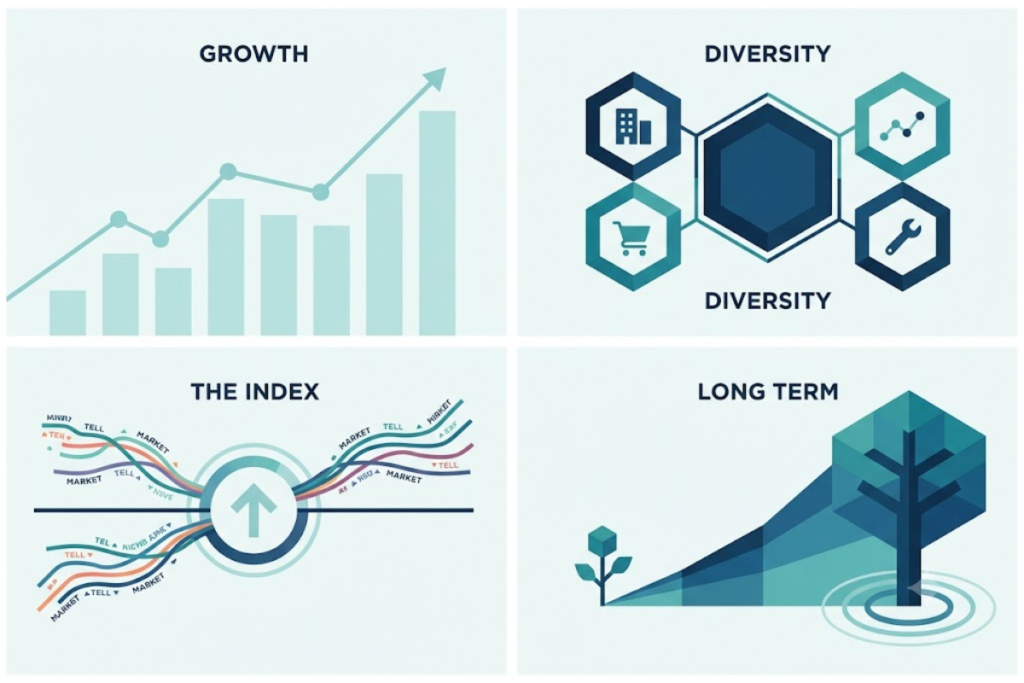
The growing interest in index funds comes down to a few practical reasons. They keep costs relatively low, spread investments across many companies, require little day-to-day management, and fit comfortably into long-term financial plans.
No investment guarantees positive returns, and index funds still move with the market. Their appeal comes from their simplicity. Rather than searching for the next winning stock, many investors prefer a steady approach that lets them participate in the growth of the broader market over time.