A backyard can feel surprisingly exposed when neighboring homes, sidewalks, or nearby roads sit within clear view. The right garden fence can create a little separation without making the yard feel boxed in. From simple wood slats to fences paired with plants, there are several ways to add privacy while keeping the space comfortable and usable.
Before choosing a design, think about what you actually want to hide. You may only need to block a neighbor’s windows or a busy walkway rather than surround the entire yard with a tall wall. Local rules can also limit fence height, placement, and materials, so check city or HOA requirements before starting.
Here are several garden fence ideas worth considering.
1. Horizontal Wood Slat Fence
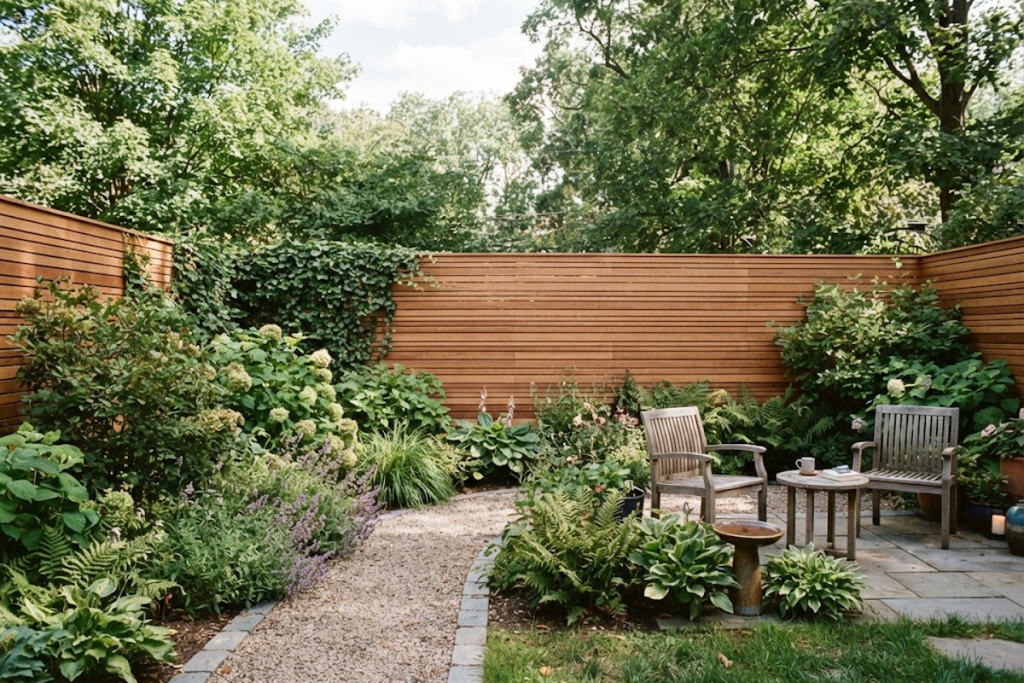
Horizontal wood slats give a backyard a clean, modern appearance while blocking direct views. The spacing between boards can be adjusted depending on how much privacy you want.
For near-total privacy, use closely spaced boards. Small gaps can allow more sunlight and airflow while still making it difficult for people outside the yard to see through.
Cedar, redwood, and pressure-treated lumber can all work for outdoor fencing, although each has different maintenance requirements. A stain can also change the look of the fence while providing some protection from the weather.
2. Fence With a Lattice Top
A solid lower fence with lattice across the top can provide privacy without creating a completely enclosed wall. The solid section blocks views at ground level, while the open lattice lets in more light.
This design works particularly well around patios and garden seating areas. You can also train climbing plants along the lattice for additional screening.
A fence with this type of open upper section can also make a smaller yard feel less enclosed than a full-height solid barrier.
3. Shadow Box Fence
A shadow box fence uses boards placed alternately on opposite sides of the rails. From straight on, the overlapping boards make it difficult to see directly through the fence.
One advantage comes from the appearance on both sides. Instead of having one finished side and one side showing the rails, the alternating layout gives the fence a more balanced look.
This style can work well when the fence sits directly along a property line and both sides remain visible.
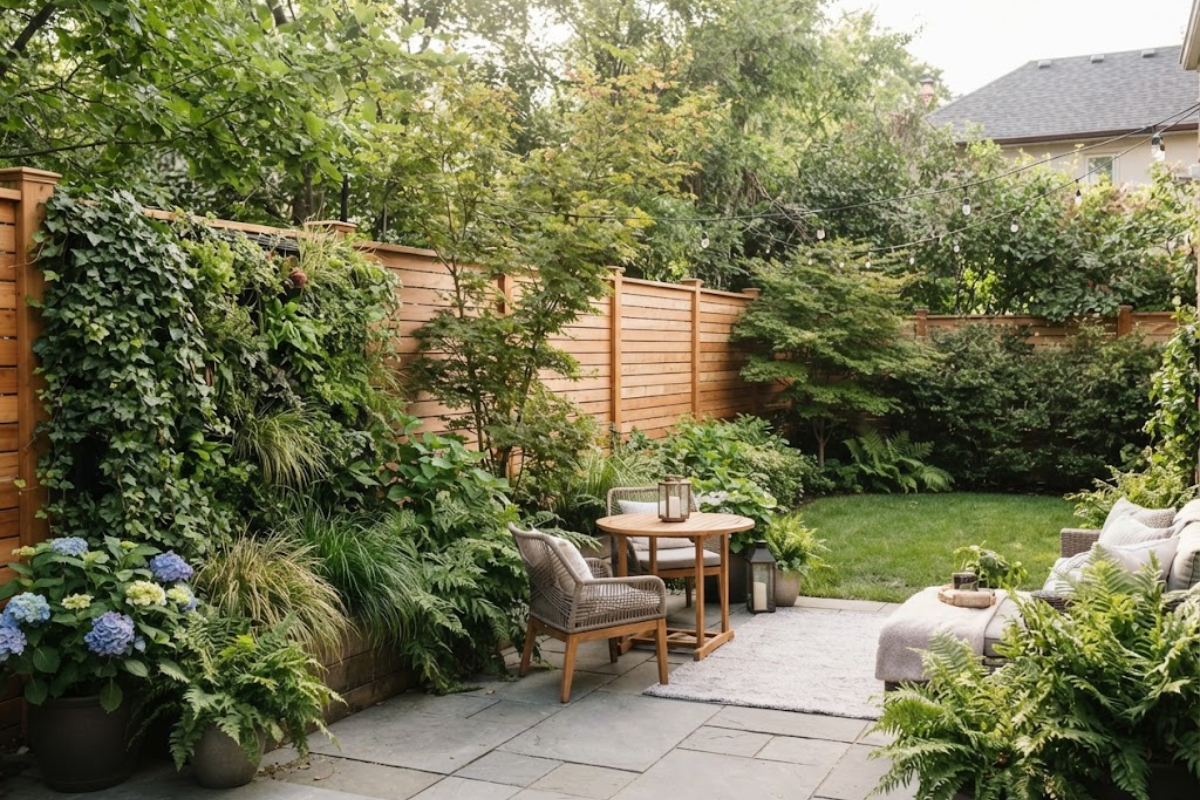
4. Fence With Tall Shrubs
A fence doesn’t have to do all the work. Planting shrubs along the inside of the fence can create another layer between your yard and the neighboring property.
Evergreen shrubs can provide screening throughout the year, while deciduous plants can give you seasonal coverage. Choose plants based on your local climate, mature size, and how much pruning you’re willing to do.
Leave enough room between the plants and fence for maintenance. A row of shrubs planted too close to the boards can make trimming and repairs unnecessarily difficult.
5. Trellis Fence With Climbing Plants
A trellis fence can provide partial privacy while giving you room to grow vines. Depending on the plant, the foliage can eventually cover much of the open structure.
This approach works especially well in gardens where a traditional solid fence might feel too heavy. Jasmine, clematis, climbing roses, and other suitable vines can add screening as they grow.
Choose plants carefully, though. Some vigorous vines can spread quickly or become difficult to control.
6. Staggered Fence Boards
Instead of keeping every board at exactly the same height, use staggered sections to create a less rigid appearance. You can alternate taller and shorter panels or vary the height gradually along the property line.
This can be useful when you want privacy without a large uninterrupted wall. Adding shrubs, ornamental grasses, or flower beds along the base can break up the fence visually.
7. Dark-Stained Wood Fence
A dark stain can give a wood fence a simple, understated appearance. Rather than using decorative details, let the fence provide a clean background for plants and outdoor furniture.
Dark fencing can work particularly well behind green foliage because the boards tend to recede visually. It can also pair with lighter patio furniture, stone paths, or raised garden beds.
The finish will need periodic maintenance depending on the type of wood, stain, sun exposure, and local weather.
8. Privacy Fence Around a Specific Area
You don’t necessarily need to fence the entire yard. A shorter section around a patio, hot tub, outdoor dining area, or seating nook can provide privacy exactly where you spend the most time.
This approach can save materials and keep the rest of the yard open. Freestanding screens or partial fence panels can also work when a permanent boundary isn’t necessary.
For more examples of materials and layouts, this privacy fence guide from This Old House covers options such as shadow box, trellis, wood, and hybrid fences.
Choosing the Right Fence for Your Yard
The best garden fence depends on more than appearance. Consider how much privacy you need, how much sunlight the yard receives, local weather, maintenance, and whether you need to accommodate pets or children.
A completely solid fence may provide the most visual privacy, but a combination of fencing, plants, and open sections can sometimes feel more comfortable. Measure the area first, check local restrictions, and think about what the fence will look like from both sides.
A thoughtful layout can give you the privacy you want without turning the backyard into a closed-off space.